

A more enjoyable bath often starts before the water runs. To learn how to make my dog enjoy bath time, build comfort gradually with gentle, lukewarm water, small rewards and calm praise instead of rushing into a full wash. Brush out tangles first, then make washing, conditioning and drying a slow, predictable routine.
If your dog trembles, tries to escape or resists the tub, bath time can be frustrating for both of you. Rushing water, slippery footing or an uncomfortable past experience may make it feel overwhelming. The goal isn’t to make every dog love water overnight, but to help them feel safer one manageable step at a time. This guide explains how to prepare the space, introduce water gently, use rewards and make brushing and conditioning part of a more comfortable coat-care routine. You’ll also learn when to pause and try again, so bath time can become calmer for both of you.
Key Takeaways
- Set up a quiet, non-slip bathing space, then introduce lukewarm water with a gentle stream and keep it away from your dog’s face.
- Build positive associations with treats and praise, letting your dog explore the tub and water at a comfortable pace.
- Slippery footing, rushing water and past discomfort can make baths stressful; notice your dog’s signals and keep handling calm and gradual.
- Brush out tangles before washing, then use conditioning and careful drying to help keep curly or long coats more manageable.
1. Using a hand shower and gentle water pressure
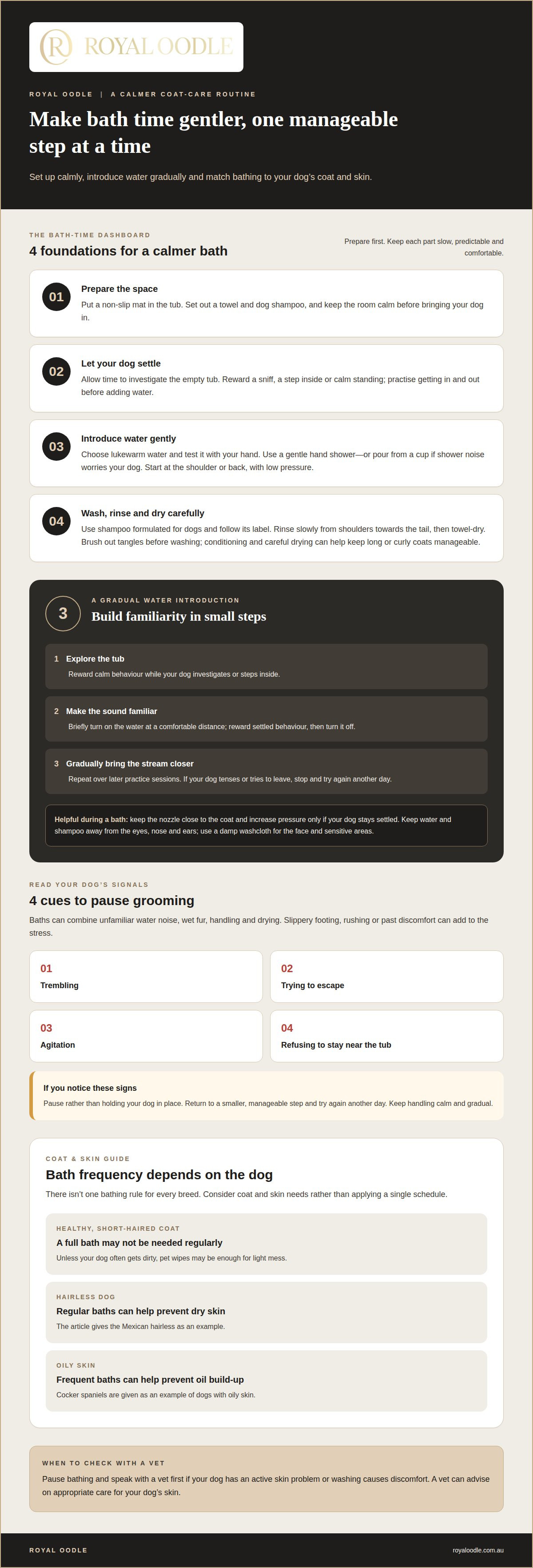
Prepare the bathing area before bringing your dog in. Put a non-slip mat in the tub, set out a towel and shampoo, and keep the room calm. Choose lukewarm water and test it with your hand before it touches your dog. A comfortable temperature is less startling than a sudden blast of cold or hot water.
Use a hand shower on a gentle setting, or pour water from a cup if the shower noise worries your dog. Start at the shoulder or back, not the head. Keep the nozzle close to the coat so water lands where you intend instead of spraying around the room. Begin with low pressure and increase it only if your dog stays settled.
Keep water and shampoo away from your dog’s eyes, nose and ears. Use a damp washcloth to clean the face and other sensitive areas. Rinse the body slowly, moving from the shoulders towards the tail. Part longer fur with your fingers so water reaches the coat underneath. Thorough rinsing helps remove shampoo residue.
Introduce bath water in small steps. Let your dog stand beside the tub and reward calm behaviour, then briefly turn on the water at a distance. Over later practice sessions, gradually bring the gentle stream closer. If your dog tenses or tries to leave, stop and try again another day. A lick mat with peanut butter can provide a distraction if it’s suitable for your dog.
Which dog shampoos are safe and suitable in Australia? Choose a shampoo formulated for dogs and follow the label directions. Avoid the eyes and rinse the coat thoroughly.
How do you bathe a dog step by step without causing stress? Prepare the mat and supplies, let your dog settle, wet the coat gently, apply dog shampoo, then rinse slowly and towel-dry.
When should a dog with skin problems see a vet before bathing? Pause bathing and speak with a vet first if your dog has an active skin problem or washing causes discomfort. A vet can advise on appropriate care for your dog’s skin.
2. Using treats and praise to create positive associations
Pair the bathroom with pleasant experiences before washing begins. Let your dog investigate the empty tub, then reward a sniff or a step inside. Repeat during calm moments and finish before your dog becomes uneasy. A positive response to the space builds a foundation for how to make my dog enjoy bath time without rushing into a wash.
Practise getting in and out of the tub without running water. Use the same cue each time, such as “in”, and reward your dog for stepping inside or standing calmly. Later, briefly turn on the tap while your dog remains at a comfortable distance. Offer a treat for settled behaviour, then switch the water off. These small steps help make the sound and setting more familiar.
During a bath, praise and reward manageable actions, such as standing still while you wet one section of the coat. Keep treats close so you can offer them promptly. A lick mat with a smear of soft food can occupy your dog while you shampoo and rinse. Peanut butter or low-fat Greek yoghurt are suggested spreads; choose something your dog already enjoys.
What treats and rewards help dogs enjoy bath time? Use small, familiar treats, gentle praise and a lick mat with an appealing spread. If you’re considering how to make my dog enjoy bath time, reward calm actions as they happen rather than waiting until the bath ends.
A toy can help, too. Let your dog explore a familiar toy near the bathing area before introducing it during washing. If the toy distracts rather than settles them, put it aside and return to treats or calm praise. After drying, play a favourite game or offer relaxed affection to end the routine on a pleasant note.
Make rewards part of preparation, not just the wash. Pairing the bathroom and tub with food and treats before attempting a bath can help your dog become more comfortable. Practising getting in and out of the tub and standing still while the water runs can also make these actions familiar.
After your dog dries, playing together can create a positive association with bath time and extend the pleasant experience beyond washing.
3. Why Do Dogs Hate Baths?
A bath combines unfamiliar sensations: water noise, wet fur, handling and drying. A slippery floor or a rushed attempt to wash the whole coat can make the experience harder. Some dogs, including Chihuahuas and Akitas, may naturally be less keen on water. An uncomfortable past bath can also affect how a dog responds next time.
Watch your dog’s body language as you handle them. Signs of fear or stress during a bath can include trembling, trying to escape, agitation or refusing to stay near the tub. If you notice these signs, pause grooming rather than holding your dog in place. Return to a smaller handling step, such as briefly touching a paw with a dry cloth.
Your pace matters, too. Rushing to finish, gripping tightly or reacting sharply when your dog moves can add tension. Prepare the towel and washing supplies first, then use slow movements and a calm voice. Practise touching your dog’s shoulders, legs and paws during a relaxed moment, rewarding them for staying comfortable. This makes hands-on care more familiar before water is involved.
Bath frequency depends on the dog’s coat and skin, not one rule for every breed. Short-haired dogs with healthy skin generally don’t need regular baths unless they often get dirty; pet wipes may be enough for light mess. Hairless dogs, such as the Mexican hairless, need regular baths to help prevent their skin drying out. Oily-skinned dogs, including cocker spaniels, need frequent baths to help prevent oil build-up.
Match each bath to your dog’s needs. A healthy short-haired dog who hasn’t become dirty may not need a full wash, while a coat that collects oil or grime may need more attention. If your dog becomes agitated during gradual handling practice, stop and try again the next day. A calmer pace lets them approach grooming without turning each session into a struggle.
4. Conditioning and brushing
For long or curly coats, brushing before the bath is more than a finishing touch. Wet fur can tighten existing tangles, making knots uncomfortable to work through. Before washing, gently brush the coat and loosen tangles without pulling at the skin. If a knot resists, work through it gradually rather than tugging.
During the bath, shampoo and conditioner can help keep a curly or long coat manageable and reduce matting. Follow each product’s directions, working through the coat carefully instead of scrubbing it into knots. Rinse thoroughly so no product is left on the skin or fur. For a fluffy coat, use a small amount of leave-in conditioner if it suits your routine.
Drying is part of detangling, not an afterthought. Towel-dry thoroughly, pressing water from the coat rather than rubbing it into tangles. If your dog tolerates a pet dryer, use low heat while brushing small sections. Keep the airflow moving and watch your dog’s comfort. With a double-coated dog, dry the undercoat thoroughly; dampness beneath the topcoat can be easy to miss.
As the coat dries, work from the ends of each section towards the roots. This gives you more control over small knots and reduces pulling. Pause if your dog shifts away or the brush catches. A calm break is better than forcing your way through a tangle, especially around sensitive areas such as the legs and belly.
Between baths, regular brushing can lift dirt, debris and loose hair, helping the coat stay fresher. For curly coats, a consistent routine is especially useful because loose curls can knot together. Choose gentle coat care for curly dogs to support a more manageable brushing and bathing routine.
For long-coated and curly-haired dogs, regular shampooing and conditioning can help prevent fur from matting and becoming unmanageable. Brushing before bathing can reduce discomfort from tangles and mats that tighten when wet. With a fluffy coat, thorough drying while brushing helps prevent knots as the fur dries. If using a dryer, low heat while brushing is recommended to help reduce skin irritation and infections; keep the process comfortable and stop if your dog shows signs of distress.
Royal Oodle: Detangling Sprays
Royal Oodle’s Detangling Sprays are a natural next step when coat tangles make brushing difficult. Use a detangling spray alongside gentle brushing to help make managing a curly coat more comfortable. Royal Oodle also offers Shampoo & Conditioners for bath-time coat care, as well as Bundles & Kits.
Royal Oodle develops and manufactures its grooming products in Australia for Oodles and other curly-coated dogs. The range features plant-based coat care and gentle ingredients formulated with sensitive skin in mind. For a long or curly coat that knots between washes, a detangling spray can complement regular brushing without making every grooming session a bath.
Explore Royal Oodle’s detangling sprays and visit the website to find coat-care options for your dog.
Make the next bath feel more familiar
Progress doesn’t have to mean a dog who eagerly jumps into the tub. A quieter response, a few seconds of relaxed standing or accepting a brush without pulling away are useful signs to build on. After each session, note what felt comfortable, what caused tension and where your dog settled. Use those observations to shape the next bath instead of repeating a step that felt like too much.
Learning how to make my dog enjoy bath time is really about creating a routine that suits your dog’s comfort and coat. Keep the next session manageable and let small improvements guide your pace. For curly-coated dogs, thoughtful coat care can support a gentler grooming routine between washes, too.
For help choosing coat-care options for your dog, contact Royal Oodle. With patience and a routine shaped around your dog, bath time can become a calmer part of caring for them.
Frequently Asked Questions
Why Do Dogs Hate Baths?
Dogs may dislike baths because the experience combines unfamiliar sounds, wet fur, restraint and close handling. A dog that tolerates a quiet rinse may still struggle with a noisy tap or having its paws lifted. Notice which part triggers discomfort, then change one element at a time. For example, practise standing in the bathroom without bathing before introducing the tub.
