

If your dog snaps, freezes or pants heavily during grooming, stop rather than forcing them to continue. These signs may mean home grooming isn’t suitable, so stress-free dog grooming at home starts with respecting your dog’s limits.
It’s understandable to feel frustrated when a simple brush or nail trim becomes tense. But pushing through a full routine can make grooming more stressful. Pausing is a practical part of care, not a failure.
Set up a calm, familiar grooming space, introduce tools gently and adapt your approach to your dog’s age, size and mobility. Keep sessions brief and spread brushing, bathing and nail care across different days so each step feels more manageable for both of you.
Key Takeaways
- Set up a familiar grooming spot with a non-slip mat, and let your dog get comfortable there before you begin.
- Adjust handling and positioning to your dog’s age, size and mobility, especially when standing or reaching is difficult.
- Keep grooming sessions brief, and spread tasks such as brushing and nail care across different days.
- Introduce tools gradually and watch your dog’s body language so you can pause when they seem unsettled.
1. Preparing a calm, consistent grooming space
Choose a quiet, familiar spot and use it consistently, such as a laundry floor away from household traffic. A non-slip mat can help prevent slips and reduce strain. Gather a brush, dog nail clippers, towels and dog shampoo before inviting your dog over, so they aren’t left waiting while you search.
For stress-free dog grooming at home, first let your dog explore the space and tools without pressure. Practise gently handling their ears, mouth, legs and paws, pairing each touch with praise or a treat. A short walk beforehand can help settle their muscles without tiring them. Wait at least an hour after a meal before grooming, which may help reduce restlessness.
Keep early sessions simple: brush a small area, then pause and watch your dog’s response. Brushing before bathing can help prevent matting and make washing easier. Don’t force a task if your dog becomes unsettled. For trimming fur, use clippers rather than scissors to reduce the chance of accidental nicks.
For nail care, start by calmly handling each paw and introducing the clippers gradually. Use treats or gentle petting to build comfort, and stop if your dog becomes distressed. You can split nail trimming across different days. If your dog repeatedly snaps, freezes or pants heavily, home grooming may not be appropriate. Seek veterinary advice if you’re concerned about pain or a health issue.
You can prepare for a groomer visit at home by practising brushing, bathing and handling your dog’s feet. A quiet meet-and-greet can help your dog get familiar with the groomer and surroundings before a full appointment. Share the handling cues that help your dog settle.
2. Adapting grooming to age, size and mobility
Before choosing a grooming position, notice how your dog stands, sits and turns. A young, energetic dog may manage standing for brushing, while an older dog may need more frequent pauses. For a small dog, work close to floor level rather than lifting them onto a high surface. Keep the setup stable and let your dog change position when needed.
Age alone doesn’t determine what feels comfortable. Watch for changes in balance, stiffness or willingness to move between grooming steps. If your dog shifts their weight away from one leg, don’t insist on that position. Brush accessible areas first, then pause before reaching underneath or around the hindquarters. Match your pace to your dog, not to the length of your grooming checklist.
Adapt the grooming approach and position for dogs with mobility or health issues. A groomer can change the setup rather than asking an older dog to hold an uncomfortable pose. For example, if a dog can’t extend a back leg, an alternative position may allow the sanitary area to be tidied. Share specific movement difficulties before grooming begins.
At home, follow the same principle: keep each position brief and comfortable. If standing becomes tiring, let your dog lie on a padded surface for brushing; work on one side, then allow them to change posture naturally. For paw care, support the leg gently without pulling it into an extended position. If your dog resists a movement, stop and choose a more comfortable approach. Grooming should follow your dog’s range of motion, not force it.
For an older dog that can’t extend a back leg, an alternative position can let the groomer tidy the sanitary area without requiring that movement. Share this limitation before grooming begins so the setup can suit your dog’s range of motion.
3. Breaking grooming tasks across different days
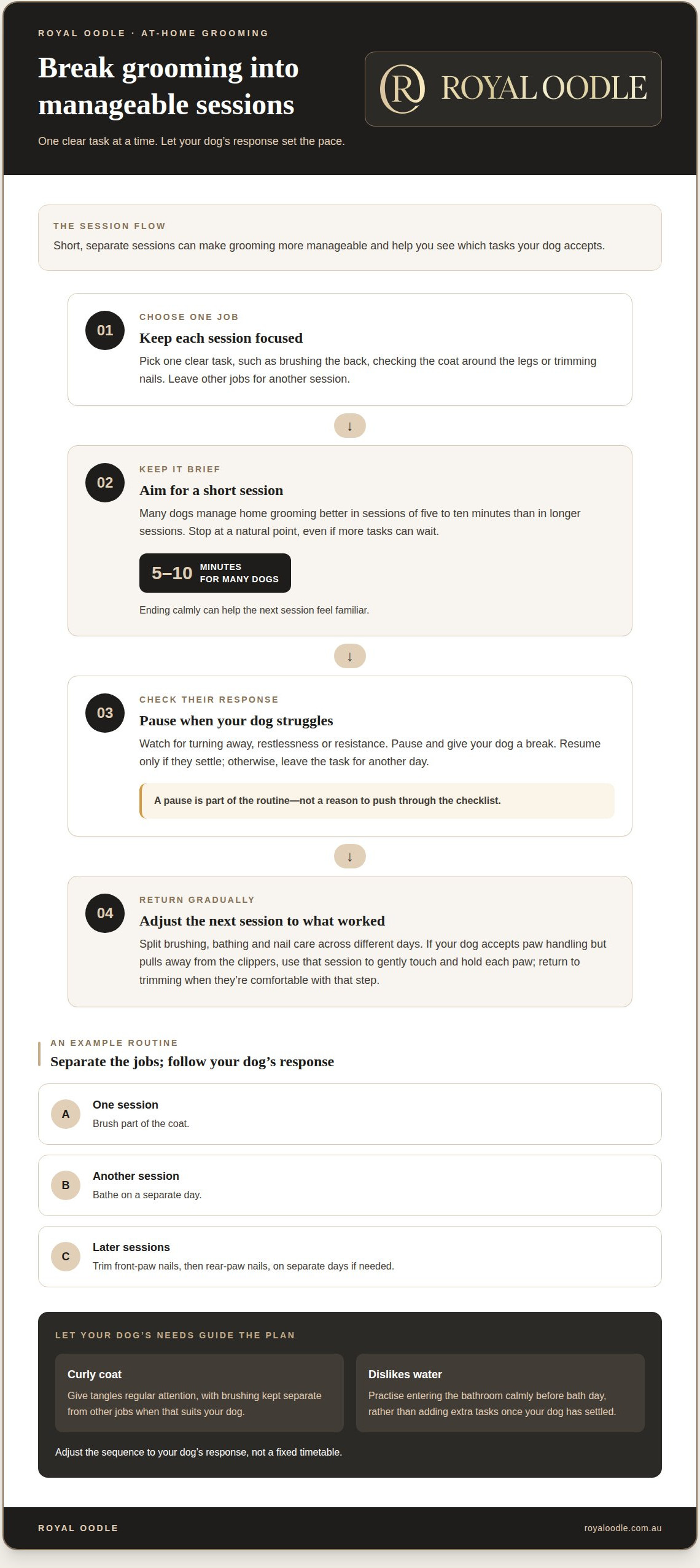
One long grooming session can turn several small jobs into a tiring experience. Many dogs manage home grooming better in sessions of five to ten minutes than in longer sessions. Choose one clear task each time, such as brushing the back, checking the coat around the legs or trimming nails. Stop at a natural point, even if other tasks can wait. Ending calmly helps make the next session feel familiar.
Build a simple routine around your dog’s coat and tolerance. For example, brush part of the coat one day, bathe on another, and leave nail care for a separate session. A curly-coated dog may need regular attention to tangles, while a dog that dislikes water can practise entering the bathroom calmly before bath day. Keep each session focused instead of adding extra jobs once your dog has settled.
You don’t need to trim all four paws at once. Split nail care across different days, giving your dog time to relax between sessions. If your dog accepts handling but pulls away from the clippers, use that session to touch and gently hold each paw instead. Return to trimming later, when your dog is comfortable with the next step.
Watch for changes as you work. If your dog turns away, becomes restless or starts resisting, pause and give them a break. Resume only if they settle; otherwise, leave the task for another day. A routine might include brushing one day, front-paw nails the next, and rear-paw nails later. Adjust the sequence to your dog’s response, not a fixed timetable. Separate, short sessions make it easier to see which tasks your dog accepts and which need a gentler introduction.
4. Creating a calm grooming environment
Make the grooming area predictable: reduce background noise, clear nearby clutter and use the same gentle routine. Start by placing one tool on the floor, then let your dog sniff it, look at it or walk away. Don’t reach for the brush while they investigate. This low-pressure introduction gives your dog choice and can make the tool feel less startling.
Your voice and posture shape the atmosphere. Speak in a low, even tone and use a short phrase such as “brush time” each session. For an anxious dog, sit on the floor rather than standing over them. That lower position can feel less imposing and makes it easier to notice how your dog responds. Research attributed to the University of California Davis School of Veterinary Medicine links calm human behaviour with reduced canine stress during handling.
Introduce noisy tools gradually. Let your dog see a switched-off clipper first, then turn it on at a distance and switch it off after a few seconds. In later sessions, increase the sound gradually while offering treats or gentle petting. Keep the tool far enough away that your dog can choose to approach or leave. Don’t start trimming during this introduction.
Use reward-based handling and let your dog retain choice. Fear Free grooming uses rewards and natural-choice techniques to build trust. For example, pause after brushing one small area and allow your dog to move away before continuing. Never tie your dog down or hold their fur to keep them still; restraint can increase panic. If your dog repeatedly snaps, freezes or pants heavily, stop the home session. A calm setup supports grooming, but it can’t make every task suitable for every dog.
Royal Oodle: Detangling Sprays
Royal Oodle’s Detangling Sprays can be part of a gentle coat-care routine. Knots can make brushing curly coats more challenging, so a detangling product may help make coat maintenance more manageable between grooming sessions. Choose a calm moment, work gradually through the coat and keep brushing within your dog’s comfort level.
Royal Oodle also offers Shampoo & Conditioners and Bundles & Kits for at-home coat care. Its grooming products are developed and manufactured in Australia, with gentle, premium ingredients for sensitive skin. Keep the routine centred on your dog’s needs: products support coat care, but they don’t replace a pause when your dog becomes unsettled.
Explore Royal Oodle’s coat-care range at royaloodle.com.au.
Make the next grooming session your dog’s own
Let your dog’s response guide what comes next. A relaxed brush-through may be the right finish today; another day, you might practise handling a paw without using clippers. This flexible approach lets you build a routine around your dog instead of expecting every session to look the same.
For stress-free dog grooming at home, treat each calm moment as useful progress. Notice which sounds, touches and positions your dog accepts, then use those cues to shape future care. If coat maintenance feels hardest, explore Royal Oodle’s grooming products and choose what suits your dog’s needs.
Contact Royal Oodle for grooming support and take the next step towards a gentler coat-care routine. Keep the pace kind, stay attentive to your dog, and let trust grow with every session.
Frequently Asked Questions
What happens if my dog becomes aggressive during a groom?
Stop grooming immediately and give your dog space; don’t scold, corner or restrain them. Put the tools aside before moving away, and let your dog settle somewhere they feel secure. Repeated snapping, freezing or heavy panting can indicate that home grooming isn’t appropriate. Arrange support from a professional groomer, and speak with your vet if the behaviour may be linked to pain or a health concern.
How can I help a fearful or reactive dog tolerate grooming at home?
Start with a grooming cue and a predictable, low-pressure routine, changing only one part at a time. For example, practise entering the bathroom without bathing, or settling on a towel without brushing. Note which body areas or sounds cause discomfort so you can adapt the next attempt. Finish before your dog becomes distressed, and build on the steps they accept comfortably.
Common at-home dog grooming mistakes and health risks
Don’t force grooming when your dog becomes unsettled, tie them down or hold their fur, or use scissors to trim fur, as these can cause accidental nicks. A non-slip mat can help prevent slips. Repeated snapping, freezing or heavy panting may mean home grooming isn’t appropriate. Consult a veterinarian if you’re concerned about pain or a health issue.
Step-by-step guide to bathing and drying a dog at home
Brush your dog before bathing to help prevent matting and make washing easier. Mix dog shampoo with warm water and apply it before wetting your dog. Some dogs may go home a little damp if they dislike hair-drying.
How to brush different dog coat types and prevent mats
Curly-coated dogs may need regular attention to tangles, and a detangling product may make brushing more manageable. Brush before bathing to help prevent mats, work gradually through the coat and pause if your dog becomes unsettled.
