

Effective oodle hair matting prevention starts with line brushing at least three times a week. Use a detangling spray and check each section with a comb. If mats are tight against the skin or spread across the coat, don’t try to cut them out at home. They need professional handling.
It’s frustrating to brush your dog and still find knots tucked beneath the curls, especially around the ears, collar and harness. Oodle coats can hold loose hairs close to the skin, where moisture and friction help tangles tighten. A calm, consistent routine makes coat care more manageable without turning every brush-out into a struggle.
Learn why Oodle coats mat, where hidden knots tend to form and how to line-brush from the skin outwards. You’ll also find practical guidance for teasing apart a small tangle, recognising when a mat needs professional attention and adjusting your routine to help prevent matting from returning.
Key Takeaways
- Part the coat into sections and brush down to the skin, then use a metal comb to find hidden knots.
- Brush with detangling spray at least three times a week, adjusting your routine to your dog’s coat and lifestyle.
- Check behind the ears, around the collar and harness, and through the armpits and groin for early tangles.
- Don’t cut tight mats out with scissors; mats close to the skin or spread across the coat need professional handling.
- Wet or muddy outings can leave the coat more prone to tangling, so drying it thoroughly and brushing it while slightly damp may help.
1. What Is Line Brushing?
Line brushing means separating the coat into narrow sections and brushing each from the skin outwards. Unlike brushing only the visible top layer, this method reaches loose hairs and small knots underneath. It’s especially useful for Oodle coats, where trapped hair can twist into tangles before you notice them.
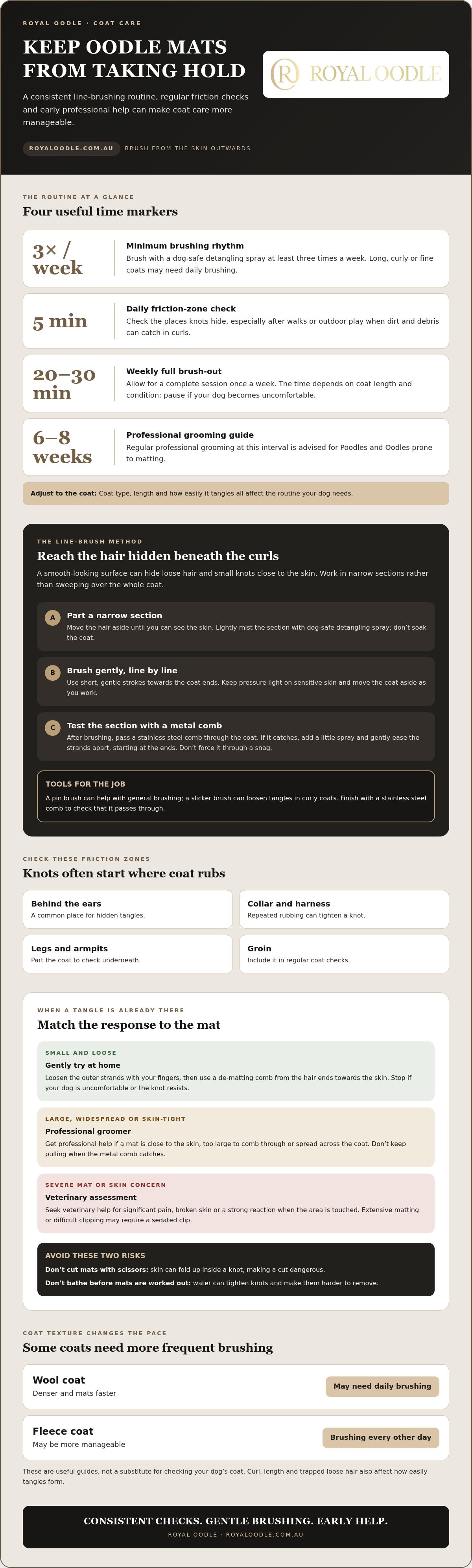
Set out a pin brush or slicker brush, a stainless steel comb and a dog-safe detangling spray. Oodle owners are advised to brush with detangling spray at least three times a week. Long, curly or fine coats may need daily brushing. The right routine depends on coat type, length and how easily it tangles.
Work through the coat in small, orderly sections. Lightly mist one section with detangling spray, then part the hair until you can see the skin. Brush downwards in short, gentle strokes, moving the coat aside as you go. Work along another narrow line rather than sweeping over the whole surface. This gives you more control and helps you reach underneath without pulling across a knot.
- Start where knots hide: Check behind the ears, beneath the collar and around the legs before brushing larger areas.
- Use the slicker brush gently: Brush each parted line towards the coat ends, keeping pressure light on sensitive skin.
- Check with a comb: Pass a stainless steel comb through the section after brushing. If it catches, work on that spot before moving on.
A pin brush can help with general brushing, while a slicker brush loosens tangles in curly coats. Use the metal comb as your final test: the coat isn’t fully brushed if the comb can’t pass through it. Don’t force it through a snag. Add a little spray and gently ease the strands apart, starting at the ends.
Make coat checks a brief daily habit, especially after walks or outdoor play, when dirt and debris can catch in curls. Spend five minutes daily checking friction zones, then set aside a complete brush-out once a week. A weekly session can take 20–30 minutes, depending on coat length and condition. Keep sessions calm and pause if your dog becomes uncomfortable; never brush forcefully through a tight mat.
Choose a dog-specific detangling spray made without alcohol or harsh chemicals. Lightly mist each section rather than soaking the coat. This helps reduce static and breakage as you brush. Regular line brushing also removes loose hair before it forms a compact tangle.
2. What if my oodle already has matting?
For a small, loose tangle, start gently at home. Use your fingers to loosen the outer strands, then work from the hair ends towards the skin with a de-matting comb. Stop if your dog shows discomfort or the knot resists. Pulling hard can tighten the mat and tug painfully on delicate skin.
Don’t bathe an Oodle until each matted area has been teased apart, brushed and combed through. Water can tighten knots, making them harder to remove after washing. Don’t cut a mat out with scissors, either. A dog’s skin can fold up inside the knot, so even a careful-looking snip can cause a serious cut.
Australian grooming advice for Oodles centres on regular brushing, checking friction areas and getting help before knots become severe. A groomer should handle mats close to the skin, mats too large to comb through, or widespread matting. If a metal comb cannot pass through a tight mat, don’t keep pulling at it. Professional grooming can remove the mat while reducing painful tugging.
A professional trim can also make a heavily tangled coat easier to manage afterwards. If you like a teddy bear cut, discuss the style with the groomer once the coat’s condition has been assessed. A desired shape may not be achievable through dense matting without first removing affected hair. Regular professional grooming every 6–8 weeks is advised for Poodles and Oodles prone to matting, helping keep the coat manageable between appointments.
Severe matting needs careful assessment. Tight mats can pull on skin and may conceal irritation or sores. If matting is extensive or clipping would be difficult, a veterinarian may need to perform a sedated clip. Veterinary help is especially important if your dog appears painful, has broken skin or reacts strongly when a matted area is touched. Don’t force a home treatment in these cases.
- Try at home: Loosen a small, surface-level tangle with fingers, then comb from the ends towards the skin.
- Book a groomer: Seek professional grooming for large, widespread or skin-tight mats, especially when the comb catches.
- Seek veterinary help: Get an assessment for severe matting, visible skin damage or significant pain.
Once the mats are safely dealt with, a consistent care routine helps limit repeat tangles. For practical support with everyday coat care, explore this gentle coat-care routine.
3. Why doodle coats mat and the effects of matting
Oodle coats can hold loose, shed hair instead of letting it fall away from the body. In a Poodle-cross coat, that trapped hair can twist around growing strands, creating tangles that tighten with movement. A coat may look smooth on top while loose hair gathers underneath, close to the skin. That’s why shedding doesn’t always clear an Oodle’s coat.
Single-coated dogs retain dead hair in their coats, where friction, moisture and incomplete brushing can turn it into mats. For example, a knot beneath a collar rubs against the coat each time your dog moves. A quick brush over the surface may leave that knot untouched, allowing it to become denser and harder to separate.
Coat texture also affects the care routine. Wool coats are denser and mat faster than fleece coats, so they may need daily brushing. Fleece coats may be manageable with brushing every other day. These are useful guides, not a substitute for checking your own dog’s coat. Length, curl and the amount of trapped loose hair all affect how quickly tangles develop.
Moisture can worsen existing tangles. After a swim, rainy walk or bath, curly strands can wrap around each other as they dry. Wet grass and water can cause small knots to shrink and lock together; air-drying may also let the coat tighten. Brush out tangles before bathing, then dry the coat thoroughly. If it’s already matted, don’t wash it until the affected areas have been separated and combed through.
The effects aren’t just cosmetic. Tight mats pull on skin and can cause bruising, blisters and pain. They may also trap moisture, urine, faeces, grass seeds and other debris against the body. This damp, soiled environment can contribute to inflammation, open sores, odour and skin infection. A dog licking or chewing an irritated patch can aggravate it further.
Dense matting can also hide skin changes and parasites, making it harder to see what’s happening beneath the coat. Notice whether your dog flinches during brushing, licks one patch repeatedly or moves differently because a mat restricts movement. These signs matter as much as the coat’s appearance. Regularly removing loose hair and checking the skin as you brush can help you catch a problem before a small tangle becomes a painful mat.
For a practical routine, match brushing frequency to coat texture, then focus on areas prone to friction or moisture. Wool may need daily attention, while fleece can often be brushed every other day. After swimming or a rainy outing, check the coat once it’s dry enough to handle. These small adjustments address the causes of matting, rather than simply smoothing the visible surface.
4. High-friction areas where mats form
Oodle mats often begin where the coat rubs against skin, clothing or equipment. Moisture and movement make these friction zones especially prone to knots. Check four areas closely: the harness line, collar line, behind the ears, and the armpits and groin. Small tangles can hide beneath the topcoat in these spots, even when the rest of your dog’s coat feels smooth.
Start with the collar line. A collar shifts as your dog moves, rubbing the hair around the neck and gathering loose strands. Remove the collar when your dog is safely at home, then gently feel beneath its usual position. Check the fur under the chin and along the back of the neck, where curls can bunch against the strap.
A harness can create a wider friction line across the chest, shoulders and sides. After walks, take it off and part the coat along each strap’s path. Look for flattened fur, debris or a developing knot. Removing the harness when it isn’t in use helps reduce rubbing in those covered areas.
Behind the ears, fine curls can tangle as the ear moves against the head or rubs on bedding. Lift each ear gently and inspect the hair at its base. The armpits and groin also need careful attention: skin folds, leg movement and moisture can encourage strands to twist together. Don’t tug at a knot in these delicate areas.
These checks are useful for Cavoodles and other curly-coated breeds, but each dog’s equipment and coat shape affect where rubbing occurs. A harness that fits across one dog’s shoulders may sit differently on another. Notice where the straps rest after a walk, and check those exact lines rather than relying on a general brush-through.
Make a daily friction-zone check part of your routine. Use your fingertips to part the coat and feel down towards the skin. If you find a loose tangle, work gently from the ends without pulling the hair. A metal comb can reveal knots hidden beneath the surface, but stop if it catches or your dog shows discomfort.
- After walks: Remove the harness, then inspect beneath its straps and along the collar line.
- During daily checks: Feel behind both ears, through the armpits and around the groin.
- At home: Remove the collar and harness when they’re not needed, reducing continued friction against the coat.
Regularly checking these four zones helps you spot friction-related tangles early. A quick check after outdoor play can also catch grass or debris before it gets caught in the coat.
5. Preventing matting from returning
After mats are removed, prevention depends on a routine you can repeat. For a curly coat, match brushing frequency to its texture and how quickly knots reappear. Oodles prone to matting generally need professional grooming every 6–8 weeks to keep their coats manageable. Treat appointments as part of ongoing care, not a substitute for brushing at home.
Build small checks into the day. Spend five minutes feeling through friction zones, especially the armpits, behind the ears and beneath collar or harness straps. Remove equipment when it isn’t in use, then inspect the coat where it rested. After a walk, check for grass, dirt or debris caught in curls.
Set aside one complete brush-out each week, allowing 20–30 minutes. Work through the coat in sections and finish by checking it with a metal comb. If the comb catches, focus on that spot rather than brushing harder. This technique helps owners find developing knots early, before loose hair and friction compact them into mats.
Wet coats need a deliberate routine, too. After swimming, rain or muddy play, dry your dog thoroughly and brush while the coat is still slightly damp. Don’t leave curls to air-dry in clumps. After a bath, towel-dry first, then use a cool, low blow-dryer setting while brushing. Check beneath the chest, belly and legs, where damp hair can go unnoticed.
Choose dog-appropriate shampoo and conditioner for bath days. Suitable products can help hydrate the coat and reduce friction, but they don’t replace thorough drying or brushing. Before bathing, make sure tangles have been brushed and combed through. Washing a matted coat can tighten knots, turning manageable grooming into a difficult detangling session.
A reliable approach to oodle hair matting prevention is consistent, not complicated: daily checks, one thorough weekly brush-out, careful drying after wet outings and professional grooming every 6–8 weeks for coats prone to matting. Adjust your attention when the coat is longer, curlier or more exposed to moisture and rubbing. Keep the comb test in your routine, so hidden knots don’t quietly return.
- Daily: Check friction zones for knots and remove unused collars or harnesses.
- Weekly: Complete a 20–30-minute brush-out and confirm the comb moves through the coat.
- After wet play: Dry thoroughly and brush while the coat is slightly damp.
For bath days, choose dog shampoo and conditioner as part of a coat-care routine that includes brushing and careful drying.
Royal Oodle: Detangling Sprays
Royal Oodle offers Detangling Sprays for Oodles and other curly-coated dogs, making them a practical addition to regular brushing. Lightly mist each section before brushing to help strands slide apart and reduce friction. The sprays are part of a coat-care range made with gentle, premium ingredients for dogs with sensitive skin.
Use a dog-safe detangling spray when the coat feels dry, catches easily or needs a careful brush-out. It supports detangling, but doesn’t replace line brushing, comb checks or professional help for tight mats. Pair it with consistent grooming to help keep the coat soft and manageable between baths.
Visit royaloodle.com.au to explore Royal Oodle’s coat-care options.
Make coat care a calm, lasting ritual
The best oodle hair matting prevention routine is one you can maintain, even on busy weeks. Make coat care a gentle moment of connection: choose a familiar spot, keep your tools within reach and let your dog settle before you begin. If your puppy is still learning, introduce brushing in short, positive sessions and build the habit gradually.
As your dog’s coat changes, revisit the products and routine you use. Royal Oodle offers Detangling Sprays, Shampoo & Conditioners, and Bundles & Kits for everyday coat care. Choose an approach that suits your grooming rhythm and your dog’s coat, then stick with it.
Explore Royal Oodle’s coat-care range and take the next step towards a more comfortable brushing routine. With patient, regular care, grooming can feel less like a struggle and more like a reassuring part of life together.
Frequently Asked Questions
Why do dogs get matted in the first place?
Dogs get matted when loose hairs and coat strands twist together instead of separating. Curly coats can hold shed hair close to the body, while movement and friction from collars or harnesses help tangles tighten. Moisture from a rainy walk or swim can also make strands cling together as they dry. Check for early knots after activities that leave the coat damp, dirty or rubbing against equipment.
🧬 Why Do Oodles Mat So Easily?
Oodles often have curly or wavy coats that retain shed hair, giving loose strands more opportunity to knot around the coat. Their coat texture can also hide tangles, so a quick pass over the top may miss them. Part the coat in different directions, especially where curls are dense, and feel for knots close to the skin.
Brushing or Cutting Out Mats: Do or Don’t?
Brush out small, loose tangles gently, but don’t cut mats out with scissors. Dog skin can pull up into a tight mat, making it easy to cut accidentally. If a mat is firmly attached, large or painful to touch, stop home grooming and arrange professional help. Avoid pulling hard with a brush, as this can hurt your dog and tighten the knot.
What Is Line Brushing?
Line brushing means parting the coat into narrow rows and brushing each row from the skin towards the hair ends. It helps you reach the dense layer underneath, where loose hair and small knots can hide. For example, part the hair along your dog’s side, brush the exposed strip, then make a new part beside it. Finish by checking the section with a comb.
What if my oodle already has matting?
For a small, loose knot, use your fingers to separate the outer hairs, then gently work from the ends. Don’t bathe your dog until the matted area has been brushed and combed through, because water can tighten the knot. If the mat sits against the skin, covers a large area or causes discomfort, leave it to a professional groomer. Severe cases may need veterinary care.
Why Does Cavoodle Hair Mat?
Cavoodle coats can mat because their curls or waves hold loose hair, which twists together with movement and friction. A Cavoodle is a cross between a Cavalier King Charles Spaniel and a Poodle, so coat texture can vary between dogs. Check your dog after outdoor play: grass, dirt and damp curls can combine into small knots, especially beneath equipment or where the coat rubs against itself.
Your Dog’s Coat Is Matted: What Now?
First, check whether the mat is loose and easy to separate or tight against the skin. Work only on a small, loose tangle at home, and stop if your dog shows pain or the comb catches firmly. Don’t use scissors or wash over unresolved mats. For extensive matting, skin irritation or a dog that can’t be handled comfortably, seek professional grooming or veterinary help.
How often should an Oodle be brushed to prevent matting?
Brush an Oodle at least three times a week, increasing the frequency if the coat tangles quickly. Long, curly or fine coats may need daily attention, while some fleece coats can be brushed every other day. Check friction areas daily, even between full brush-outs. After rain, swimming or outdoor play, inspect for damp knots and debris instead of waiting for the next scheduled session.
