

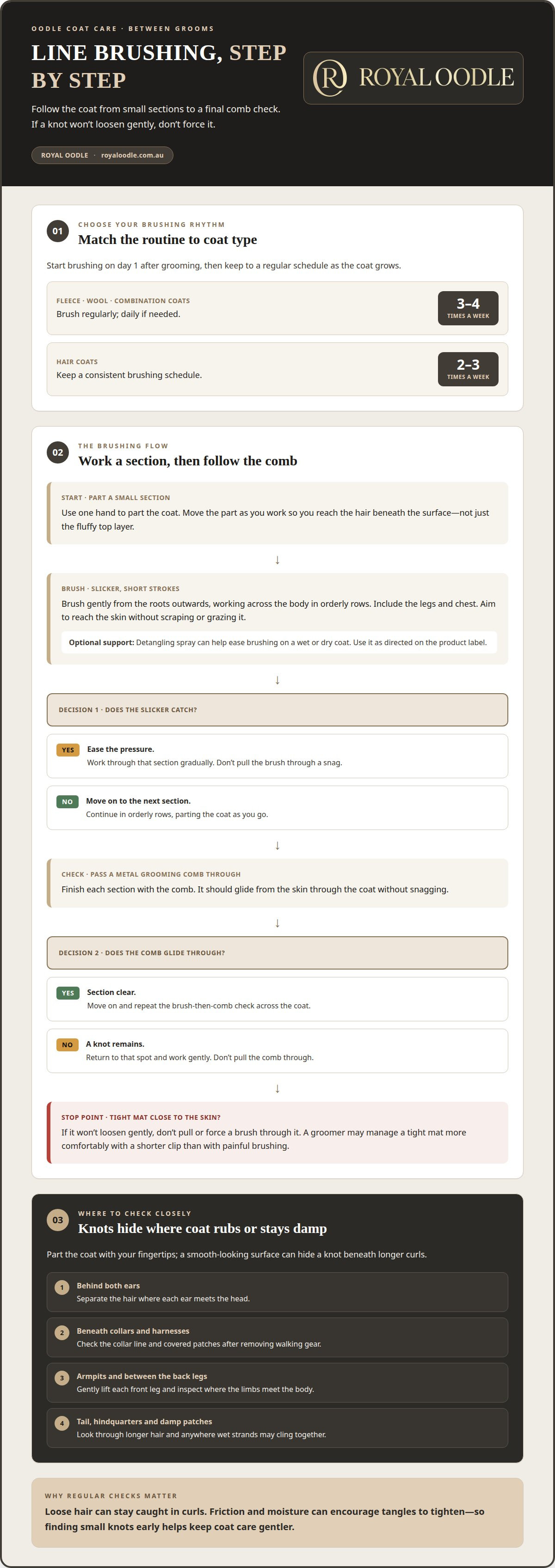
For maintaining an Oodle coat between grooms, line brush in small, parted sections, reaching down to the skin without scraping it, then pass a metal comb through to catch missed knots. Brush fleece, wool and combination coats 3-4 times a week, and hair coats 2-3 times a week. A detangling spray can help ease brushing on a wet or dry coat.
Low-shedding doesn’t mean low-maintenance. Loose hair can stay caught in curls, where friction and moisture encourage tangles to tighten. Early knots are easy to miss, especially in high-friction spots, but a calm, regular routine can make coat care gentler for both of you.
Learn how line brushing works, why shedding and matting go hand in hand, and where knots commonly hide. We’ll also explain how a detangling spray can help your brush move more smoothly through the coat, so you can care for your Oodle between grooming appointments with confidence.
Key Takeaways
- Work through the coat in sections, then use a metal comb to reveal any knots your brush may have missed.
- Pay extra attention behind the ears, beneath collars and harnesses, in the armpits and between the back legs.
- Avoid forcing tight mats close to the skin; brushing them out can be uncomfortable, and a shorter clip may be kinder.
- Use detangling spray to help ease brushing, and choose a routine that suits your Oodle’s coat texture.
1. What Is Line Brushing?
Line brushing means parting the coat into small sections and brushing each from root to tip. Move the part as you work so the brush reaches the hair beneath the surface, rather than smoothing only the top. This helps reveal tangles close to the skin, where a fluffy outer layer can hide them. A steady line-brushing routine supports maintaining oodle coat between grooms.
Set the routine around your Oodle’s coat type. Brush fleece, wool and combination coats 3-4 times a week, or daily if needed. Brush hair coats 2-3 times a week. Begin brushing on day 1 after grooming, then keep to a regular schedule as the coat grows. Consistent sessions make it easier to spot small tangles before they tighten, supporting the routine for maintaining oodle coat between grooms.
Use a slicker brush, followed by a metal grooming comb. Part a small section with one hand, then brush gently from the roots outwards using short strokes. Work across the body in orderly rows, including the legs and chest. Aim to reach the skin without scraping or grazing it. If the slicker catches, ease the pressure and work through the section gradually.
Finish each section with the metal comb. It should glide from the skin through the coat without snagging. If it stops, there’s still a knot; return to that spot instead of pulling the comb through. This final pass checks for areas the brush may have missed and helps you keep the coat evenly brushed.
How often should you bathe an Oodle between grooms? Let the coat’s condition, dirt and skin needs guide the timing rather than following a fixed schedule. Choose a gentle dog shampoo suited to sensitive skin and rinse thoroughly. A dog-specific shampoo and conditioner can support a careful washing routine.
2. Oodle coat shedding and matting
Oodles may shed lightly, but their curly coats can hold loose undercoat rather than letting it fall away. The retained hair mixes with the surrounding curls, creating knots that can tighten into mats. So low-shedding doesn’t mean low-maintenance. Regularly removing loose hair and brushing out knots helps prevent mats from forming, according to the RSPCA.
Moisture and friction can increase the risk of tangles. A collar, harness or jumper may repeatedly rub the same patch of coat, while everyday movement creates knots around the legs and underarms. Check these areas after removing clothing or walking gear. If the coat feels clumped, gently separate the strands instead of dragging a brush over the surface. Small knots are easier to address before loose hair becomes tightly interwoven.
After bathing, blot the coat with a towel instead of rubbing vigorously, which can twist damp strands together. Work through small sections as you dry, keeping the coat separated and brushing gently. Make sure it dries fully, especially beneath the legs, around the collar and anywhere damp hair can lie against the body.
Poor brushing can leave mats that tug at the skin and make later grooming uncomfortable. Washing a tangled coat without carefully separating and drying it can leave knots tighter as the hair dries. If a mat sits close to the skin and won’t loosen gently, don’t pull or force a brush through it. A groomer may manage tight mats more comfortably with a shorter clip than with painful brushing.
For a practical wash routine between grooms, explore gentle Oodle coat care alongside regular brushing.
3. Areas prone to knots
Start your coat check in places where movement, pressure or moisture disrupts the curls. Common trouble spots for an Oodle include behind the ears, beneath the collar, in the armpits and between the back legs. The tail and hindquarters can tangle too, especially where longer hair rubs against the body. Check damp coat as well, since wet strands can twist together.
Before brushing, use your fingertips to part the coat in each area. Check behind both ears, then follow the collar line around the neck. Gently lift each front leg to inspect the armpit, and look between the back legs where the coat meets. Don’t rely on a smooth surface: a knot can hide beneath longer curls until you part the coat.
- Behind the ears: Separate the hair where the ear meets the head, checking both sides.
- Collar and harness zones: Inspect beneath straps and around the neck after removing walking gear.
- Armpits and back legs: Part the coat where limbs meet the body, then check for catches.
- Tail, hindquarters and damp patches: Look through longer hair and anywhere the coat has become wet.
Friction from collars, harnesses and jumpers can encourage knots, while moisture adds to the risk of matting. After a walk in a jumper or harness, check the covered areas. If your Oodle gets wet, part the damp coat and look for strands beginning to cling together. These quick checks focus attention on patches that are easy to overlook.
Finish by gently passing a metal comb through each high-friction area. Behind the ears, move slowly and support the skin so you don’t tug. Around the armpits and back legs, use short strokes and pause if the comb catches. A snag points to a knot that needs careful attention, not a harder pull. Finding it early helps keep coat care comfortable.
4. Detangling spray
A detangling spray can help a brush move through an Oodle’s curls more easily. It supports your routine, but doesn’t replace parting the coat into sections and working through knots. Use it on a wet or dry coat as directed on the product label.
On a dry coat, part a small section before applying spray. Work gradually across the area rather than misting only the top layer. Around the ears, for example, separate the curls and apply the spray where the strands meet. Then brush gently with a slicker brush, followed by a comb to check that the section is clear.
After bathing, detangling spray can also support brushing while the coat is wet. First, blot away excess water with a towel, then part the coat into manageable sections. Apply spray according to its label and brush gently through each section. Avoid rubbing damp curls together, as this can encourage strands to twist into tangles while drying.
Pay attention to how the coat responds. If a brush or comb catches on a small knot, pause and work carefully at that spot instead of pulling. Spray may help the brush move through the coat, but it won’t make it safe to force apart a tight mat close to the skin. Stop if your dog shows discomfort. Persistent, compact mats need a different approach from loose tangles.
Choose a detangling spray made for dogs, then use it as one step in a consistent coat-care routine. Pairing the spray with section-by-section brushing gives you a clearer way to address tangles without rushing through curls. Explore Oodle detangling sprays to support easier brushing between grooming appointments.
Royal Oodle
Royal Oodle offers at-home coat-care products designed for curly-coated dogs and sensitive skin. The range includes detangling sprays, shampoo and conditioners, plus bundles and kits to help build a practical routine between grooming appointments. Choose products that suit the care steps your dog needs, from washing the coat to easing brush-throughs.
Use them alongside regular line brushing, careful drying and checks for hidden knots. Detangling spray can support brushing on a wet or dry coat, while shampoo and conditioner fit into bath time. If you’re refining your Oodle’s coat-care routine, contact Royal Oodle to learn more about its grooming products.
Make coat care a gentler ritual
Maintaining an Oodle coat between grooms can become a small moment of connection, rather than another task on the list. Notice how your dog responds to brushing and bathing, then adjust your approach to keep each session calm and comfortable. Short, unhurried care can help you spot changes in the coat and address a minor tangle before it becomes difficult to manage.
Royal Oodle offers shampoo and conditioners, detangling sprays, and bundles and kits for at-home coat care. Choose products that fit your Oodle’s needs, whether you’re preparing for bath time or working through a brushing session.
If you’d like guidance on your Oodle’s coat-care routine, contact Royal Oodle for coat care advice. Take the next brushing session one section at a time, and let a gentle, consistent rhythm guide you.
Frequently Asked Questions
What Is Line Brushing?
Line brushing reaches through an Oodle’s full coat instead of smoothing only the visible surface. Create a part with your fingers, brush the exposed section from near the roots outwards, then move the part and repeat. For example, work in narrow rows along the side of the body. A comb pass helps reveal missed tangles.
Why do dogs get matted in the first place?
Mats form when loose hairs become caught and twist together instead of falling away. An Oodle’s curls can hold shed hair within the coat, while rubbing from a collar or harness can tighten tangles in the same spot. Damp curls can cling together too. Check the coat after walks, when removing clothing, and after it gets wet to catch early clumping.
How often should an oodle be brushed between professional grooms?
Brush fleece, wool and combination coats three to four times a week, or daily if needed; hair coats need brushing two to three times a week. Start on the first day after a groom, then keep a consistent rhythm as the coat grows. If your Oodle’s coat tangles quickly, pay particular attention to areas beneath walking gear.
What brush and comb are best for maintaining an oodle coat?
Use a slicker brush to work through the coat, then a metal comb to check your work. Choose tools that let you brush close to the skin without scraping it. For example, a comb that catches behind an ear may reveal a small knot hidden beneath the curls. Don’t force it through; gently ease the section apart.
How do you line brush an oodle to prevent mats?
Start with a small section and part the coat so you can see the roots. Brush gently from the skin outwards, then shift the part and continue in rows. Work methodically across the body, including the legs and chest. Finish each area with a metal comb. If it snags, return to that spot instead of pulling.
What signs of matting mean an oodle needs a professional groom sooner?
Arrange a professional groom sooner if mats feel tight against the skin, cover a large area or resist gentle separation. If a comb cannot pass through a section, a knot remains; several clumped patches may indicate more extensive matting. Don’t keep brushing if your Oodle flinches or the coat pulls at the skin. Tight mats may need clipping.
