

Professional grooming isn’t automatically needed every week. If you’re wondering what to do when you can’t afford a groomer, start with regular brushing and a monthly bath at home, or use a self-service wash station when you need a dedicated place to wash your dog. Monitor tangles, skin condition and nails, and prioritise professional help if your dog is uncomfortable or their coat needs more than routine care.
Balancing your dog’s grooming needs with a tight household budget can be difficult, especially when their coat needs regular attention. A manageable routine can help maintain comfort between full grooms without making every salon visit feel essential. This guide covers DIY washing, choosing between a home bath and a self-service station, and deciding whether nail care or a full style groom is the priority. You’ll also find practical ways to keep curly coats easier to care for between washes.
Key Takeaways
- Build a manageable home routine around brushing, bathing and coat checks, and use pet-safe shampoo when washing your dog.
- Consider a self-service dog wash when you need bathing facilities but want to handle the grooming yourself.
- Separate routine nail care from a full style groom, and prioritise painful tangles, skin concerns or nails affecting your dog’s comfort.
- Explore grooming schools, lower-priced mobile groomers and volunteer-run pet-care organisations as possible lower-cost options.
- Ask local shelters, councils and charities about pet-care support, then choose the option that best fits your dog’s coat needs and wellbeing.
DIY dog washing as a lower-cost option
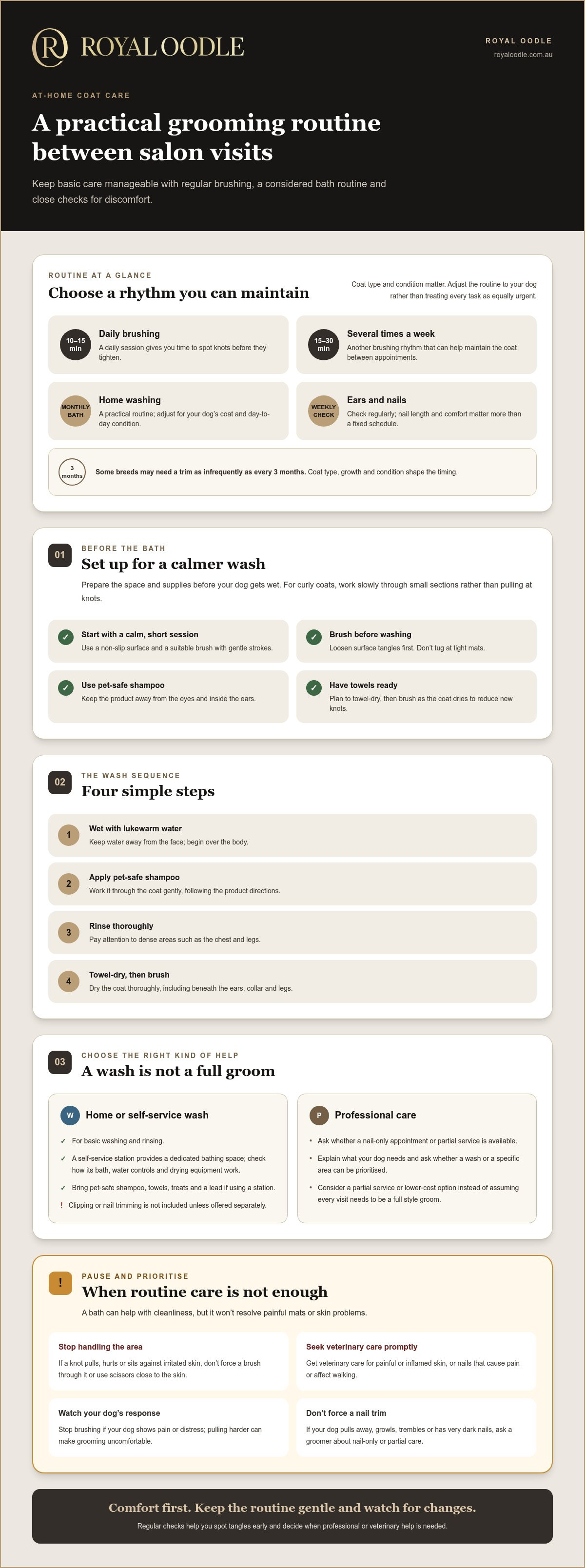
Washing your dog at home can extend the time between professional grooms, while regular brushing helps keep the coat manageable. Start with a calm, short session, a non-slip surface and pet-safe shampoo. For curly coats, work slowly through small sections instead of pulling at knots. If you’re deciding what to do when you can’t afford a groomer, a simple routine can help with basic upkeep, but it won’t resolve painful mats or skin problems.
Make brushing a regular part of the week. A daily session of 10-15 minutes gives you time to spot knots before they tighten, while 15-30 minutes several times a week can help maintain a coat between appointments. Use a suitable brush and gentle strokes, especially around the ears, legs and collar, where tangles often develop. Stop if your dog shows pain or distress; pulling harder can make grooming uncomfortable.
For a straightforward home wash, organise the steps before your dog gets wet:
- Brush first to loosen surface tangles. Don’t tug at tight mats.
- Use lukewarm water and pet-safe shampoo, keeping product away from the eyes and inside the ears.
- Rinse thoroughly, then towel-dry and brush as the coat dries to reduce new knots.
- Keep the bath monthly as a practical routine, adjusting for your dog’s coat and day-to-day condition.
Check your dog’s ears and nails weekly as part of the same care routine. A trim may be needed as infrequently as every 3 months for some breeds, but nail length and comfort matter more than a fixed schedule. Avoid scissors or clippers around tight mats, thin skin or moving areas. A home bath is for cleanliness, not for cutting out close-to-skin tangles.
How much does basic dog grooming cost in Australia, and what affects the price? Size, coat condition and the work involved affect the price.
Painful tangles, skin infections and overlong nails are welfare concerns that need prompt attention. Seek veterinary care promptly if your dog has painful or inflamed skin, or nails that cause pain or affect walking. Don’t try to resolve these problems with a bath.
To discuss affordability, describe what your dog needs and ask the groomer directly: “Can we prioritise a wash or a specific area?” and “Do you offer partial services, payment plans or a lower-cost option?” A clear request helps you compare essential care with a full style groom before booking.
Do-it-yourself dog washes
A self-service dog wash can offer a practical middle ground between bathing at home and booking a full groom. You wash your dog yourself in a dedicated bathing space. It may suit a muddy dog after a walk or a curly-coated dog that’s difficult to rinse in a household bath. Bring your preferred pet-safe shampoo and read the facility’s instructions before you start.
Plan the visit before lifting your dog into the wash area. Brush out loose dirt and easy tangles first, then pack towels, treats, a lead and any coat-care products you need. Check for a raised bath, water controls and drying equipment, and learn how they work before your dog gets wet. A nervous dog may benefit from a quiet introduction to the room, sounds and surfaces before bathing.
- Settle your dog on a non-slip surface and keep the lead secure without restricting movement.
- Wet the coat gradually, beginning at the body rather than directing water at the face.
- Apply pet-safe shampoo as directed, working it through the coat with gentle hands.
- Rinse until the water runs clear, paying attention to dense areas such as the chest and legs.
- Towel-dry first, then use any dryer only as the facility directs and your dog tolerates.
Curly coats need particular care during washing. Water can make hidden knots harder to see, so feel through the coat before bathing. Don’t force a brush through a tight mat or use scissors close to the skin. If a knot pulls, hurts or lies against irritated skin, stop handling that area and seek appropriate professional or veterinary help. A wash station is for bathing, not removing painful mats.
Keep the visit focused. Washing and rinsing can refresh a coat, but they don’t include a clip, style or nail trim unless those services are offered separately. Drying matters too: damp, dense fur can be uncomfortable, so dry the coat thoroughly and check beneath the ears, collar and legs. Follow the station’s cleaning instructions after use, and leave the area ready for the next dog.
Compare a self-service wash with home bathing by considering transport, your dog’s comfort and the equipment you need. For example, a large dog may be easier to rinse in a dedicated tub, while a small, relaxed dog may be manageable at home. To prepare a gentler routine for a curly coat, explore coat-care guidance for dogs.
Nail trims and full style grooms
Nail care and a full style groom address different needs. A nail trim focuses on paw comfort, while a full groom can include washing, drying, brushing and clipping. Separating these tasks helps you decide what your dog needs now. For example, a dog with a tidy coat but long nails may need nail care before another full style appointment.
Some breeds may need a coat trim as infrequently as every 3 months. Coat type, growth and condition shape the timing, so a curly coat that tangles quickly needs closer monitoring than a short, low-maintenance coat. Check your dog’s nails and ears weekly, and watch for nails that catch on surfaces or alter the way your dog walks. These signs help you prioritise care rather than treating every grooming task as equally urgent.
Home nail trimming isn’t the right first step for every dog. If your dog pulls away, growls, trembles or has very dark nails, forcing a trim can make the experience more difficult. Ask a groomer about a nail-only appointment or partial service, and explain your budget clearly. You could say, “My dog’s coat is manageable, but their nails need attention. Can you do that on its own?” This keeps your request specific and lets you discuss the task before booking.
What are the risks of shaving or cutting severely matted dog fur at home? Tight mats can be painful, and cutting close to the skin risks injuring your dog because skin can sit within the tangled coat. Don’t pull at painful knots or slide scissors beneath them. Severe matting needs prompt attention. Ask a grooming professional or veterinarian to assess the safest next step.
When a full style groom is beyond your budget, consider what can wait without affecting your dog’s comfort. A tidy, comfortable coat may need less immediate attention than painful tangles or nails that affect movement. Ask whether a groomer can focus on essential areas, such as the face, paws or sanitary trim, instead of a complete style. Describe the coat honestly, including mats, sensitive areas and your dog’s tolerance for handling.
Are there mobile groomers, grooming schools or community programmes with discounted services in Australia? Yes. Lower-priced mobile groomers, grooming schools and volunteer-run pet-care organisations may be lower-cost resources. Search your local area and describe the specific help your dog needs.
Keep the goal practical: protect your dog’s comfort first, then plan cosmetic styling around your budget. A neat finish can wait if the coat is comfortable, but painful tangles or overlong nails need prompt attention. For example, maintain easy-to-brush areas at home while arranging help for a tight mat or difficult nail trim.
Where can Australians find low-cost or free dog grooming services?
Start with three practical leads in Australia: grooming schools, lower-priced mobile groomers and volunteer-run pet-care organisations. These give you options beyond a full-price salon appointment. The support available varies, so first identify the task your dog needs. A bath, nail trim or coat assessment calls for a different request from a full style groom.
Search online using your suburb or town alongside terms such as “dog grooming school”, “mobile dog groomer” or “volunteer pet care”. Make a shortlist of nearby options. A grooming school may offer training-based services, while a mobile groomer brings grooming equipment to the appointment location. Volunteer-run organisations may also provide pet-care assistance. Contact each option with a clear description of your dog’s needs.
Make your first enquiry specific. Include your dog’s breed or coat type, size, the service needed and any discomfort you’ve noticed. You could write:
- “My dog has a curly coat and needs help with tangles around the legs.”
- “I’m looking for a nail trim rather than a full groom.”
- “Do you offer lower-cost or volunteer-run grooming support in my area?”
That detail helps the organisation understand whether your request is for routine upkeep or an urgent welfare concern. Mention painful mats, irritated skin or nails affecting your dog’s movement. Don’t describe severe matting as a cosmetic tidy-up. A clear account helps direct attention to the right task and avoids treating a basic wash as a substitute for care that needs prompt attention.
Compare what the service includes, not just the label “low-cost”. Ask whether the appointment covers washing, brushing, clipping or nail care, and what you need to bring. For a grooming school, ask how the appointment works and who supervises the groom. For a mobile groomer, explain where your dog can be handled comfortably. For a volunteer organisation, state the specific help you’re seeking.
Before booking, write down the agreed task and any limits. If your dog needs only a nail trim, confirm that the appointment focuses on nails. If a curly coat needs a full clip, explain how long it has been since the last groom and where knots have formed. These details help match your request to the service, so you’re not paying for work your dog doesn’t need.
Free assistance isn’t guaranteed or consistently available across Australia, so treat volunteer-run organisations as one lead among several. Continue brushing and checking the coat while you search. If your dog has painful tangles, skin concerns or overgrown nails, put comfort ahead of cosmetic styling and seek appropriate care promptly.
Do Australian animal shelters, councils, or charities offer grooming assistance?
Some Australian pet-care organisations may be leads for lower-cost help, but don’t assume every shelter, council or charity provides grooming. Start with your local council’s animal services page and nearby animal shelters. Search for “pet assistance”, “community pet care” and “dog grooming support” alongside your suburb or town. You can also look for volunteer-run pet-care organisations as a possible lower-cost resource.
Be precise about the help your dog needs. A nail trim is different from a full clip, a bath or help with painful mats. When contacting an organisation, include your dog’s size, coat type and specific concern. For example: “My small curly-coated dog has tight tangles behind the ears. Is grooming support available?” This gives staff useful details without suggesting your dog needs a complete style groom.
Try these steps to make a local search more useful:
- Search your suburb and state with “volunteer pet care” or “grooming assistance”.
- Contact local shelters and ask whether they provide grooming help or know a relevant community programme.
- Ask your council whether its animal services team can direct you to local pet-care support.
- Describe any painful tangles, irritated skin or nails affecting your dog’s movement.
Animal shelters focus on animal welfare and rehoming, so grooming assistance isn’t automatically part of their services. A shelter can still be a useful local contact when asking about community support. Keep your question direct: “Do you provide grooming help, or can you suggest a local volunteer-run pet-care organisation?” Councils may also direct residents to local services, while charities may support particular community needs.
Briefly explain your circumstances and what you can manage at home. For example, you might be keeping up with brushing but need help with a difficult nail trim. Ask about eligibility, the type of assistance and how to apply. If an organisation can’t help with grooming, ask specifically for a referral to a local organisation rather than assuming it provides another service.
Keep a short list of contacts and note each organisation’s response. Record the date, who you spoke with and whether they suggested another local lead. This helps you avoid repeating the same search and makes follow-up easier. If your dog has painful mats, skin problems or overgrown nails, explain those concerns clearly and prioritise comfort while arranging appropriate care.
While you search, continue gentle coat checks and brush only where your dog is comfortable. Don’t cut close to the skin or pull at painful mats. A council, shelter or charity can be a starting point for finding local support, but it isn’t a substitute for urgent veterinary attention when your dog has a health concern.
Royal Oodle: Detangling Sprays
Royal Oodle’s Detangling Sprays give Oodle and other curly-coated dogs a coat-care option between professional appointments. Use a detangling spray as part of a gentle brushing routine, working through manageable sections rather than pulling at tight knots. For regular washing, Royal Oodle also offers Shampoo & Conditioners, Bundles & Kits, and Breeder Packs. Its grooming products are developed and manufactured in Australia, with formulations designed for curly coats and sensitive skin. These products support at-home coat care, but painful mats or skin concerns need appropriate professional attention. To explore Royal Oodle’s coat-care range, visit royaloodle.com.au.
Make your next grooming step manageable
If you’re deciding what to do when you can’t afford a groomer, choose one practical step your dog can tolerate today. A small, consistent home-care routine helps you monitor coat condition and notice when your dog needs more support. For curly-coated dogs, Royal Oodle’s Detangling Sprays, Shampoo & Conditioners, and Bundles & Kits can support at-home coat care by helping with tangles and brushing. They’re products, not a replacement for professional help with painful mats, skin concerns or difficult nail trims.
Choose the care your dog needs rather than trying to achieve a perfect style in one session. Keep grooming gentle, pause if your dog is uncomfortable, and seek appropriate help when a concern goes beyond routine coat maintenance. A calm, considered approach can make the next step clearer for both of you.
Explore Royal Oodle’s coat-care range and find a thoughtful addition to your dog’s home routine.
Frequently Asked Questions
What dog grooming tasks are safe to do at home with basic tools?
At home, you can usually manage gentle brushing, a bath with pet-safe shampoo, towel-drying and checking the coat for debris. Choose a brush suited to your dog’s coat, and keep combs away from irritated skin. A short-coated dog, for example, may need a different brush from a curly-coated Oodle. Leave close clipping, tight mats and any task your dog finds painful to a suitably qualified professional.
How do you brush, bathe, and dry a dog at home safely?
Prepare a secure, non-slip space and let your dog investigate the tools before you start. Brush in small sections, pausing if the coat catches or your dog reacts uncomfortably. For a bath, use pet-safe shampoo and rinse away residue thoroughly. Towel-dry gently, then keep your dog in a warm, draught-free area until their coat is dry. Avoid hot air and stop if the process causes distress.
How can you trim a dog's nails at home, and when should a vet do it?
Use dog nail clippers only if your dog is calm and you can clearly see where to trim. Remove a small amount from the tip, then pause and reassess before continuing. Don’t force a trim if your dog struggles or the nail is difficult to assess. Seek veterinary care if nails are painful, affect walking or are overgrown, as these concerns need prompt attention.
What grooming tools are worth buying for affordable dog care at home?
A suitable brush and pet-safe shampoo are useful basics for home care. Towels can help dry your dog after a bath.
