

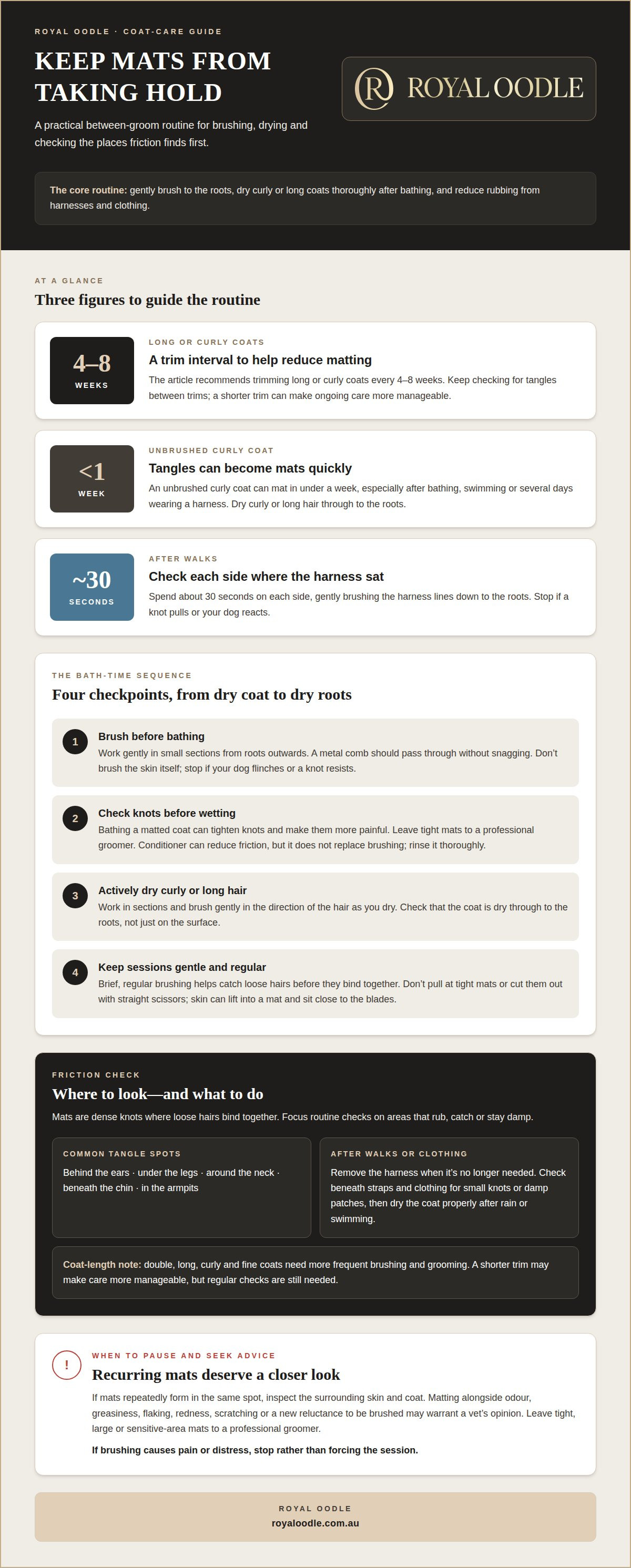
A recurring mat is more than a brushing problem. The answer to how to prevent dog matting between grooms is a manageable routine: gently brush through to the coat’s roots, dry curly or long hair thoroughly after bathing, and reduce rubbing from harnesses and clothing. Mats are dense knots where loose hairs bind together, often in friction-prone areas such as behind the ears or under the legs.
If your dog’s coat tangles easily, keeping up with it can feel like a daily chore, especially when washing or walking seems to make knots worse. Learn how brushing, bathing and drying, coat length, and everyday gear affect matting, and how to keep care calm and consistent.
Mats that repeatedly form in one spot, or appear alongside odour, greasiness, flaking, redness or a new reluctance to be brushed, may warrant a vet’s opinion. A few thoughtful adjustments can make coat care gentler and easier to maintain between appointments.
Key Takeaways
- Detangle the coat before bathing; moisture can make existing knots tighter and more uncomfortable.
- Choose a coat length that suits the time you can comfortably give to ongoing care.
- Look beneath harnesses and clothing for friction-related tangles, and let the coat dry properly after it gets wet.
- Pay attention to mats that repeatedly form in the same area, as they may be linked to skin irritation.
Bathing and drying practices to prevent tangles tightening
A useful routine for how to prevent dog matting between grooms starts before bath time. Brush first, wash only a coat that’s free of tight mats, then actively dry curly or long hair.
-
Brush the coat before bathing
Work gently through small sections, moving from the roots outwards without scraping the skin. Reach down to the skin, where mats can form, but don’t brush the skin itself. A metal comb should pass through each section without snagging. If your dog flinches or a knot resists, stop rather than pulling. Brushing should not hurt. Regular, brief sessions help catch loose hairs before they bind together.
-
Use bathing and conditioning practices
Check for knots before wetting the coat. Bathing a matted coat can tighten knots and make them more painful, so leave tight mats to a professional groomer. Conditioner can reduce friction between hairs, but it doesn’t replace brushing. Rinse it thoroughly, as residue can make the coat tackier and harder to work through later.
-
Dry curly and long coats actively
After bathing, dry curly or long hair rather than letting it air-dry flat against the skin. Work in sections and brush gently as you dry, following the direction of the hair. Check that the coat is dry through to the roots, not just at the surface. An unbrushed curly coat can mat in under a week, especially after bathing, swimming or several days wearing a harness.
-
Set a routine and know when to stop
To understand how to prevent dog matting between grooms, make brushing regular and suit the schedule to your dog’s coat. Long or curly coats should be trimmed every 4-8 weeks to help reduce matting. Leave tight, large or sensitive-area mats to a professional groomer. Don’t cut them out with straight scissors; skin can lift into a mat and sit close to the blades.
Choosing a manageable coat length
- Match coat length to your dog’s care needs. Double, long, curly and fine coats need more frequent brushing and grooming to help reduce matting. A shorter trim can make ongoing coat care more manageable, but it doesn’t remove the need for regular checks.
- Choose tools to suit the coat. Brush short, single coats dry; for curly or long coats, apply a light mist or detangling spray before brushing. Work gently in small sections, then pass a metal comb from the skin outward. It should move through the coat without snagging.
- Check friction-prone spots as part of your routine. Look around the neck, under the chin, in the armpits and behind the ears, where mats commonly form. If your dog has a sensitive coat or resists brushing, keep sessions brief and gentle. Stop if brushing causes pain or distress.
- Set a trim schedule around coat growth and tangling. Long or curly coats should be trimmed every 4-8 weeks to help reduce matting. If brushing a heavily matted coat would cause more distress than a short cut, clipping may be recommended. Prioritise your dog’s comfort: don’t pull at tight mats or cut them out with scissors. Severe matting should be assessed by a professional groomer or veterinarian. A considered coat-care routine can help you keep daily maintenance manageable between trims.
Brush regularly between grooming appointments, more often for double, long, curly or fine coats, which are more prone to matting.
For dog owners across Australia, a short, manageable trim every six weeks may reduce coat-care maintenance. Treat that interval as a practical starting point, not a reason to overlook changes in the coat. Continue checking for tangles and give extra attention to areas that catch or rub, adjusting the routine to your dog’s comfort.
Keep brushing gentle between trims, and don’t judge how manageable coat care will be by length alone. A trim can simplify upkeep, while regular checks help you spot developing mats before they become difficult to handle. If your dog becomes uncomfortable, pause and reconsider your approach rather than forcing the session.
Harnesses and clothing as sources of friction and moisture
Harnesses and clothing can trap moisture and rub against the coat during walks. Add a few deliberate checks to your routine to catch friction-related knots early.
- Remove your dog’s harness as soon as it’s no longer needed. Leaving it on between outings creates ongoing friction, especially where straps press or move against the coat. Before the next walk, smooth the fur beneath each strap and look for small knots or damp patches.
- Brush each harness line after walks. Spend about 30 seconds on each side, working gently through the fur where the straps rested. Check the coat down to the roots, because surface brushing can miss tangles forming close to the skin. If a knot pulls or your dog reacts, stop rather than tugging.
- Check collars as well as harnesses. Repeated rubbing around the neck can bind loose hairs into knots, particularly on long or curly coats. A rolled leather collar may be an alternative to a flat collar to help reduce tangles. Remove collars when they aren’t needed, if it’s safe to do so.
- Brush beneath clothing before and after your dog wears it. A jumper or coat can press the fur together and hold warmth or dampness against the body. After removing the garment, gently separate the coat with your fingers, then brush any areas that look compressed or tangled.
- Dry the coat properly after rain, swimming or damp clothing. Don’t leave long or curly hair to air-dry flat against the skin, where hairs can settle together. Once dry, check the areas covered by straps or fabric again. This simple after-walk sequence helps catch friction and moisture before they contribute to a mat.
When recurring matting may signal a skin problem
- Notice where mats return. If the same patch tangles repeatedly despite careful brushing, inspect the surrounding skin and coat. Recurring matting can accompany scratching or rubbing, including when allergies make your dog itch. Note the location and any changes you see; this can help explain the concern during a veterinary assessment.
- Look for changes beyond the knot. Coat odour, greasiness, flaking, redness or a new objection to brushing are reasons to seek a veterinarian’s opinion. Note whether these signs appear near a recurring mat or elsewhere. A grooming issue alone doesn’t explain every change in your dog’s skin or response to touch.
- Don’t pull at a tight mat to check the skin underneath. Tight mats can tug painfully, and brushing against your dog’s resistance may cause further distress. Severe matting should be assessed by a professional groomer or veterinarian. Avoid cutting out a tight knot with straight scissors, as skin can sit close to the blades.
- Understand the effects of tight mats. They can pull on the skin and cause pain, especially when handled or brushed. Dense knots can also make it harder to see the skin beneath, so redness or flaking may go unnoticed. Stop home detangling if a mat is tight, extensive or near a sensitive area.
- Take a clear next step when you spot warning signs. Arrange a veterinary opinion for recurring mats alongside odour, greasiness, flaking, redness or changed brushing behaviour. If the coat is severely matted, seek assessment rather than trying to remove it yourself. For everyday coat maintenance, explore gentle coat-care options.
Royal Oodle
Royal Oodle helps make at-home coat care more manageable with grooming products designed for Oodles and other curly-coated dogs. Detangling sprays can support easier brushing, while shampoo and conditioner complete a considered bathing routine. Bundles and kits bring coat-care essentials together to help organise your routine.
Choose products to support everyday grooming between appointments, not to force out tight mats or replace veterinary advice when skin changes accompany recurring tangles. Royal Oodle’s gentle, premium formulations are developed and manufactured in Australia, with sensitive skin in mind.
For a considered approach to your dog’s coat-care routine, contact Royal Oodle.
Build a routine that grows with your dog
Make coat care a small, familiar part of your day rather than a task reserved for grooming appointments. Choose a moment that suits your household, then keep the routine flexible enough to fit your dog’s comfort, coat condition and everyday activities. A calm, consistent approach makes it easier to notice when their needs change.
Build your approach to how to prevent dog matting between grooms around what your dog tolerates, where they spend time and the coat they have now. Keep sessions gentle, and adjust your routine when brushing becomes uncomfortable or the coat starts behaving differently. If you’d like guidance on suitable at-home care, discuss your dog’s coat-care routine with Royal Oodle.
Small, thoughtful habits can make caring for your dog’s coat feel more manageable.
Frequently Asked Questions
What is matted dog hair?
Matted dog hair is a compacted clump of tangled hairs that can sit close to the skin, rather than a loose knot at the coat’s surface. It may conceal the skin underneath, so gently part the surrounding coat to see whether the area looks irritated. If a clump feels tight or your dog reacts when you touch it, don’t pull or cut into it.
How to keep a dog's coat mat-free after bathing and drying at home?
After bathing, dry the coat in small sections so damp patches don’t remain hidden. Blot excess water with a towel instead of rubbing the coat back and forth. As each section dries, pass a comb through it from the skin outwards; pause if it catches rather than forcing it through. Check the underside and areas covered by a collar or harness before dressing your dog.
Are detangling sprays or conditioners safe and effective for dogs?
Dog-formulated detangling sprays and conditioners can help reduce friction between hairs, making brushing easier, but they can’t prevent matting on their own. Follow the product directions, rinse out rinse-off conditioner thoroughly, and avoid contact with eyes and ears. Individual skin sensitivities and coat requirements should always be considered. Royal Oodle products aren’t a treatment for allergies; persistent skin concerns need veterinary care.
What brush and comb are best for preventing mats in different dog coat types?
Use a brush suited to the coat. For curly or long coats, apply a light mist or detangling spray before brushing; short, single coats can be brushed dry. Finish by running a metal comb from the skin outward. It should pass through without snagging.
