

Regular brushing is the most reliable daily habit for reducing mats. Long or curly coats may need brushing every day, while dogs prone to tangles should be brushed or combed several times a week. Knowing how to prevent dog hair matting also means checking damp fur and high-friction spots, where tangles can form quickly.
A mat is more than a stubborn knot. As it tightens, it can pull on your dog’s skin, feel itchy or painful, and trap moisture and dirt. Finding one after a cuddle, bath or walk can be frustrating, especially if brushing has become uncomfortable for your dog.
This guide explains why mats form, which dogs are more at risk and how to build a gentle routine to keep the coat manageable. You’ll learn to brush through the coat rather than just its surface, give extra care to areas such as behind the ears and beneath a harness, and recognise when widespread or skin-tight matting needs professional attention.
Key Takeaways
- Match your brush and comb to your dog’s coat, and work through the layers rather than brushing only the surface.
- Give curly, long and fine coats frequent attention, especially behind the ears, beneath harnesses and around the legs.
- Wet fur tangles more easily, so brush before bathing and gently dry and brush the coat afterwards.
- Mats can tug at skin and trap moisture; tight or widespread matting needs professional attention rather than scissors at home.
- Keep grooming calm and consistent, taking breaks if your dog becomes uncomfortable.
How do you prevent mats from forming?
Prevent mats with coat-appropriate tools, regular brushing and close inspections. After bathing or swimming, pat the coat dry, then brush it thoroughly once dry to remove tangles and prevent moisture from lingering in the fur.
-
Choose brushes and combs for the coat
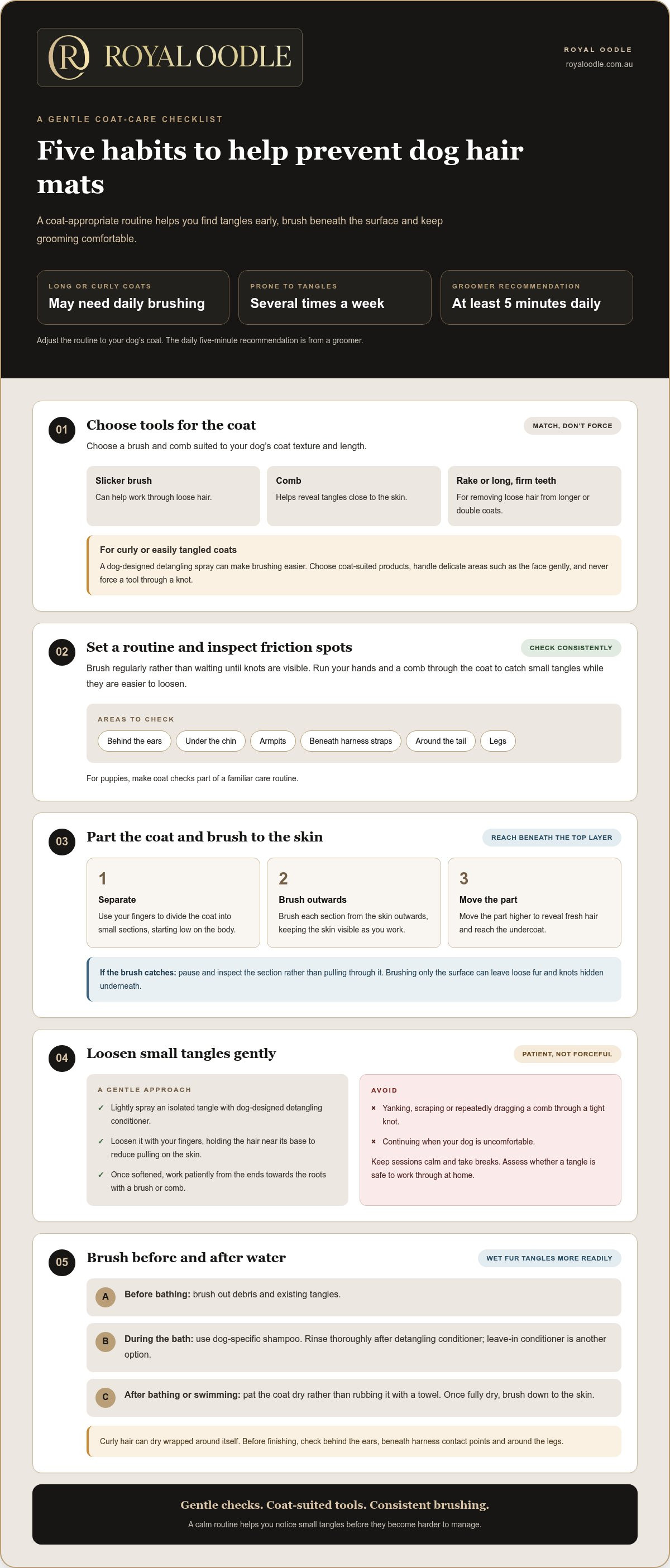
Choose a brush and comb suited to your dog’s coat texture and length. A slicker brush can help work through loose hair, while a comb helps reveal tangles close to the skin. For longer or double coats, a rake or tool with long, firm teeth can remove loose hair. Don’t force a tool through knots: the wrong approach can tug at sensitive skin.
For curly or easily tangled coats, use a dog-designed detangling spray to make brushing easier. Choose grooming products for your dog’s coat type, and handle delicate areas such as the face gently. Learning how to prevent dog hair matting starts with tools suited to the coat, not forceful strokes.
-
Inspect and brush the coat
Set a regular brushing routine instead of waiting until knots are visible. Dogs prone to matting need brushing or combing several times a week; long or curly coats may need daily attention. A groomer recommends brushing and combing for at least five minutes every day to help prevent mats. Adjust the routine to your dog’s coat and check it consistently.
Run your hands and a comb through high-friction areas, including behind the ears, under the chin, in the armpits and beneath harness straps. Check around the tail and legs too. These inspections help you find small tangles while they’re easier to loosen. For puppies, learning how to prevent dog hair matting means making these checks part of their familiar care routine.
-
Part the coat and brush to the skin
Separate the coat into small sections with your fingers, starting low on the body. Brush each section from the skin outwards, then move the part higher to reveal fresh hair. This method reaches the undercoat instead of smoothing only the top layer, where loose fur and knots can remain hidden.
Use gentle strokes and keep the skin visible as you work. Pay extra attention to dense areas where brushing only the surface can miss compacted fur. If the brush catches, pause and inspect the section rather than pulling through it.
-
Detangle knots with fingers and tools
Lightly spray an isolated tangle with dog-designed detangling conditioner, then loosen it with your fingers. Hold the hair near its base to reduce pulling on the skin. Once the knot has softened, work patiently from the ends towards the roots with a brush or comb.
Keep sessions calm and take breaks if your dog becomes uncomfortable. Don’t yank, scrape or repeatedly drag a comb through a tight knot. Gentle handling helps prevent brushing from becoming unpleasant and gives you a chance to assess whether the tangle is safe to work through at home.
-
Dry and brush after water exposure
Brush the coat before bathing to remove debris and existing tangles. Use dog-specific shampoo, then rinse thoroughly after applying detangling conditioner; a leave-in conditioner is another option. Pat the coat dry rather than rubbing it with a towel, which can create fresh knots.
After bathing or swimming, make sure the coat is fully dry, then brush down to the skin. Wet fur tangles more readily, and curly hair can dry wrapped around itself. Before finishing, check behind the ears, beneath harness contact points and around the legs.
What dog breeds are more at risk of getting mats?
Doodles, curly-coated breeds and long-haired dogs are especially prone to matting. Mats commonly form behind the ears, between the toes and legs, in the armpits, beneath the belly, around the bottom and along the backs of the legs.
- Assess coat texture and length before setting a routine. Curly, long or fine coats can tangle readily, while loose hair during seasonal shedding can catch in surrounding fur. Senior dogs may also need closer coat checks because they can groom themselves less. Focus on your dog’s actual coat, not breed alone: dogs with different coat textures may need different brushing and bathing habits.
- Set bathing frequency according to coat type and activity. Dogs may be bathed anywhere from once a week to once a month, depending on their coat and how active they are. Dogs that swim often need particular attention: wet hair can curl and dry wrapped around itself, creating tangles. Brush before bathing, pat the coat rather than rubbing it with a towel, then dry and brush it afterwards.
- Inspect friction points after walks, play and harness wear. Check around the neck, beneath the chin, behind the ears, under the armpits, on the feet and across the backs of the rear legs. Dirt, movement and rubbing can cause loose hairs to gather into knots. Removing a harness when your dog is off leash can reduce friction where its straps rest. Check the coat before a small tangle becomes matted.
- Pay extra attention during seasonal coat changes. Dogs commonly develop mats before summer and winter, when they shed one coat and grow another. Loose hair can become caught in the coat instead of falling away, especially in long or curly fur. Increase combing and inspections during these changes, checking beneath the surface rather than relying on a smooth-looking top layer.
- Support coat condition through balanced feeding, not supplement guesswork. A good diet supports coat health, and fish oil supplements may help support a healthy coat. They don’t remove existing knots, so keep brushing and combing as the practical mat-prevention steps. If you’re considering a supplement, account for your dog’s current food and overall needs rather than adding oils casually. For a more considered routine, explore curly-coat care options.
Health and comfort effects of mats
A mat can do more than spoil a soft coat. As it tightens, it pulls at the skin, traps moisture and dirt, and may make ordinary movement uncomfortable.
- Check the places where mats form. Part the coat and inspect behind the ears, between the toes, in the armpits, around the belly and bottom, and along the backs of the legs. These high-friction areas can hide knots close to the skin. Check beneath a collar or harness too, where repeated rubbing can encourage tangles.
- Notice changes in comfort and movement. A tight mat can pull painfully when your dog walks, stretches or lies down. Mats may twist the skin, restrict circulation and limit airflow. Watch for flinching during brushing, scratching, reluctance to move or sensitivity when you touch a matted area. These signs can indicate discomfort, not simply resistance to grooming.
- Look beneath the surface without tugging. Mats can hold moisture, dirt and bacteria against the skin, potentially causing irritation, hot spots, sores or infection. Severe matting can also cause bruising, while compacted fur may hide parasites or an existing skin condition. If you notice redness, broken skin, an unpleasant smell or persistent irritation, avoid pulling at the area and seek veterinary advice.
- Loosen only a small, loose mat gently. Apply dog-safe detangling conditioner lightly, then use your fingers to ease the knot apart. Hold the hair at its base to reduce pulling on the skin. Once loosened, work carefully with a brush or comb, starting at the ends. Stop if your dog reacts, the mat resists or you can’t separate it from the skin.
- Leave tight mats and sensitive areas alone. Mats close to the skin can hurt, and skin may be caught inside the knot. Don’t try to remove mats around the ears, where poking or pulling can cause pain. Avoid using scissors to cut out a mat at home: a dog’s skin can sit close beneath the fur, making accidental cuts possible. A professional groomer can assess and safely remove tight or widespread matting.
- Make comfort part of each grooming check. Use short, calm sessions and pause if your dog becomes distressed. Recheck the same areas after bathing, swimming or wearing a harness, since dampness and friction can worsen knots. Removing loose tangles early is gentler than working through a dense mat later, and helps make grooming a more comfortable part of your dog’s routine.
When to seek professional grooming
Seek professional help when mats are widespread, tight against the skin or painful to touch. A completely matted undercoat that blocks access to the skin also needs expert attention.
-
Recognise when to seek grooming help
Book a groomer for widespread matting rather than trying to remove every knot at home. Tight mats can pull skin into the tangle, and a compacted undercoat may conceal skin that needs attention. If your dog flinches, cries or resists movement when a mat is touched, stop brushing instead of forcing it.
Contact a veterinarian if the skin beneath a mat looks sore, irritated or infected. Severe matting may need clipping under sedation at a veterinary clinic. A vet can also assess skin problems that brushing or grooming alone won’t resolve.
-
Plan professional grooming appointments
For high-maintenance coats, arrange a full groom and haircut every 6 to 8 weeks. Regular appointments remove excess coat and help prevent tangles building between visits. Your dog’s coat type, activity and how quickly mats form can guide the maintenance routine between appointments.
Use each visit to learn which areas need extra care at home. Ask for practical guidance on brushing and combing your dog’s particular coat, then follow the routine between grooms. For example, curly coats may need frequent attention to stay free of knots.
- Describe what happens during grooming. Tell the groomer if your dog becomes anxious, pulls away or reacts when a particular area is brushed. Mention sensitive spots such as the belly, ears or legs, and any recent skin irritation. Clear details help the groomer handle your dog calmly and notice where extra care is needed.
- Keep home sessions gentle and brief. Choose a quiet spot and let your dog settle before bringing out the brush. Work on a small area, pause when your dog shows stress, and reward calm behaviour. If brushing becomes painful or your dog repeatedly struggles, stop instead of turning grooming into a stressful contest.
- Don’t cut out tight mats yourself. Scissors can catch skin hidden beneath compacted fur, especially around the ears, belly and armpits. Leave mats close to the skin to a professional groomer, who can assess whether safe removal requires clipping. If severe matting affects your dog’s comfort or hides the skin, seek help promptly.
Common causes of dog hair matting
- Check the coat after swimming. Moisture changes how strands sit against one another, and wet hair can curl as it dries. The curls may wrap around neighbouring hairs and tighten into tangles. This is especially relevant for dogs that swim often or have curly coats. Inspect the coat after a swim, not only when it looks dry on the surface.
- Dry without rubbing the coat. Vigorous towel rubbing creates friction between damp hairs, encouraging them to twist and knot. Pat the coat instead, then brush it once dry, including beneath the chest and around the legs. If the coat stays damp, strands can settle together and make a small tangle harder to loosen later.
- Look for rubbing from collars and harnesses. Repeated movement beneath a strap can make hairs catch and pull together. Check around the neck, under the chin, beneath the armpits and across the chest after walks. Removing a harness when your dog is off leash can reduce friction where it rests. Also inspect the feet and backs of the rear legs, where movement creates repeated contact.
- Increase coat checks during seasonal shedding. Dogs commonly develop mats before summer and winter, when they shed one coat and grow another. Loose hairs can become trapped among the remaining coat instead of falling away. Check beneath the top layer during these transitions, especially if your dog has long or curly fur. A smooth surface can conceal a knot forming underneath.
- Adapt care to your dog’s coat and age. Long, curly or fine coats catch loose hairs more readily than short coats. Senior dogs may also groom themselves less, allowing tangles to build unnoticed. Set a brushing rhythm that suits the coat, and inspect high-friction areas after active days. Long gaps between sessions can turn several small snags into a dense, uncomfortable mat.
- Notice what changes after outdoor activity. Wet grass, swimming and repeated harness wear each affect the coat differently. After a beach or park visit, check for dampness, debris and knots around the neck, belly and legs. Gently remove visible debris before it becomes caught in surrounding hairs. If the coat feels clumped, carefully separate the section rather than pulling it apart.
- Reduce friction with a suitable detangling aid. Dog-designed detangling sprays can help prevent tangles and make brushing easier, particularly after moisture exposure or harness wear. Use a product intended for dogs and follow its directions; avoid applying human hair products to your dog’s coat. For an easier brushing routine, explore dog detangling sprays.
Royal Oodle: Detangling Sprays
Royal Oodle’s Detangling Sprays can make brushing easier and help reduce tangles between baths. They’re a practical addition for curly coats, puppy coat changes or friction-prone areas that catch knots, such as behind the ears and beneath harness straps.
Use a dog-specific detangling spray as part of a gentle routine, not as a substitute for brushing or professional help with tight mats. Royal Oodle also offers Shampoo & Conditioners, Bundles & Kits, and Breeder Packs for considered coat care. Its grooming products are developed and manufactured in Australia, with gentle ingredients for sensitive skin.
Explore Royal Oodle’s detangling sprays and coat-care options at royaloodle.com.au.
Make coat care a comfortable habit
Your puppy’s coat will change as they grow, so let their comfort guide the routine. Notice which brush, pace and handling help them stay settled, then build those moments into everyday care. A calm, familiar ritual can make grooming feel less like a struggle and more like attentive time together.
Learning how to prevent dog hair matting is an ongoing process, not a one-time fix. As your puppy’s coat develops, observe how it responds to brushing and adjust your approach when its texture or length changes. Gentle, dog-specific products can support that routine: Royal Oodle offers Detangling Sprays, Shampoo & Conditioners, and Bundles & Kits, with formulations designed for curly coats and sensitive skin.
For help choosing coat-care products to suit your dog’s routine, contact Royal Oodle. A thoughtful next step can make home grooming feel easier for both of you.
Frequently Asked Questions
Why Is Matted Fur a Problem?
Matted fur can hurt because it pulls the skin as your dog moves, and it may trap moisture and dirt against the body. This can lead to irritation, sores or infection, while dense knots can hide parasites or existing skin changes. Watch for scratching, flinching or sensitivity during handling. A mat isn’t only a coat issue if it affects your dog’s comfort or conceals a skin problem.
Brushing or Cutting Out Mats, Do or Don’t?
Gently brush out a small, loose tangle, but don’t cut out a mat that’s tight against the skin. A dog’s skin can sit close to the coat, so scissors may cause a serious cut before you can see what’s underneath. If the knot resists your fingers or comb, stop rather than pulling harder. A groomer can assess whether the mat needs careful clipping.
What Causes Matting in Dogs?
Matting starts when loose hairs twist around one another and stay caught in the coat. Curly, long or fine hair can hold these tangles, while rubbing from a collar or harness adds friction. Swimming and bathing can contribute because wet fur tangles more easily, especially if it dries curled together. Puppy coat changes and seasonal shedding can also leave loose hairs caught beneath the visible surface.
What Causes Mats?
Common triggers include damp fur, loose shedding hair, friction and missed tangles. For example, a harness rubbing the chest can catch hairs, while towel-rubbing a wet coat can encourage knots. A dog that swims often may develop tangles as its coat dries. Senior dogs may also groom themselves less, giving small snags time to tighten. Consider what changed before the mat appeared, such as wet weather or more harness wear.
What Should You Avoid Doing During Mat Removal?
Don’t yank a knot, scrape at the skin or keep brushing when your dog shows discomfort. Pulling can make grooming painful and increase tension on the skin. Avoid scissors, especially near the ears, legs and belly, where skin may be hidden inside the mat. Don’t try to work out widespread or skin-tight mats at home. Pause if your dog struggles, then seek professional grooming help.
When Do Mats Tend to Form?
Mats can form whenever friction, moisture or loose hairs combine. They’re common after swimming or bathing if the coat stays damp or dries tangled. Seasonal coat changes before summer and winter can also leave shedding hairs caught in the coat. Check after activities that affect the coat, such as swimming, and during shedding periods. A small knot noticed early is easier to address than one left to tighten.
Where Are You Likely to Find Mats on Your Dog?
Check behind the ears, under the chin, in the armpits, beneath harness straps and around the feet. Mats can also form between the legs, around the belly and bottom, and along the backs of the rear legs. These spots experience rubbing or are easy to overlook during a quick surface brush. Gently run your fingers through each area, especially after walks or harness wear.
How Often Should You Brush a Dog to Prevent Matting by Coat Type?
Long or curly coats may need daily brushing, while dogs prone to tangles should be brushed or combed several times a week. Short-coated dogs benefit from weekly brushing. Adjust for your dog’s coat, shedding and activity, then check that brushing reaches beneath the top layer. A groomer recommends at least five minutes of brushing and combing every day to help prevent mats, particularly for coats that knot readily.
