

At-home dog grooming for a curly coat includes brushing, bathing, nail and ear checks, dental care, and trimming when needed. Brush a curly or wavy coat daily in sections, from roots to tips, and check that you can reach the skin without pulling at knots. Regular, gentle care helps keep tangles from becoming more uncomfortable to manage.
Grooming is more than bath time: the right brush, shampoo, and conditioner matter just as much as a consistent routine. This guide covers the steps of at-home grooming, from brushing and bathing to drying and clipping. You’ll also learn how to choose coat-care products for curly textures, so grooming feels more manageable for you and comfortable for your dog.
Key Takeaways
- Ease out knots before bath time so water doesn’t make them harder to manage.
- Dry thoroughly with the dryer moving and at least 25 cm from your dog’s skin.
- Use a comb gently to find hidden tangles, and stop if it catches rather than pulling.
- Choose shampoo, conditioner and detangling products suited to curly coats and sensitive skin.
Bathing and drying a curly coat
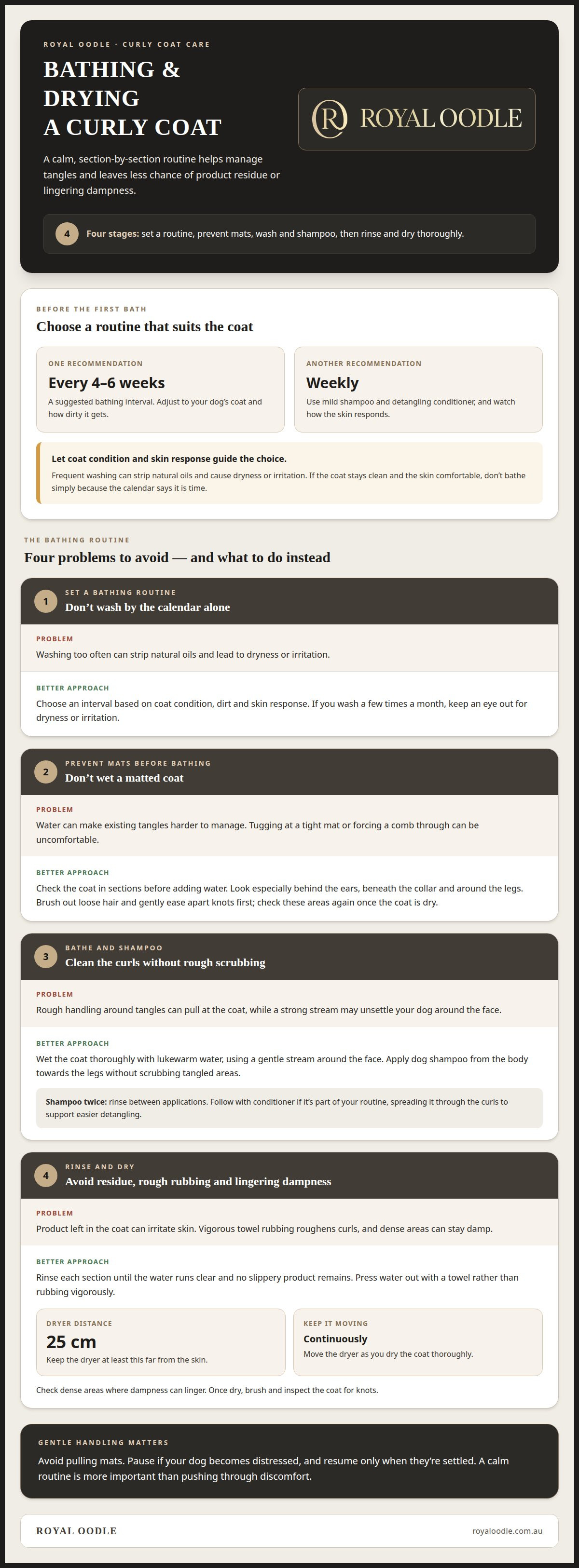
For home grooming in Australia, handle your dog gently, avoid pulling mats, and pause if they become distressed. Bathing recommendations vary: some suggest every 4-6 weeks, while others recommend weekly washing with mild shampoo and detangling conditioner. Let coat condition and skin response guide the routine, since frequent washing can strip natural oils and cause dryness or irritation.
1. Set a bathing routine
Choose a bathing interval that suits your dog’s coat and how dirty it gets. A 4-6-week routine is one recommendation; weekly bathing is another, using mild shampoo and detangling conditioner. Watch for dryness or irritation, particularly if you wash your dog a few times a month. If the coat stays clean and the skin comfortable, avoid bathing simply because the calendar says it is time.
2. Prevent mats before bathing
Before adding water, check the coat in sections, especially behind the ears, beneath the collar, and around the legs. Brush out loose hair and gently ease apart knots first; wetting a matted coat can make tangles harder to manage. Don’t tug at a tight mat or force a comb through it. Once the coat is dry, check those areas again and gently work through any remaining loose knots.
3. Bathe and shampoo the coat
Wet the coat thoroughly with lukewarm water, keeping the stream gentle around your dog’s face. Apply dog shampoo across the coat, working from the body towards the legs without scrubbing tangled areas. Shampoo twice, rinsing between applications, so dirt and shedding hair lift away more effectively. Follow with conditioner if your routine includes it, spreading it through the curls to support easier detangling.
4. Rinse and dry the coat
Rinse each section until the water runs clear and no slippery product remains; residue can irritate skin. Press water from the curls with a towel rather than roughening them with vigorous rubbing. If using a hair dryer, keep it at least 25 cm from the skin and moving continuously. Dry the coat thoroughly, checking dense areas where dampness can linger, then brush and inspect for knots once dry.
Section-by-section brushing down to the skin
Brush a curly or wavy coat daily in small sections, from roots to tips. Reaching the skin helps clear debris and makes hidden tangles easier to spot.
Choose brushes and combs
Start with a pin brush for daily brushing, then keep a steel comb nearby for checking your work. A slicker brush can help lift dead hair, especially when shedding increases, but use a light touch on sensitive areas. Choose tools that move through the coat without scraping skin. For a long, dense curl, longer bristles can reach further into the coat.
Brush the coat section by section
Part the coat into small sections and brush each one from the roots towards the tips. Work gently down to the skin, keeping strokes short where curls are dense. Daily brushing helps prevent tangles from tightening into mats. If you find a knot, loosen it with your fingers or brush rather than dragging a comb through it.
- Begin at the feet and work upwards, lifting a small layer of coat at a time.
- Brush each layer from the skin outwards, following the direction of hair growth.
- Use your fingers to separate a loose knot before brushing through the surrounding curls.
- Run a steel comb from skin to tips after brushing; stop if it catches.
Use controlled brush strokes around the ears, armpits, and collar, where friction can tangle curls. If your dog shifts or pulls away, pause and reposition before continuing. Move on when the comb passes through smoothly. Trimming is a separate step, not a way to force through a knot.
Clipping the coat for easier maintenance
Choose a trim that suits your dog’s coat length and your handling skills. A curly coat can be clipped to about ¾ of an inch for easier maintenance.
-
Choose clippers and scissors
Use a lightweight trimmer for small tidy-ups around areas such as the face, chin, ears, and feet. When using scissors, keep the blades parallel to your dog’s body, with the tips pointing away. Work only on a clean, brushed coat so loose hair and knots don’t catch between the blades. Leave any trim that needs extra care to a professional groomer.
-
Trim and clip the coat
Start with a small section and move the clippers steadily in the direction of coat growth. About ¾ of an inch is one suggested option for keeping a curly coat manageable, but don’t force a blade through knots. Remove loose hair as you work, then check the finish in natural light. If the coat is matted, don’t try to cut mats out at home; de-matting can be dangerous.
-
Groom a curly-coated puppy
Introduce a puppy to grooming in short, calm sessions, starting with gentle handling and brushing before any trimming. Use a quiet approach around the face and feet, and stop if your puppy becomes distressed or struggles. Attend to the nails before trimming foot hair. If you’re unsure about nail clipping or your dog is anxious, seek guidance from a veterinary nurse or groomer. Shaving at home isn’t a suitable shortcut for a difficult coat or a close clip that needs extra care.
Choosing grooming products for a dog's coat type
Match each product to your dog’s coat texture, skin needs, and the task at hand. Curly coats need different care from smooth or corded coats.
- Identify the coat before selecting tools. Dog coats fall into 10 common classifications, from smooth-coated to corded, and curly coats need tools that can reach through the curls without scraping skin. A pin brush is useful for routine curly-coat brushing. Choose a brush that moves comfortably through the hair, rather than one that snags or makes your dog pull away.
- Choose shampoo and conditioner with your dog’s coat and skin in mind. Curly coats can tangle, so a detangling conditioner may help make the hair easier to manage after washing. For sensitive skin, choose a gentle formulation. Don’t assume a product labelled for a short, smooth coat will suit dense curls equally well.
- Consider the task as well as the coat texture. For curls, pair suitable shampoo and conditioner with a detangling product if knots are a recurring challenge. A bristle brush can help lay silky hair in its natural direction, while short, smooth coats may suit softer or shorter bristles. One brush or wash routine won’t suit every coat.
- Check how products work through the coat as you groom. Apply shampoo according to its directions and rinse thoroughly. Then assess whether conditioner helps separate tangles without pulling. Use a pin brush for curls and a comb to find remaining snags. If a tool catches, stop rather than forcing it through. The right combination can make regular coat care easier and more comfortable.
For a curly-coat wash routine, explore shampoo and conditioner for curly-coated dogs selected for coat care and sensitive skin.
Royal Oodle
Royal Oodle helps make curly-coat care at home more considered, with grooming products designed for Oodles and other curly-coated dogs. Its range includes Detangling Sprays, Shampoo & Conditioners, Bundles & Kits, and Breeder Packs. These products are developed and manufactured in Australia, with gentle, premium ingredients for dogs with sensitive skin.
Choose products that fit the steps in your routine, from washing and conditioning to easing through tangles. If you’re refining your dog’s coat-care routine or looking for a practical starting point, explore the options that suit your needs. Contact Royal Oodle to discuss your curly-coated dog’s grooming routine.
Make coat care a calm routine
Let your dog’s comfort set the pace. Short, familiar sessions can make at-home grooming for a curly-coated dog easier than leaving every task until bath day. Keep tools nearby, choose a quiet spot, and pause when your dog needs a break. Notice which areas collect tangles or cause discomfort, then give those spots gentle attention in future sessions. Small adjustments can make grooming more predictable for both of you.
If you’re deciding which coat-care products might suit your dog, Royal Oodle can help you explore its range. Contact Royal Oodle about your dog’s grooming routine and take the next step towards more comfortable care at home.
Frequently Asked Questions
What does dog grooming typically include?
Dog grooming can include coat brushing and bathing, nail checks and trims, ear checks, dental care, and coat trimming when needed. Use a routine check to notice changes, such as a tender patch, a small injury, or a grass seed caught in the coat. Grooming is also a chance to spot parasites or skin irritation early, rather than focusing only on appearance.
What if my dog doesn’t like to be groomed?
Pause if your dog becomes distressed, struggles, or repeatedly pulls away. Make the next attempt smaller: let them settle near the brush, then briefly touch the shoulder or back before brushing. Don’t restrain them to finish a trim, especially near the face, feet, or nails. If anxiety makes nail care difficult, seek help from a veterinary nurse or groomer.
How to brush and detangle a curly-coated dog at home
For at-home dog grooming of a curly coat, work on one small patch at a time and separate curls with your fingers before brushing. If you find a loose knot, gently ease it apart rather than tugging; stop if the brush or comb catches. A detangling spray can support coat care, but no product can prevent matting on its own. Tight mats aren’t suitable for home de-matting.
Best brushes and combs for curly dog coats in Australia
A pin brush is a practical choice for regular curly-coat care, while a steel comb helps reveal tangles that brushing may miss. Select tools that reach through the coat without scraping the skin, and use light pressure around delicate areas. Longer bristles can suit longer coats. If the comb catches, stop rather than pulling harder.
How to safely wash and dry a curly dog at home
For at-home dog grooming of a curly coat, use dog shampoo and conditioner, then rinse until no product remains. Avoid contact with your dog’s eyes and ears. Towel-dry by pressing, not vigorously rubbing, then use a dryer only if your dog tolerates it. Keep the dryer at least 25 cm from the skin and moving. Check dense areas so dampness doesn’t remain trapped.
How to trim a curly dog’s coat at home step by step
Only trim a clean, brushed coat that is free from mats. Start with a small area and use clippers cautiously; a coat length of about ¾ of an inch is one suggested manageable style. Keep scissor blades parallel to the body, with their tips pointing away from your dog. Stop if they struggle, and leave difficult clipping to a professional groomer.
