

The coat type, not the label on the bottle, should guide your choice of cavoodle coat care products. Match shampoo, conditioner and detangling spray to your dog’s coat texture and skin needs, then choose brushing tools that help keep tangles manageable. Bathing most Cavoodles every 3-4 weeks is typical, but the right routine also depends on whether their coat is wool, fleece or hair.
If grooming feels like a cycle of knots, baths and brushing, you’re not alone. Cavoodle coats vary, so the products that suit one dog may not work as well for another. A thoughtful routine can still be simple.
Learn how to recognise coat differences and choose shampoos, conditioners, colognes, brushes and sprays for your dog’s needs. We’ll also cover practical brushing and maintenance habits, so you can make coat care feel more considered, comfortable and manageable at home.
Key Takeaways
- Identify whether your Cavoodle has a wool, fleece or hair coat before choosing wash-day products and planning its grooming routine.
- Pair a suitable slicker brush with a metal comb and detangling spray to work through knots gently and spot tangles early.
- Look beyond claims of softness and shine: consider how a product fits your dog’s coat texture, skin needs and regular brushing routine.
- Choose shampoos, conditioners and detangling sprays that support the care your Cavoodle’s coat needs between professional grooms.
Cavoodle shampoos, conditioners and colognes
Choose wash-day products according to your Cavoodle’s coat and skin. Follow the directions on each label.
-
Choose shampoo and conditioner
Match dog-formulated shampoo and conditioner to your Cavoodle’s coat and bathing routine. Shampoo cleans the coat, while conditioner can make it easier to handle during brushing. Follow the label directions for dilution and rinsing. Cologne is an optional finishing touch, not a substitute for bathing. Keep scented products away from your dog’s face and stop using them if your dog seems uncomfortable.
-
Address sensitive skin and itch
If your Cavoodle is prone to irritation, choose a gentle shampoo labelled for dogs with sensitive skin. Rinse thoroughly, as residue can irritate the skin. If itching continues, worsens or appears alongside redness, sores or hair loss, pause new products and seek veterinary advice. Note when the symptoms began and which product you used; these details may help inform the next step.
-
Check ingredients to avoid
Avoid ingredients your veterinarian has identified as triggers for your dog. There’s no universal avoid-list for every Cavoodle, so read the full ingredient label rather than relying on claims such as “natural” or fragrance-free. Introduce one new product at a time and observe your dog’s skin and coat. Don’t use a product if its directions exclude dogs or your dog reacts after application.
-
Choose refill sizes and care for sensitive areas
Choose shampoo and conditioner sizes to suit your bathing routine, storage space and the label’s instructions. A larger container can be convenient for regular use if you can store it as directed; a smaller one may be easier to manage once opened. At home, wipe around the eyes with a clean, damp cloth and clean only the visible outer ear. Check the paws and hygiene areas for debris, then gently clean and dry them.
Choosing a slicker brush, metal comb and detangling spray
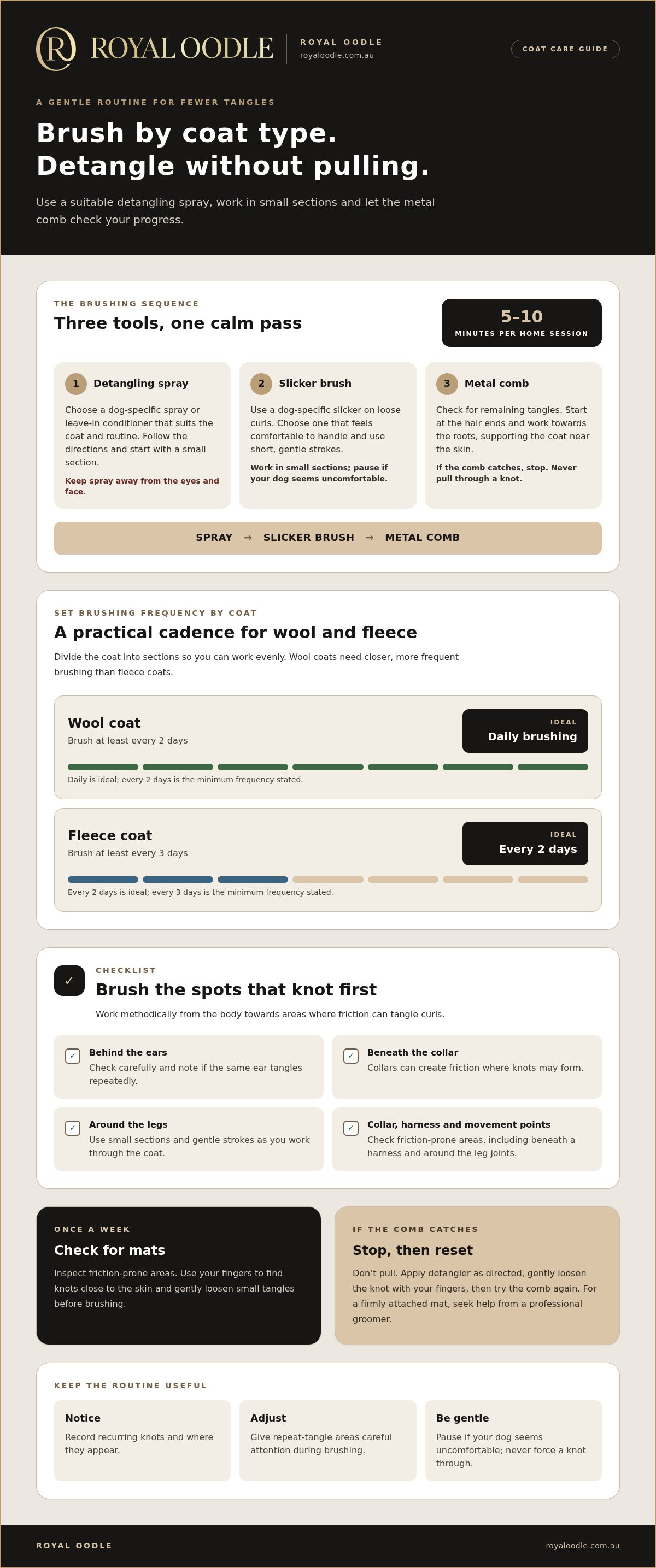
- Choose a dog-specific detangling spray or leave-in conditioner that suits your Cavoodle’s coat and grooming routine. It can help a brush move through curls more gently. Read the directions, apply as instructed and start with a small section. Avoid spraying near your dog’s eyes or face.
- Use a slicker brush on loose curls, working in small sections. Choose one that feels comfortable to handle and use short, gentle strokes. Work methodically from the body to friction-prone areas such as behind the ears, beneath the collar and around the legs. Pause if your dog seems uncomfortable.
- Follow with a metal comb to check for remaining tangles. Start at the hair ends and work towards the roots, supporting the coat near the skin. If the comb catches, stop rather than pulling. Apply detangler as directed, gently loosen the knot with your fingers, then try the comb again.
- Make brushing frequency suit coat type. Wool coats need brushing at least every 2 days, with daily brushing ideal. Fleece coats need brushing at least every 3 days, with every 2 days ideal. A home session can take 5-10 minutes. Divide the coat into sections so you can work evenly.
- Check for mats once a week, especially where collars, harnesses or movement create friction. Keep a note of recurring knots, such as tangles behind one ear, and give those areas careful attention during routine brushing. The right cavoodle coat care products can support detangling, but regular checks help you catch small knots early. Explore dog detangling sprays to find an option for your routine.
Coat softness, shine and matting claims
Judge product claims by what you can see and feel. A glossy finish alone doesn’t tell you whether tangles are easier to manage.
-
Assess softness, shine and matting claims
Read the label to understand the specific result a product promises. Softness and shine describe how a coat looks or feels; they don’t show that mats will disappear. After using a product as directed, check whether the coat is easier to separate with your fingers. Compare the same area before and after, such as the curls behind the ears.
- Separate cosmetic results from everyday maintenance. Conditioner may leave hair feeling smoother, but brushing is still important. For example, check the underarms after a walk, where movement can tangle curls. If a product promises lasting mat prevention, look for clear directions on use and brushing rather than relying on the claim alone.
-
Prevent matting through coat maintenance
Inspect friction-prone areas, including behind the ears, beneath the collar, in the armpits and around the leg joints. Use your fingers to find knots close to the skin, then gently loosen small tangles before brushing. After swimming or rain, dry the coat and check that damp curls aren’t clumping together. Stop if your dog seems uncomfortable.
- Adjust your approach to the type of tangle. You can often ease a loose knot with your fingers and a suitable detangling product, but a tight mat may pull at the skin. Don’t cut close to your Cavoodle’s skin with household scissors. If a mat is firmly attached, seek help from a professional groomer.
- Keep a simple grooming note to track what works. Record the products you use, the areas that tangle and whether brushing feels easier afterwards. For example, repeated knots beneath a harness strap may signal friction and the need for more frequent checks. Use these observations to refine your routine rather than assuming shine or softness claims address every cause of matting.
Cavoodle coat types and maintenance needs
- Use the five-second ear-hair check as a quick clue to coat texture. Look at the hair around your Cavoodle’s ears and compare it with the body coat. Wool coats generally need closer grooming attention than hair coats. Check your dog all over before settling on a routine, as different areas may curl or tangle differently.
- Set bathing around coat condition and your dog’s routine. Bathing most Cavoodles every 3-4 weeks is typical. A muddy walk or a coat that feels dirty may affect timing, but follow product directions and rinse thoroughly. Dry the coat fully afterwards, especially where curls sit close together, so damp hair doesn’t remain clumped.
- Plan professional grooming according to coat type. Wool coats need professional grooming every 4-6 weeks; fleece coats need it every 6-8 weeks. Hair-coated Cavoodles need professional grooming every 8-10 weeks. These intervals help you plan ahead while keeping coat length and daily manageability in view.
- Pay closer attention during puppy coat transition, commonly between 6 and 12 months old. Book professional grooming every 4 weeks during this stage. Watch for changes in texture and new tangles, particularly where puppy hair meets the emerging adult coat. Adjust home care to what you observe, rather than relying on an earlier routine.
- Use coat type to guide product and grooming choices. A wool coat may need more frequent professional attention than a hair coat, while fleece sits between those intervals. Record how quickly knots form and which areas need extra care. For products suited to curly coats, explore coat-care options and choose according to your dog’s texture and needs.
Royal Oodle: Detangling Sprays
Royal Oodle offers detangling sprays for curly-coated dogs, including Cavoodles. Use one during brushing when curls catch or knots need careful attention. Follow the product directions, then gently work through the coat in sections with a suitable brush or comb.
For a complete wash-day routine, Royal Oodle also offers shampoos and conditioners, bundles and kits, and breeder packs. Its products are designed for Oodles and other curly-coated dogs, with gentle, premium ingredients for sensitive skin. They’re developed and manufactured in Australia using modern formulations.
Choose products to suit your dog’s coat-care routine and follow their directions. Explore the range at royaloodle.com.au or contact Royal Oodle for help choosing.
Make your next grooming session more intentional
Use your next grooming session to learn what suits your Cavoodle. Notice which parts of the routine feel comfortable, where tangles return and how your dog responds to handling. These observations can help you make thoughtful adjustments instead of adding unnecessary steps.
Choosing cavoodle coat care products is easier when you focus on the needs you’ve noticed. Keep the routine calm and consistent, and make changes gradually so you can identify what works for your dog. If skin irritation or persistent discomfort appears, pause the routine and seek veterinary advice.
For your next step, explore Royal Oodle’s coat-care range and consider which options fit your dog’s needs and your home routine. Explore coat-care options, then make grooming a comfortable ritual you can build on together.
Frequently Asked Questions
What shampoo and conditioner are best for Cavoodle coats in Australia?
Choose dog-formulated shampoo and conditioner suited to curly coats and your Cavoodle’s skin. Royal Oodle’s Manuka Honey Shampoo & Conditioner Duo is an Australian-made option designed for Oodle coats. Follow the label directions, rinse thoroughly and introduce unfamiliar products one at a time. This makes it easier to notice how your dog’s coat responds, rather than changing several parts of the routine at once.
How often should a Cavoodle be brushed, bathed and professionally groomed?
Match brushing and grooming intervals to coat type. Wool coats need brushing at least every 2 days, ideally daily; fleece coats need brushing at least every 3 days, ideally every 2 days. Bathing most Cavoodles every 3-4 weeks is typical. Professional grooming intervals are 4-6 weeks for wool, 6-8 weeks for fleece and 8-10 weeks for hair coats. Coat transition commonly occurs between 6 and 12 months.
How do you prevent and safely remove mats in a Cavoodle’s coat?
Check your Cavoodle’s coat weekly and note where tangles tend to form. For example, inspect beneath a harness after walks and record whether the same patch catches again. Gently ease loose knots without pulling against the skin. If a mat is tight, painful to touch or close to the skin, don’t cut it out at home; arrange professional grooming.
Are hypoallergenic or sensitive-skin grooming products suitable for Cavoodles?
Dog-formulated products designed for sensitive skin may suit some Cavoodles, but a label can’t guarantee that every dog will tolerate a product. Read the full ingredient list and follow the directions. Introduce one new product at a time rather than changing shampoo, conditioner and spray together. This makes it easier to identify which product may be linked to a reaction.
What are the signs of skin irritation or allergies caused by grooming products in dogs?
Possible signs of irritation include new or increased itching, redness, a rash, repeated licking or swelling after grooming. These signs can have different causes, so don’t assume a product is responsible. Stop using a newly introduced product if symptoms appear and note when you applied it. Seek veterinary advice for persistent or worsening irritation, marked discomfort, swelling or broken skin.
