

The brush may not be the real problem; tugging, sensitive spots or unfamiliar handling can make grooming uncomfortable. To learn how to brush a dog that hates it, start with short, soft bristles and let your dog sniff the brush before you begin. Brush one small section for just 30 seconds, then offer praise and a treat.
If brushing has become a daily struggle, you’re not alone, and your dog isn’t being difficult on purpose. A gentle, gradual approach can make coat care calmer for both of you. Learn how to introduce the brush, keep sessions brief and rewarding, and spot signs that discomfort may be behind your dog’s reaction.
Key Takeaways
- Choose short, soft bristles that move through the coat without snagging; adjust the tool to suit your dog’s coat type.
- Start with one small area and a brief session, then gradually build up as your dog becomes more comfortable.
- Pair calm brushing with treats and praise, and finish before your dog becomes overwhelmed.
- Notice whether your dog reacts to particular areas or movements, as discomfort or pain may be making grooming difficult.
Choosing soft bristles that will not tangle or pull hair
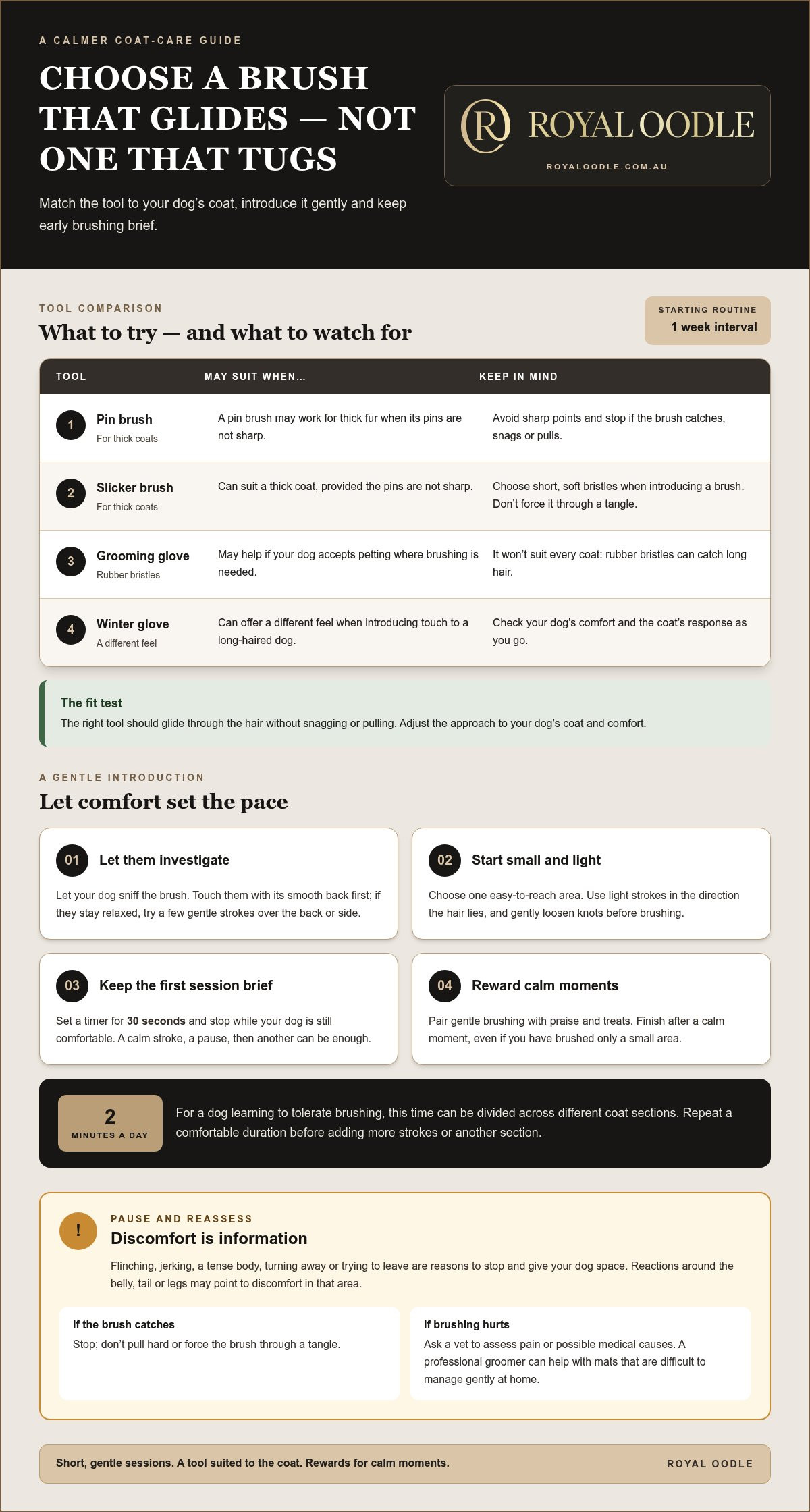
Use a 1 week brushing interval as a starting routine, adjusting the approach to your dog’s coat and comfort. For a thick coat, a pin brush or slicker brush may suit, provided its pins aren’t sharp. The right tool should glide through the hair without snagging or pulling.
- Match the tool to the coat. Check the brush against your dog’s hair before grooming. A pin brush or slicker brush can work for thick fur, but avoid sharp points and stiff, prickly bristles. Choose short, soft bristles when introducing a brush, and stop if they catch or tug.
- Try a gentle alternative if needed. A grooming glove has small rubber bristles on its palm and may help a dog that accepts petting where brushing is needed. It doesn’t suit every coat: rubber bristles can catch long hair. A regular winter glove can offer a different feel for introducing touch to a long-haired dog.
- Introduce the object before brushing. Let your dog sniff the brush, then touch them with its smooth back. If they remain relaxed, try a few gentle strokes over their back or side. This gives them time to get used to the tool before its bristles meet the coat.
- Work from the coat surface in small areas. To brush without causing pain, begin with a small section and use light strokes in the direction the hair lies. Gently loosen knots before brushing; don’t pull hard or force a brush through a tangle.
- Watch the coat and your dog’s response. Tight knots, hair clumped close to the skin, flinching or jerking can signal matting or discomfort. Stop if brushing hurts. Ask a vet to assess pain or possible medical causes; a professional groomer can help when mats are difficult to manage gently at home.
Keeping brushing sessions short
- Begin with a brief finish line. Set a timer for 30 seconds and stop while your dog is still comfortable. One calm stroke, a pause, then another can be enough for an early session. Ending before your dog pulls away helps keep grooming manageable and gives you a clear starting point next time.
- Work on one small section. Choose an easy-to-reach area, such as the back or side, rather than attempting the whole coat. For a dog learning to tolerate brushing, 2 minutes a day can be divided across different coat sections. Keep the brush moving gently, and pause if your dog stiffens, turns away or tries to leave.
- Increase time gradually. Repeat a comfortable duration before adding more strokes or another section. A dog that accepts 30 seconds calmly can progress towards a longer session at its own pace. Don’t extend brushing simply to finish the coat; a few relaxed strokes are more useful than a prolonged struggle.
- Set up for calm. Try a towel or your dog’s bed as a soft surface. A contained area, such as a patio or porch, can limit opportunities to bolt. If sitting still is difficult, brush after an energetic walk, when your dog is more ready to settle. Keep your movements steady and your voice relaxed.
- Respond safely to fear or aggression. Don’t force brushing or restrain a dog that is panicking, snapping or biting. Pause and rebuild comfort with gradual handling; a dog that bites during grooming may need help from a trainer. If knots make short sessions difficult, explore dog coat detangling sprays as part of your grooming routine.
- Stop at the first signs of stress. A tense body, repeated attempts to escape or growling means the session needs a break. Put the brush away, give your dog space, then restart another time with fewer strokes. Calm repetition, rather than one long grooming effort, makes each session easier to approach.
Using treats and praise
- Offer a treat before the brush appears. Give your dog a small reward while they’re relaxed, then bring the brush into view. This creates a pleasant first association before grooming begins. For example, reward your dog for staying beside you while the brush rests on the floor, rather than reaching straight for their coat.
- Reward calm behaviour as it happens. Pair a gentle stroke with a treat, then praise your dog for remaining settled. The Australian Bureau of Statistics says dog handlers use positive reinforcement to reward desired behaviours and discourage unwanted behaviours. In practice, mark a quiet moment with a warm “good dog” and a treat, so your dog can connect calm cooperation with a positive outcome.
- Keep rewards close together at first. For a dog that dislikes grooming, offer a treat every couple of seconds while brushing. Use small pieces so you can reward repeatedly without interrupting the session for long. If your dog stops accepting food, turns away or becomes tense, pause the brush rather than using treats to push through distress.
- Use food to guide position gently. If your dog is comfortable with brushing, hold a treat near their nose to encourage a slight turn. Brush an accessible patch as they reposition, then reward them. This can help you reach another area without pulling their legs or twisting their body into an uncomfortable pose.
- Offer a puzzle toy as a distraction. A treat-filled puzzle toy can occupy a dog that becomes unsettled during grooming. Place it on a stable surface where your dog can reach it comfortably, then brush only while they remain relaxed. Keep watching their body language; distraction shouldn’t replace a pause when they show discomfort.
- End with praise and a special treat. Finish after a calm moment, even if you’ve brushed only a small area. Give your dog a favourite reward and affectionate praise as soon as the brush is put away. Repeating this clear ending helps make the final memory of each grooming session pleasant.
Reasons dogs dislike brushing
- Notice where the reaction begins. Watch your dog’s face and body as you approach with the brush. Pulling away when you reach the belly, tail or legs can point to discomfort in that area. Record which places trigger a reaction, then avoid brushing them until you understand what is happening.
- Check whether the coat is pulling. Knots can tug at the skin as a brush passes through, making grooming feel unpleasant. Look for compacted hair, especially around areas where the coat rubs or folds. Don’t force a brush through a tangle; pulling harder can intensify discomfort and make your dog wary of future handling.
- Consider pain as a possible cause. Arthritis, infected ears or inflammation in the joints can make a dog jerk when you approach sensitive spots. Notice whether the response happens during other handling too, such as touching an ear or helping your dog stand. Arrange a veterinary assessment for possible medical causes of brushing pain.
- Separate fear from a specific sore spot. A dog may tense as soon as the brush appears, or react only when one body area is touched. Note the difference across calm, everyday interactions. If your dog accepts gentle petting but recoils from the brush, the tool or its movement may be part of the problem.
- Pause when your dog signals distress. A sudden jerk, flinch, growl or attempt to escape is a cue to stop and give space. Don’t scold or continue brushing through the reaction. For example, if your dog moves away when you approach a hip, leave that area alone and note the response.
- Use the pattern to choose your next step. A reaction tied to a particular area, especially alongside sensitivity outside grooming, calls for veterinary advice. If the coat is tightly matted, or your dog cannot tolerate handling, seek help with the coat rather than forcing a home session. The key is to address the cause, not label the dog difficult.
Royal Oodle: Detangling Sprays
Royal Oodle’s detangling sprays can support coat-care routines when knots make brushing uncomfortable. For curly-coated dogs, detangling care can complement patient handling and a suitable soft-bristled brush. Use a spray as part of your grooming routine, then gently work through manageable tangles rather than pulling the brush through a knot.
Choose a detangling spray when your dog’s coat catches easily or small tangles make each session harder. Royal Oodle also offers Shampoo & Conditioners, Bundles & Kits, and Breeder Packs for different coat-care needs. Keep the routine calm: a detangling product supports coat care, while short sessions and your dog’s comfort should guide every brush stroke.
Explore Royal Oodle’s coat-care range at royaloodle.com.au.
Make the next grooming session a fresh start
Progress doesn’t have to mean a complete brush-through. A calmer response to the brush, or your dog choosing to stay beside you, is a meaningful step forward. Notice what helps your dog feel safe, and let their comfort set the pace of each session.
Learning how to brush a dog that hates it is about building trust, not winning a struggle. If knots make the process harder, Royal Oodle’s grooming range includes detangling sprays, Shampoo & Conditioners, and Bundles & Kits. Choose products that support your routine, and keep each brushing session gentle and responsive to your dog.
For help exploring coat-care options, contact Royal Oodle. With patience and a thoughtful routine, brushing can become a quieter moment of connection.
Frequently Asked Questions
Why Does My Dog Dislike Being Brushed?
Your dog may dislike brushing because it pulls at knots, touches a painful area, or feels unfamiliar. Notice whether the reaction starts when you pick up the brush or only when you approach a particular spot, such as an ear or hip. A sudden change in tolerance, especially alongside sensitivity during everyday handling, is a reason to discuss possible pain with your vet.
How to gradually desensitise a dog to brushing
Learning how to brush a dog that hates it starts with making the brush familiar, then moving forward only while your dog stays relaxed. Begin with the brush nearby and reward your dog for choosing to approach it. Next, briefly touch them with the smooth back of the brush, followed by a gentle bristle stroke. If they move away or tense up, return to an easier stage at another session. Don’t hold them in place to continue.
How to choose a gentle dog brush and grooming tools in Australia
Choose a tool that suits your dog’s coat and moves through the hair without snagging. For thick fur, a pin brush or slicker may be suitable if its points aren’t sharp; short, soft bristles can feel gentler when introducing a brush. Check the brush after a few strokes: if it keeps catching, it may not suit the coat. Grooming gloves can also catch long hair.
What treats and rewards help dogs tolerate brushing
Use a treat your dog already enjoys, and reward a clear, calm behaviour rather than offering food continuously without a cue. For example, give a treat when your dog lets you bring the brush close, then reward them again after a relaxed stroke. A treat-filled puzzle toy can keep a dog occupied during grooming. Keep your praise warm and specific, such as “good staying”.
