

The gentlest answer to an itchy dog isn’t always another bath. The right dog shampoo for itchy skin can help cleanse the coat, but scrubbing or choosing a product without considering your dog’s skin tolerance may add to the irritation.
If your dog keeps scratching, it’s understandable to wonder whether bathing will help or make things worse. Start gently: use lukewarm water, avoid vigorous rubbing and rinse thoroughly. Choose shampoo thoughtfully, too. “Hypoallergenic” on a label doesn’t guarantee a product will suit every dog, and itching can have causes that shampoo alone won’t address.
This guide covers a low-stress bathing routine, what to consider when choosing a gentle shampoo and when to pause home care and seek veterinary advice. You’ll also learn why persistent or severe itching deserves attention, so you can keep curly-coat grooming comfortable and low-friction without treating a bath as a substitute for veterinary care.
Key Takeaways
- Notice when scratching persists or returns. Itch can have several causes and isn’t a diagnosis on its own.
- Choose dog shampoo for itchy skin with your dog’s individual skin and coat in mind, and follow the label directions.
- Shampoo can cleanse the coat, but it can’t identify what’s causing the itch.
- Make bath time gentler by preparing first, using lukewarm water and rinsing the coat thoroughly.
- Observe your dog’s skin after bathing, and seek veterinary advice if irritation continues or worsens.
Why is your dog itchy, and when should you look beyond shampoo?
Seeing your dog scratch, lick or rub against the furniture can be unsettling, especially when a curly or fleece coat makes the skin harder to see. Itching is a sign to observe, not a diagnosis. Before reaching for dog shampoo for itchy skin, take note of what’s happening. The right next step depends on more than the coat’s surface.
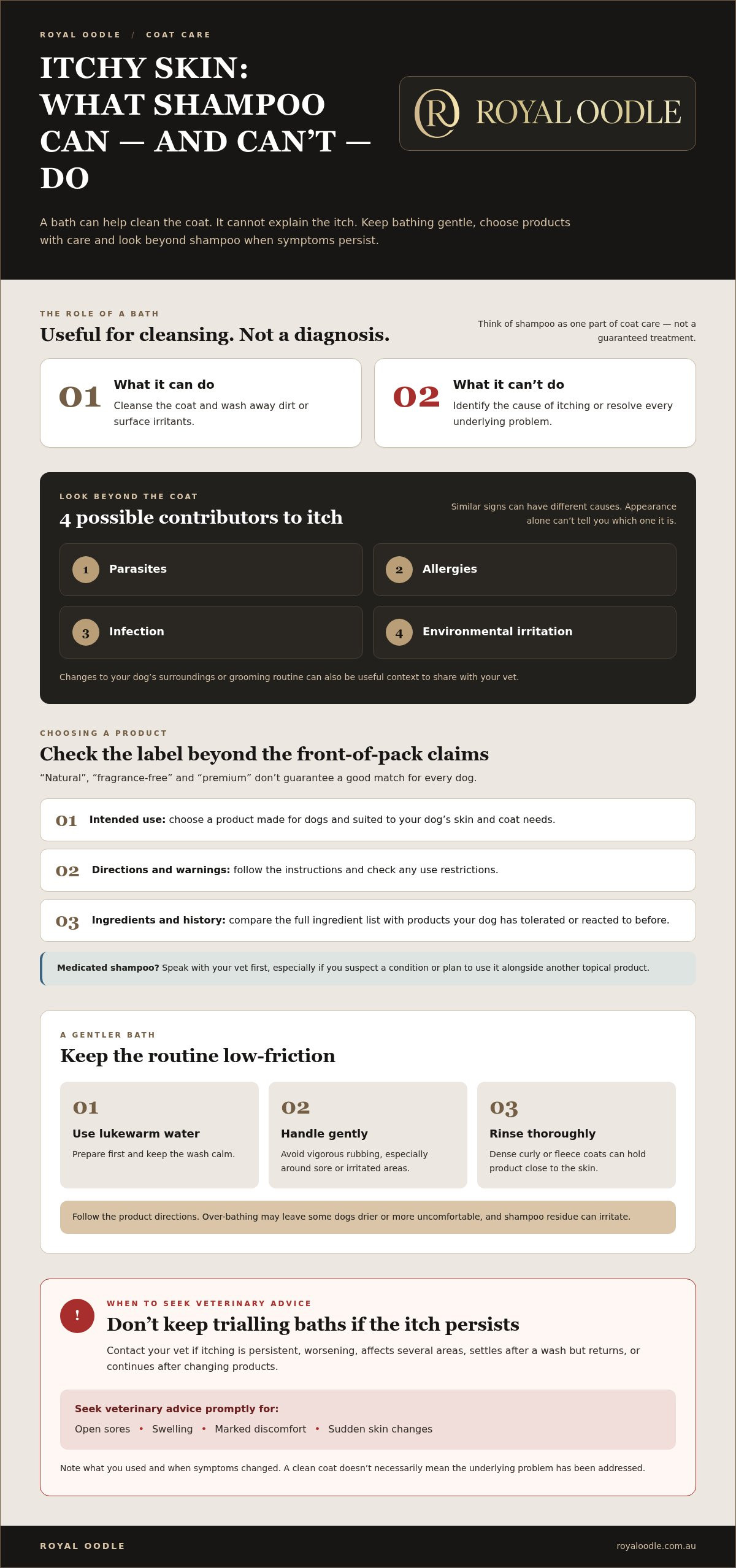
Possible contributors include parasites, allergies, infection and environmental irritation. Changes in your dog’s surroundings or grooming routine may also be useful context to share with your vet. These possibilities can look similar at home, so avoid trying to identify the cause by appearance alone. A gentle bath may wash away surface debris or irritants, but it can’t resolve every underlying problem. Repeatedly changing shampoo without understanding the pattern may delay more appropriate care.
Itching is a symptom, not an explanation: parasites, allergies, infection and environmental irritation are among the possible causes.
What signs can you observe before bath time?
Pause for a calm, visual check. Notice where your dog focuses their attention and whether the behaviour happens occasionally or keeps interrupting rest, play or walks. With a dense coat, gently look through the fur without digging at the skin or disturbing sore areas.
- Note where your dog scratches, licks or rubs, and how often it happens.
- Look for visible redness, flaking, odour, sores or changes in the coat.
- Write down recent changes to grooming, the home environment, walks or routine.
A short record can help you describe the pattern clearly during a veterinary discussion. If you can, note when you first noticed the behaviour and whether it’s becoming more frequent. Don’t delay care to complete a log if your dog seems unwell or uncomfortable.
When is itching a reason to call the vet?
Seek veterinary advice if the itch is persistent, worsening or affecting several areas. Contact a vet promptly for open sores, swelling, marked discomfort or sudden skin changes. These signs deserve attention rather than another experiment with bathing or a new product.
Itching that settles after a wash but returns is worth discussing, too. A bath may leave the coat feeling cleaner while the underlying cause remains. Repeated shampoo changes can make it harder to tell what’s helping or irritating your dog, so note what you used and when symptoms changed. Your vet can assess the skin and advise whether bathing should continue or another approach is needed.
How can you choose dog shampoo for itchy skin?
Start with a shampoo made specifically for dogs. Human shampoo isn’t a substitute for canine grooming products, even if it’s marketed as mild. For a dog with sensitive skin, look for clear directions, gentle cleansing and guidance that suits your dog’s coat and skin. A curly or fleece coat also needs careful application and thorough rinsing, as dense fur can hold product close to the skin.
Labels can help you compare products, but no single claim guarantees a good match for every dog. “Natural”, “fragrance-free” and “premium” describe different qualities; they don’t confirm how your individual dog will respond. If a product has caused a reaction before, make a note of it and take care when considering a new formula.
Choose shampoo for your dog, not just for an ingredient claim.
Which label details are worth checking?
Read the intended use, directions, warnings and any stated skin or coat suitability. Review the full ingredient list, and keep track of products your dog has previously tolerated or reacted to. This gives you a more useful basis for comparing options than front-of-pack claims alone. For more label-reading guidance, explore this sensitive-skin dog shampoo guide.
- Check that the product is intended for dogs and suits your dog’s coat and skin needs.
- Follow the directions and note any warnings or use restrictions.
- Compare the ingredient list with products your dog has previously used.
For curly coats, cleansing is one part of a considered grooming routine. Gentle handling and careful rinsing matter, too. Australian-developed shampoos and conditioners formulated for sensitive skin may suit dogs whose skin needs thoughtful product selection. Explore Australian-developed coat-care products as you shape a routine around your dog’s individual needs.
Does an itchy dog always need medicated shampoo?
No. A cosmetic shampoo can cleanse the coat, but it shouldn’t be relied on to treat a suspected infection, parasites or allergy. Medicated products should be appropriate for the suspected condition and used with veterinary guidance. If you’re considering a treatment shampoo, or using it alongside another topical product, speak with your vet first.
A product label can’t establish the cause of a skin problem. If your dog’s itching continues or returns, veterinary advice can guide the next step instead of leaving you to trial products one after another. Choose with your dog’s coat, skin tolerance and history in mind, and keep bathing gentle.
What can shampoo do for itchy skin, and what can’t it do?
A bath has a practical role: it can cleanse the coat and remove dirt or surface irritants. It can’t tell you why your dog is itchy, and a clean coat doesn’t necessarily mean the underlying problem has been addressed. Think of shampoo as one part of coat care, not a diagnosis or a guaranteed treatment.
Comfort after bathing varies with the dog’s skin and the reason for the itch. Over-bathing may leave some dogs feeling drier or more uncomfortable, while shampoo residue left in a dense curly coat can also irritate. Follow the product directions, rinse thoroughly and avoid bathing more often than the coat and product guidance call for. Don’t expect a cosmetic wash to cure allergies, infection, parasites or ongoing skin disease.
A bath can clean the coat, but recurring itch needs assessment beyond another product switch.
When might a gentle wash be useful?
A gentle wash may make sense when your dog’s coat is dirty or has picked up surface irritants. Keep expectations measured: a bath may leave the coat cleaner, but whether your dog feels more comfortable depends on their skin and the cause of the itching. For curly coats, this Oodle dog shampoo choosing guide can help you consider coat suitability alongside cleansing.
Use a dog-specific product as directed. If your dog seems more uncomfortable during or after the wash, stop and seek veterinary advice rather than assuming another bath will help.
Why can frequent product changes complicate skin care?
Switching shampoos, conditioners or other topical products in quick succession makes it harder to connect a change in the skin with a particular product. Keep the routine steady where appropriate, and make a simple record of bathing dates, products used and anything you notice afterwards. If discomfort appears after a product, stop using it and ask your vet for guidance.
- Record the product and bathing date.
- Note changes such as increased scratching, redness or discomfort.
- Share the record with your vet if the itch continues or returns.
This simple record won’t identify the cause, but it can provide useful context during an assessment. Avoid adding several new products at once, especially if your dog’s skin is already unsettled. The aim is thoughtful, low-friction coat care, not a cycle of increasingly frequent washes. Dog shampoo for itchy skin may suit cleansing needs, but persistent symptoms call for veterinary advice about what’s driving them and what care is appropriate.
How do you bathe an itchy dog gently at home?
A calm bath is easier on sensitive skin and on a curly coat that can tangle with rough handling. Prepare first, keep the water lukewarm and move slowly. Use dog shampoo for itchy skin only as its label directs, including any stated contact time and rinsing instructions. Don’t scrub harder in an attempt to reach the skin through a dense coat.
How should you prepare for a low-stress bath?
Gather the dog shampoo, towels and a non-slip surface before bringing your dog to the bathing area. Check the coat gently for mats, but don’t pull at tangles or brush over sore skin. Keep your voice and movements calm, and allow your dog time to settle. If they show significant distress, stop and consider another approach with veterinary guidance.
Once you’re ready, use this simple sequence:
- Wet the coat: Use lukewarm water and wet the coat thoroughly, working patiently through dense areas without directing water into the eyes or ears.
- Apply shampoo: Keep it away from the eyes, ears and other sensitive areas. Follow the label’s directions rather than guessing the amount or contact time.
- Rinse completely: Work through the coat methodically, including areas where curly fur can hold product. Follow any specific rinsing instructions on the label.
- Dry gently: Blot with a towel and dry the coat thoroughly without overheating the skin.
Keep your touch light throughout. Avoid vigorous scrubbing, hot water and forceful brushing over irritated areas. If the coat is matted close to the skin or handling appears painful, don’t try to work through it during the bath. Protecting your dog’s comfort matters more than completing every grooming step at once.
How should you rinse and dry an itchy coat?
Rinse until no visible product remains, parting the coat gently so water can reach through its full depth. Leftover shampoo can leave some dogs uncomfortable. After rinsing, press a towel against the coat to absorb water instead of rubbing the skin or creating friction through curls. Dry thoroughly and gently, taking care not to overheat the skin.
Bathing with conditioner as well as shampoo? Follow each product’s directions and consider how the pair suits your dog’s coat. This Australian dog shampoo and conditioner guide offers context for choosing a wash pairing. Keep the routine unhurried, and stop if your dog becomes markedly distressed or more uncomfortable.
For a considered routine, explore dog shampoos and conditioners for curly coats and follow the directions for the product you choose.
What should you do if your dog is still itchy after a bath?
If your dog keeps scratching after a bath, resist the urge to wash again straight away. A bath may clean the coat, but continued or returning itch needs more than another change of shampoo. Observe your dog and note what you see. Persistent, worsening or widespread itching warrants veterinary assessment to help identify its cause.
Seek prompt veterinary advice if you notice open sores, swelling, marked discomfort or sudden skin changes. If your dog seems significantly distressed, prioritise their comfort rather than continuing with home grooming. Dog shampoo for itchy skin can be part of routine coat care, but it isn’t a substitute for assessing ongoing irritation.
What information helps a vet assess ongoing itch?
A clear timeline can make a veterinary appointment more useful. Record when the symptoms began, which areas are affected and whether the scratching, licking or rubbing is becoming more frequent. Note visible changes, such as redness, flaking, sores or coat changes, and whether your dog seemed more comfortable or more irritated after bathing.
- Write down the dates of baths and the shampoo and conditioner used.
- List any topical products applied, including detangling or leave-on products.
- Describe what changed after bathing and how long any change lasted.
Keep the product labels or take clear photos of them, so you can share the directions and ingredients with your vet. Don’t start several new products while waiting for advice; changing multiple things can make it harder to interpret what happened. If a product appears to trigger discomfort, stop using it and discuss the reaction with your vet.
How can coat care stay gentle between baths?
Keep grooming sessions calm and brief. Use a light touch, and don’t brush directly over sore or inflamed skin. With curly and fleece coats, avoid tugging at knots near sensitive areas; pause if your dog reacts as though handling is painful. Choose coat-care products with your dog’s skin tolerance and coat texture in mind, and follow their directions.
Royal Oodle’s Australian-developed shampoos and conditioners are grooming products for Oodles and other curly-coated dogs, including options formulated for sensitive skin. They can support a considered cleansing routine, but they aren’t medical treatments and shouldn’t be relied on to diagnose or treat the cause of persistent itch. For broader product-selection context, the Australian-made dog grooming products guide explores what to consider when choosing grooming products.
Keep the focus on comfort: gentle handling, thoughtful product use and timely veterinary advice when symptoms continue. That way, coat care stays supportive without delaying attention to skin that needs a closer assessment.
Make your dog’s next grooming step a gentle one
Let your dog’s skin response guide what happens next. If the itch continues or returns, make veterinary advice the priority before trying another wash. If you’re choosing dog shampoo for itchy skin for routine cleansing, focus on a product suited to your dog’s coat and skin, then follow its directions carefully.
For curly-coated dogs, comfort also depends on the grooming that follows bath time. A considered routine can help keep coat care calm and reduce unnecessary pulling through curls. Royal Oodle’s shampoos and conditioners are developed and manufactured in Australia, with options formulated for sensitive skin. They’re grooming products, not medical treatments, but can be part of thoughtful care when they suit your dog.
Explore Royal Oodle’s Australian-developed grooming products for your dog and choose a routine that feels manageable for both of you. Small, attentive steps can make bath time a more reassuring part of your dog’s care.
Frequently Asked Questions
Can dog shampoo stop my dog's itchy skin?
Not necessarily. Dog shampoo for itchy skin may clean away dirt or surface irritants, but it can’t identify or reliably resolve the reason your dog is uncomfortable. If the itching is linked to parasites, allergies or infection, a cosmetic wash alone won’t address that cause. Consider how your dog responds after bathing, and arrange veterinary advice if the scratching continues or returns.
How often should I bathe a dog with itchy skin?
There isn’t one bathing schedule that suits every dog. Your dog’s coat, skin response and the shampoo’s directions all matter. Avoid bathing more often simply because the itching persists; frequent washing may leave some dogs less comfortable. Follow the product label, and ask your vet for a suitable routine if your dog needs repeated baths or has ongoing skin irritation.
Is human shampoo safe for dogs with itchy skin?
Use shampoo made for dogs rather than human shampoo. A product intended for people isn’t a substitute for canine grooming care, even if it’s described as mild or suits sensitive human skin. Check that the label states it’s for canine use and follow its directions. If you’ve already used a human product and notice a reaction, contact your vet for advice.
What should I do if my dog is still itchy after a bath?
Don’t repeat the bath straight away. Observe whether the scratching is easing, unchanged or worsening, and note any new redness or discomfort. Keep the shampoo and conditioner labels, along with the time of the bath, so you can share what was used. If the itch persists or returns, book a veterinary assessment rather than trying several products in quick succession.
Can I use medicated dog shampoo without seeing a vet?
It’s best to get veterinary guidance before using a medicated shampoo. The appropriate treatment depends on what may be causing the skin problem, and choosing an unsuitable product could delay assessment. Ask your vet before combining a treatment wash with other topical products, too. If a medicated shampoo has already been recommended, follow the directions provided for your dog and contact the clinic if you’re unsure how to use it.
Should I use conditioner on a dog with itchy skin?
You can use a dog-specific conditioner if it’s suitable for your dog’s skin and coat, and the label directions allow it. For curly or fleece coats, conditioner may be part of a routine that helps make coat care more manageable, but it isn’t an itch treatment. Rinse as directed, and stop using the product if your dog seems more uncomfortable afterwards.
When should I take an itchy dog to the vet?
Arrange veterinary advice if itching is persistent, worsening, widespread or keeps returning. Seek prompt care for open sores, swelling, marked discomfort or sudden skin changes. Before the appointment, note when the symptoms started, where your dog is scratching and any grooming products used. If your dog seems acutely distressed, don’t wait to see whether another bath will help.
