

A “natural” label doesn’t guarantee a gentler bath. If you’re searching for “dog shampoo for sensitive skin australia”, reassuring claims on the bottle can still leave you wondering what will suit your dog, and whether washing might make itching or redness worse.
That uncertainty is understandable. A sensitive-skin claim and an ingredient list offer useful clues, but they can’t predict how every dog will respond or explain what’s causing discomfort. Start with your dog’s symptoms and tolerance, rather than choosing a label that simply sounds soothing.
This guide explains how to read shampoo labels, build a careful bathing and rinsing routine, and recognise when to stop using a product and seek veterinary advice. You’ll also learn how dog-specific grooming products fit into coat care, and why shampoo can support a comfortable wash without replacing a veterinary diagnosis.
Key Takeaways
- Choose dog shampoo for sensitive skin in Australia by considering your dog’s symptoms and tolerance, not just a reassuring front-label claim.
- Read the full ingredient list and directions to assess whether a shampoo’s intended use suits your dog.
- Understand the difference between everyday cleansing shampoos and veterinarian-directed medicated products.
- Make bath time gentler with a calm, simple routine, and follow the product directions for use and rinsing.
- Notice how your dog responds after a bath. Recurring or severe skin signs call for veterinary advice, not repeated product switching.
Dog shampoo for sensitive skin: what the label can, and cannot, tell you
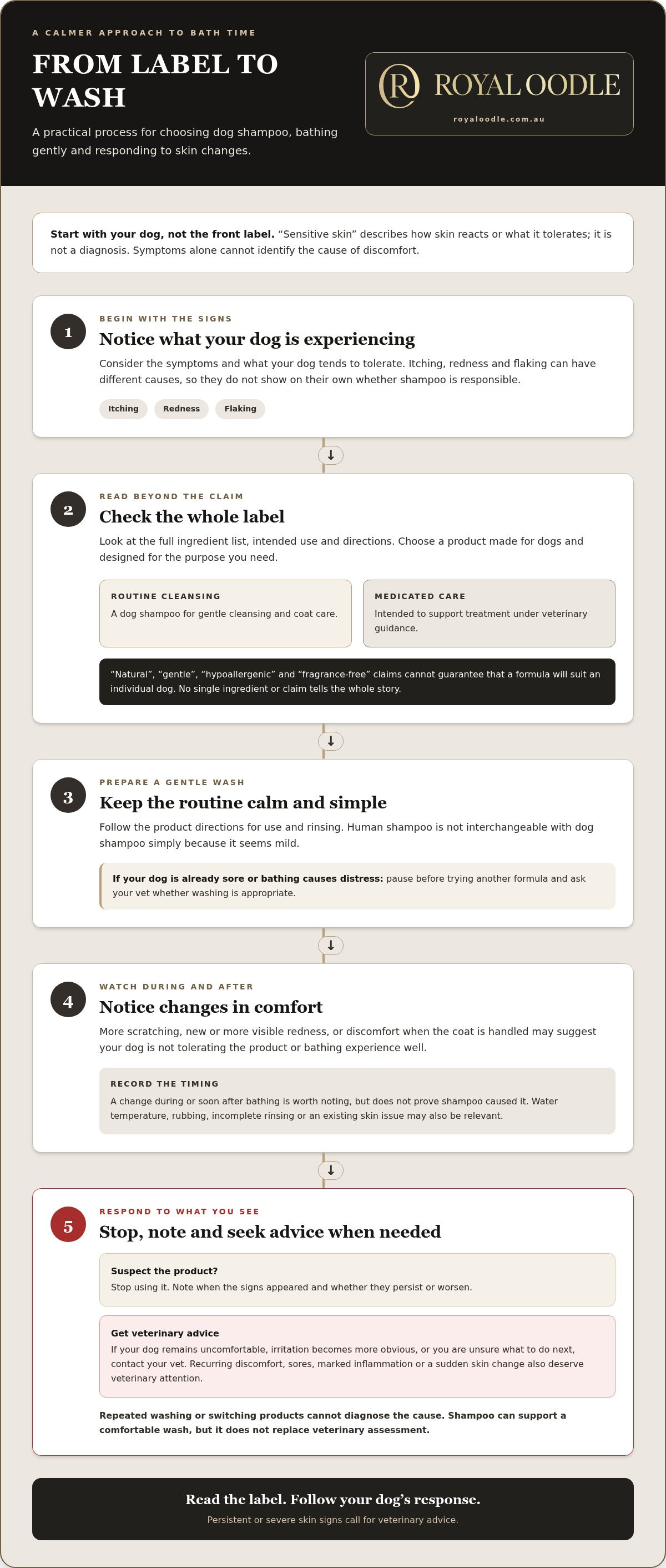
“Sensitive skin” describes how a dog’s skin reacts or what it tolerates. It isn’t a diagnosis. Itching, redness and flaking can have different causes, so symptoms alone can’t tell you whether shampoo is responsible or what care your dog needs.
A label can explain a product’s intended use, directions and listed ingredients. It can’t confirm the cause of irritation or guarantee that every dog will tolerate the formula. When comparing dog shampoo for sensitive skin in Australia, look beyond the front-of-bottle claim and pay attention to your dog’s response.
A sensitive-skin shampoo is intended for gentle cleansing and coat care; a medicated shampoo is intended to support treatment under veterinary guidance. Don’t treat a cosmetic cleansing claim as evidence that a product will resolve a skin condition. If your dog has a diagnosed problem, follow your vet’s advice about whether a particular wash is appropriate.
Which signs suggest shampoo may be irritating your dog?
Notice what happens during and after a bath. Increased scratching, new or more visible redness, or discomfort when the coat is handled may be signs that your dog isn’t tolerating the product or bathing experience well. Timing is useful to note: a change during or soon after bathing is worth recording, but it doesn’t prove the shampoo caused it. Water temperature, rubbing, incomplete rinsing or an existing skin issue may also be relevant.
If you suspect a product, stop using it. Note when the signs appeared and whether they persist or worsen. Seek veterinary advice if your dog remains uncomfortable, develops more obvious irritation, or you’re unsure what to do next.
When is itching more than a shampoo question?
Recurring discomfort, sores, marked inflammation or a sudden change in your dog’s skin deserves veterinary attention. Parasites, allergies and infections can cause skin signs, but a shampoo label or home assessment can’t distinguish between them. These problems need professional assessment, so don’t rely on repeated washing or product changes to treat them.
If your dog is already sore or bathing seems to cause distress, pause before trying another formula and ask your vet whether washing is appropriate. A calmer routine starts with understanding what your dog needs, not adding more products.
For coat-care context, including washing considerations for curly coats, explore our Oodle dog shampoo guide. It complements this symptom-led guidance, but persistent or severe skin signs still call for veterinary advice.
How to assess dog shampoo ingredients for sensitive skin
A calming phrase on the front label is only a starting point. Turn the bottle around and read the full ingredient list, intended use and directions. For dog shampoo for sensitive skin in Australia, a dog-specific formula is a sensible place to start, but no label can predict exactly how an individual dog will respond.
Suitability depends on the complete formulation and the individual dog, not one ingredient or front-label claim. “Natural”, “gentle” and “hypoallergenic” may sound reassuring, but they don’t guarantee that a formula will suit your dog. Plant-derived ingredients aren’t automatically suitable for every animal, and synthetic ingredients aren’t automatically problematic. Consider the overall formula and your dog’s observed tolerance.
How should you read a dog shampoo label?
Check that the shampoo is made for dogs, then follow its directions. Human shampoo isn’t interchangeable with dog shampoo simply because it seems mild. Choose a product designed for canine bathing instead. Look for clear ingredient information and make sure the product’s stated purpose matches your need, such as routine cleansing rather than treatment for a skin condition.
If your dog has reacted to a grooming product before, compare the new label with the old one and note any shared ingredients. A match doesn’t prove the cause: formulas differ, and a reaction can have more than one explanation. If symptoms persist or return, ask your vet for guidance rather than testing a succession of products.
Do natural or fragrance-free claims guarantee a gentler wash?
No single claim can promise a comfortable result. Fragrance, essential oils, cleansers and preservatives each have a role in some formulations, but their presence alone doesn’t establish whether a shampoo will irritate your dog. Equally, “fragrance-free” or “natural” isn’t proof of individual suitability. Assess the full label, intended use and your dog’s response.
For professional context on veterinary skin expertise, see the Australian and New Zealand College of Veterinary Scientists Dermatology Chapter. It’s a useful reminder that persistent skin concerns are best assessed by a vet, rather than solved by interpreting ingredient names alone.
Product origin can help you understand who makes a grooming formula, though it doesn’t establish how your dog will tolerate it. Read more about Australian-made dog grooming products for broader label and origin context. If you’re comparing dog-specific washes, explore Royal Oodle’s dog shampoos and conditioners. The range is designed for Oodles and other curly-coated dogs and includes products formulated with gentle, premium ingredients for sensitive skin.
Sensitive-skin dog shampoo: how to compare products without chasing claims
Compare the practical details first. A clear “sensitive” or “natural” claim may catch your eye, but it won’t tell you whether a shampoo suits your dog’s coat, bathing needs or known sensitivities. Use the label to check what the product is designed to do and how it should be used.
What should you compare before choosing a shampoo?
Use this quick comparison to assess dog shampoo for sensitive skin in Australia without relying on a “best” claim or someone else’s review:
| What to check | What to look for |
|---|---|
| Intended use | A dog-specific shampoo whose stated purpose matches your need, such as routine cleansing or coat care. |
| Ingredient information | A list that lets you review the complete formulation, particularly if your dog has known sensitivities or reacted to a previous product. |
| Directions | Clear instructions for application and rinsing. Follow the label rather than guessing about use. |
| Suitability | Consider your dog’s coat, past reactions and any advice from your vet. |
Reviews can help you understand another owner’s experience, but they can’t predict how your dog will respond. A product that worked well for one pet may not suit another. Give more weight to clear directions, ingredient information and a use that fits your needs than to ratings or broad “natural” promises.
When might a medicated shampoo be different?
Everyday cleansing products are designed for washing and coat care. A medicated shampoo may be intended to support care for a specific skin problem, so use it under veterinary direction. Don’t choose a treatment product, or change how it’s used, based only on a label claim or online review.
Skin signs can have different causes, and persistent discomfort may need assessment beyond a change of shampoo. The AAHA guidance on dog allergies and sensitive skin provides further context on allergies and management. A cosmetic shampoo can be part of a thoughtful wash routine, but it can’t replace veterinary diagnosis or treatment.
For a dog-specific option, explore Royal Oodle’s dog shampoos and conditioners, including formulas intended for sensitive skin. Compare the label with your dog’s needs, then observe how your dog responds.
How to bathe a dog with sensitive skin more gently
A calm, well-prepared wash gives you more control over each step. When using dog shampoo for sensitive skin in Australia, follow the product label rather than guessing about dilution, how long to leave it on or how often to bathe. If your dog’s skin is already inflamed or broken, seek veterinary guidance before applying shampoo.
What does a careful wash-day routine look like?
Set out towels and supplies before bringing your dog to the bath. A steady, unhurried routine can make the experience easier for both of you.
- Prepare: Keep the shampoo, towels and anything else you need within reach.
- Wet: Use comfortable, lukewarm water and avoid spraying directly into your dog’s eyes.
- Apply: Use the shampoo as directed on the label. Don’t add your own dilution or leave-on time.
- Rinse: Rinse thoroughly, following the product instructions. Take care around the face and avoid getting shampoo in the eyes.
- Dry: Pat the coat gently with a towel. Vigorous rubbing can add friction and discomfort.
Keep the wash focused and quiet. If your dog becomes distressed or uncomfortable, pause rather than rushing through the remaining steps.
How can you introduce a new shampoo cautiously?
Choose a time when your dog’s skin isn’t visibly sore, inflamed or broken. If you’re unsure whether bathing is appropriate, ask your vet first. During the wash and afterwards, watch for changes such as increased scratching, redness or signs of discomfort. A calm start doesn’t guarantee a particular response, so keep observing.
If irritation or discomfort appears, stop using the product and rinse it off thoroughly if you’re still bathing. Note the shampoo and when the change occurred, then share those details with your vet. Seek veterinary advice if signs persist or worsen, or if your dog develops sores or marked inflammation.
Recurring skin concerns shouldn’t be managed by repeatedly switching shampoos. A gentle wash routine can support coat care, but it can’t establish what’s causing a skin problem. For a dog-specific option to consider as part of your routine, explore Royal Oodle dog shampoos.
Choosing a gentle dog shampoo in Australia: a calmer next step
A thoughtful choice starts with your dog, not the loudest claim on a bottle. Before the next bath, use this checklist when choosing dog shampoo for sensitive skin in Australia:
- Check the purpose: Choose a shampoo intended for dogs and read all directions before use.
- Consider the symptoms: Mild, occasional signs are different from discomfort that keeps returning or is getting worse. If signs are persistent or severe, seek veterinary advice rather than trying another shampoo.
- Keep the routine manageable: Follow product directions and avoid bathing more often than they recommend.
- Observe your dog: Notice any changes during or after bathing, and stop using the product if irritation or discomfort appears.
These steps can help you make a measured choice without expecting a cosmetic product to explain or resolve a skin problem. Recurring itching, sores or marked inflammation need veterinary assessment.
Where does a conditioner fit into sensitive-skin coat care?
Conditioner is a separate coat-care step. It may help care for the coat, but it isn’t a treatment for skin disease. Read its directions and keep it away from any areas the label excludes. If your dog has sore or broken skin, ask your vet whether applying conditioner is appropriate.
Royal Oodle develops and manufactures dog shampoos and conditioners in Australia, including options formulated with gentle ingredients for sensitive skin. Australian development is useful product context, but it doesn’t predict how an individual dog will respond. Follow the directions and pay attention to your dog’s tolerance.
For more context on choosing wash products, read the dog shampoo and conditioner guide. A considered wash can be part of comfortable coat care, but veterinary advice comes first if skin signs persist or worsen.
Explore Royal Oodle’s dog wash products to find dog-specific shampoos and conditioners for your bathing routine.
Make your dog’s next wash a gentler one
Choosing dog shampoo for sensitive skin in Australia is less about finding a perfect-sounding claim and more about making a considered choice for your dog. Read the full label, check that the formula is intended for dogs, and follow its directions. A calm wash and thorough rinse can help keep grooming comfortable, while careful observation helps you notice if your dog reacts poorly.
Remember, shampoo supports cleansing and coat care; it can’t diagnose or treat the cause of recurring itch, redness or soreness. If signs persist or worsen, pause product changes and seek veterinary advice. Your dog’s comfort comes first.
Royal Oodle develops and manufactures grooming products in Australia, including dog shampoos and conditioners formulated with gentle, premium ingredients for sensitive skin. Explore Royal Oodle’s Australian-developed dog wash products to find a dog-specific option for your routine. Read the label, follow the bathing directions and pay attention to your dog’s response. Browse Royal Oodle’s dog wash range to choose products for your dog’s coat-care routine.
Frequently Asked Questions
What is the best dog shampoo for sensitive skin in Australia?
The best choice is a dog-specific shampoo with clear ingredients and directions that suit your dog’s needs. No “sensitive skin” or “hypoallergenic” claim can guarantee an individual dog’s tolerance, so observe how your dog responds. Royal Oodle develops and manufactures its products in Australia, including dog shampoos formulated with gentle, premium ingredients for sensitive skin. If your dog has recurring or severe symptoms, seek veterinary advice before choosing a wash.
Can I use human shampoo on a dog with sensitive skin?
It’s best to use shampoo made for dogs, not human shampoo. Human products are formulated for people, and a mild or fragrance-free label doesn’t make them suitable for canine skin. Choose a dog-specific formula and follow its directions. If you’ve already used human shampoo and notice redness, scratching or discomfort, stop using it, rinse thoroughly if product remains on the coat, and contact your vet if signs persist or worsen.
Are natural dog shampoos better for sensitive skin?
Not necessarily. “Natural” describes a marketing position, not a guarantee that a shampoo will suit every dog. Plant-derived ingredients may still be unsuitable for an individual pet, while the overall formulation matters more than a single reassuring claim. Check the full ingredient list, intended use and directions. If your dog has reacted to grooming products before, compare labels carefully and ask your vet for guidance if skin signs continue.
How often should I bathe a dog with sensitive skin?
There isn’t one bathing schedule that suits every dog. Follow the shampoo label and any guidance from your vet, especially if your dog has an ongoing skin concern or is using a medicated wash. Avoid bathing more often than directed or adding extra washes to manage persistent itching. If discomfort keeps returning or worsens, ask your vet about the cause rather than repeatedly changing products or bathing more frequently.
What should I do if my dog reacts to shampoo?
Stop using the shampoo if your dog develops increased scratching, redness or discomfort during or after a bath. If you’re still bathing, rinse the coat thoroughly to remove product, taking care around the eyes. Note the product and when the signs appeared. Contact your vet if the reaction persists, worsens, or includes sores or marked inflammation. Don’t try another shampoo on sore or broken skin without veterinary guidance.
Can dog shampoo soothe itchy skin?
A dog shampoo may cleanse the coat, but it can’t identify or treat every cause of itching. Parasites, allergies and infections may need veterinary assessment, so don’t rely on repeated washing to resolve ongoing discomfort. If your dog has recurring itch, redness, flaking or sores, speak with your vet. Use medicated shampoo only under veterinary direction, and follow the product instructions closely.
Should I use conditioner after shampooing a dog with sensitive skin?
Conditioner can be a separate coat-care step, but it isn’t a treatment for skin disease and isn’t automatically necessary after every wash. Choose a dog-specific product, read its directions and keep it away from any areas excluded on the label. If your dog has inflamed, sore or broken skin, ask your vet before applying conditioner. Stop use and seek advice if you notice irritation or discomfort.
