

A calmer grooming session starts with stopping, not pushing through. Calming grooming techniques for anxious dogs rely on gradual, gentle handling, treats and praise for relaxed behaviour. If your dog trembles, freezes, tries to escape or growls, pause and give them space rather than forcing the next step.
It’s understandable to feel concerned when brushing, bathing or nail care becomes stressful. A frightening past experience, unfamiliar tools or discomfort with being touched can make dogs anxious. The right pace matters just as much as the technique.
Learn what may be behind grooming anxiety, how to spot stress early and when to stop handling. This guide covers practical ways to build positive associations at home and what to look for in a groomer experienced with anxious dogs, keeping your dog’s comfort at the centre of each step.
Key Takeaways
- Build comfort with sensitive areas gradually, rewarding calm handling and pausing when your dog shows distress.
- Watch for subtle stress signals during grooming, and use treats, praise or a favourite toy to support positive associations.
- Reduce sensory triggers by avoiding artificial fragrances and heavily scented products around grooming spaces.
- Choose a groomer who listens to your dog’s specific triggers and takes a patient, low-pressure approach.
1. Importance of recognising when to stop handling a dog.
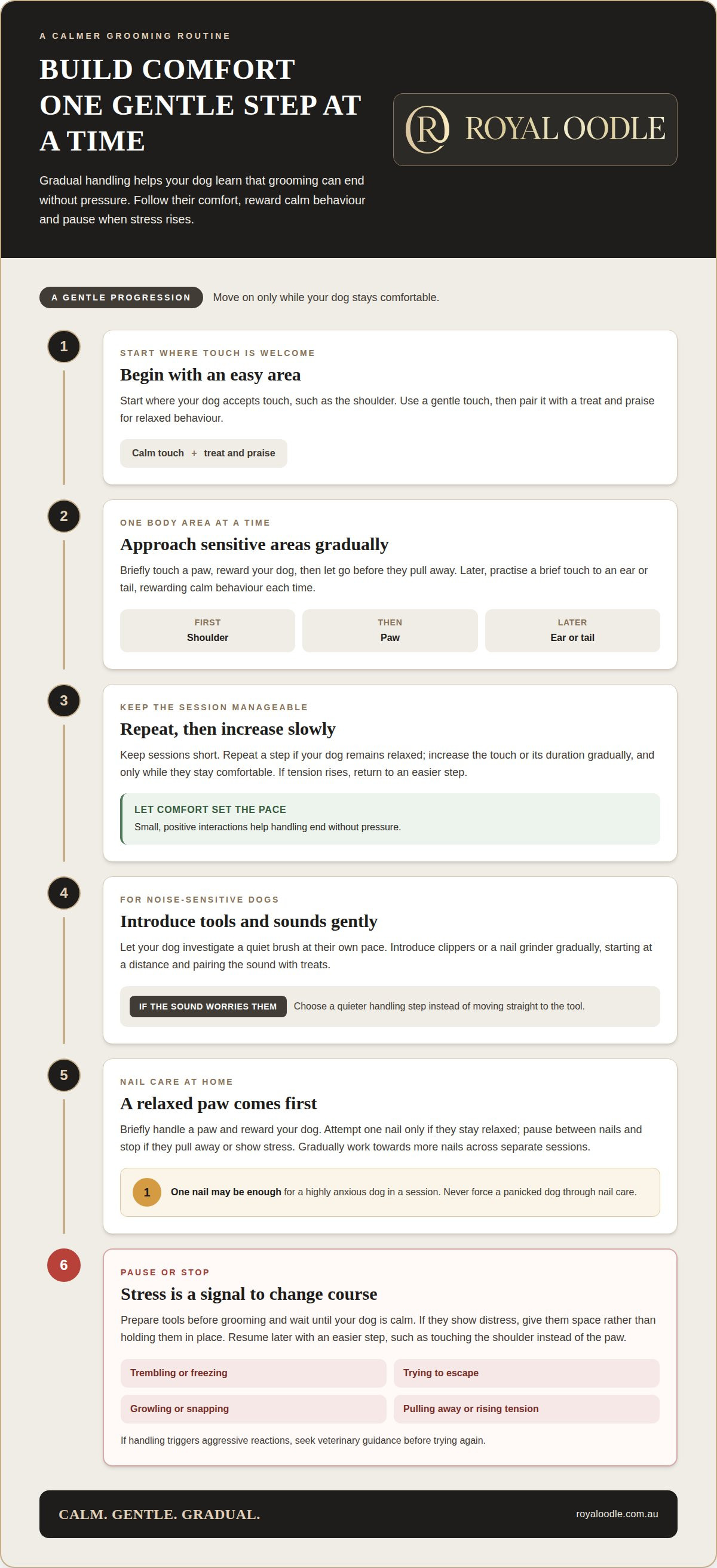
Desensitisation builds tolerance through brief, manageable steps, not a full grooming session all at once. Start where your dog accepts touch, such as the shoulder, then gradually move towards a sensitive area like a paw. Pair each gentle touch with a treat and praise. If your dog stays relaxed, repeat; if tension rises, return to an easier step. The National Center for Biotechnology Information notes that dogs showing moderate fear, anxiety or stress need a slow, considerate approach.
Practise one body area at a time. Briefly touch a paw, reward your dog, then let go before they pull away. Later, handle an ear or touch the tail briefly, rewarding calm behaviour each time. These small, positive interactions help your dog learn that handling ends without pressure. Keep sessions short, and increase the touch or duration gradually only while your dog remains comfortable.
For noise-sensitive dogs, start with a quiet brush they can investigate at their own pace. Introduce clippers or a nail grinder gradually, beginning at a distance and pairing the sound with treats. If the noise causes anxiety, don’t switch straight to the tool. Choose a quieter handling step instead.
Prepare your tools before grooming and wait until your dog is calm. Use a gentle touch, a steady voice, and treats or praise for relaxed behaviour. Stop or change what you’re doing if your dog trembles, freezes, tries to escape, growls or snaps. Give them a break instead of holding them in place. Resume later with an easier step, such as touching the shoulder rather than the paw.
To trim nails at home, briefly handle a paw and reward your dog. Attempt one nail only if they stay relaxed. Pause between nails, and stop if your dog pulls away or shows stress. Gradually work towards more nails across separate sessions; a highly anxious dog may manage just one at a time. Never force a panicked dog through nail care. If handling triggers aggressive reactions, seek veterinary guidance before trying again.
2. What Are The Signs That A Dog Is Feeling Stressed During Grooming?
Watch your dog’s face, posture and movement while brushing or using a dryer. Yawning, lip licking, panting, pacing and shaking can signal stress. A tucked tail, turning away or showing the whites of the eyes, often called whale eye, may also indicate discomfort. Read these signals together and in context: panting after activity differs from panting while your dog avoids the brush.
Notice whether signs appear before grooming starts. Your dog may hide, whine or pace when you bring out the brush, anticipating what usually follows. Drooling, trembling or trying to escape can indicate rising distress; growling or snapping means handling needs to stop. The National Library of Medicine describes how veterinarians use dogs’ communication signals to assess arousal and guide handling.
Use positive reinforcement to make cooperation worthwhile. Offer a small treat as soon as your dog stays settled while you show the brush, then praise them for allowing one gentle stroke. Pause between strokes and let your dog choose whether to approach again. A favourite toy can also reward a calm pause, as long as it doesn’t distract you from watching their body language.
At home, practise one grooming step at a time: let your dog sniff the brush, reward calm interest, then try one brief stroke. End the session while your dog is still comfortable, rather than waiting for their nervousness to escalate. If they turn away or tense up, take a break and make the next practice easier.
A positive salon visit doesn’t need to include grooming. If you can arrange a familiarisation visit, let your dog experience the space and sounds without starting a full appointment. Keep the visit calm and reward relaxed exploration. During home brushing or a salon introduction, watch for changes from your dog’s usual behaviour, not just dramatic reactions. Early signs give you a chance to adjust before anxiety intensifies.
3. Why Do Dogs Get Anxious at the Groomers?
A difficult grooming experience can shape how a dog reacts next time. Rough handling, a frightening noise or discomfort during an appointment may become a trigger. Dogs with few positive early experiences of grooming may also find the salon unfamiliar. A dryer’s rush of air, clippers’ vibration or being touched around the face can feel overwhelming. Patience helps you identify which part of grooming causes the strongest reaction.
Scent can add to sensory strain. Artificial fragrances, heavily scented cleaning products and essential-oil diffusers may make a grooming area harder for a sensitive dog to tolerate. Keep the space free of strong perfumes and let your dog settle before introducing equipment. At home, notice whether they withdraw when you open or apply a particular scented product. Removing that scent can help distinguish a sensory trigger from anxiety about brushing or handling.
Restraint can intensify fear, especially if a dog already feels trapped on a grooming table or by unfamiliar hands. Don’t overpower or force a frightened or aggressive dog through routine grooming. If your dog stiffens, struggles or growls, stop and reduce the pressure. A brief pause or simpler care step is safer than tightening your hold. Grooming may need to be divided across sessions, with brushing first and bathing another time.
Calming supplements and pheromone products don’t replace gentle handling and gradual preparation. A synthetic pheromone diffuser may help create a calmer setting, but discuss its use with your veterinarian first. Ask whether a supplement is suitable for your dog before adding it to their routine.
Make grooming easier to predict. Introduce one sound, scent or touch at a time, then reward calm behaviour. For example, let your dog hear clippers from a distance before bringing them closer. If anxiety persists or your dog reacts aggressively, veterinary guidance can help you shape a safer plan.
4. Choosing a groomer experienced with anxious dogs
Look for a groomer who recognises fear signals and adjusts their approach rather than rushing through a session. Professional groomers are trained in methods that can help fearful or anxious puppies feel more at ease. Ask how they introduce clippers, dryers and handling on a table. Look for a gradual plan that responds to your dog. A calm approach matters more than completing every task in one appointment.
Before booking, explain your dog’s specific triggers. Mention areas they dislike being touched, such as their paws or ears, and equipment sounds that make them nervous. Describe what they do, whether they freeze, pull away or try to escape. These details help the groomer prepare an appropriate handling approach and recognise when your dog needs a pause.
Discuss what the first grooming session will involve. A gradual start might focus on meeting the groomer, exploring the space or tolerating a brief brush before moving on to more difficult tasks. Some dogs benefit from becoming familiar with the salon’s sights and sounds first. Ask whether the appointment can be adapted to your dog’s comfort rather than assuming bathing, clipping and nail care all need to happen together.
Pay attention to how the groomer describes restraint. Gentle support may help a dog stay steady, but forceful restraint or pushing through panic can intensify distress. A suitable plan responds to your dog’s body language and allows handling to stop if fear escalates. Limiting the number of dogs and people present can also reduce noise, crowding and the chance of tense encounters.
Share any history of defensive behaviour, escape attempts or previous difficult appointments before grooming starts. If your dog’s anxiety makes necessary care unsafe, talk with your veterinarian about next steps. Medication should only be used under veterinary guidance, not given independently to make a grooming appointment easier. Choose a groomer who communicates clearly about your dog’s triggers, adapts the session and prioritises calm, safe handling over speed.
Royal Oodle: Detangling Sprays
Royal Oodle’s Detangling Sprays can support a gentle brushing routine for Oodles and other curly-coated dogs. Use a detangling product when knots make coat care more difficult, and brush gradually if your dog becomes uneasy. It’s a grooming aid, not a way to push through fear: pause if your dog shows stress, then return to a calmer step when they’re ready.
Royal Oodle also offers Shampoo & Conditioners, Bundles & Kits, and Breeder Packs for coat-care routines. The products are developed and manufactured in Australia, with formulations designed for curly coats and sensitive skin. Choose the care step that suits your dog’s coat, while keeping comfort central to each session.
For a closer look at coat-care options, visit Royal Oodle’s website.
Make the Next Grooming Step Feel Manageable
Let your dog’s comfort set the pace. A calmer grooming routine grows through small, repeatable experiences, not one perfect appointment. Keep noticing which sounds, touches and coat-care steps feel manageable, then shape the next session around what you learn. These calming grooming techniques for anxious dogs can help make care a more thoughtful ritual, with room to pause whenever your dog needs it.
For curly-coated dogs, choose coat care that supports easier brushing, but don’t treat a product as a substitute for patient handling. Royal Oodle offers Detangling Sprays, Shampoo & Conditioners, and Bundles & Kits for coat-care routines.
Contact Royal Oodle for grooming support and explore a considered approach to your dog’s coat care. Each gentle step is progress worth celebrating.
Frequently Asked Questions
Why Do Dogs Get Anxious at the Groomers?
Grooming combines unfamiliar sounds, smells, surfaces and close handling, which can make dogs anxious. A dog unsettled by car travel might arrive tense, then struggle with the dryer or elevated table. Knots or sensitive skin can add to the discomfort. Calming grooming techniques for anxious dogs work best when you identify what happens just before your dog becomes uneasy and adapt the experience to that trigger.
Does My Dog Need To Be Sedated?
Sedation isn’t the starting point for grooming anxiety, and you shouldn’t give your dog medication without veterinary advice. A veterinarian can consider your dog’s reactions, health and care needs before discussing medication. Behavioural support, including gradual desensitisation and counterconditioning, may form part of a longer-term plan. If essential care can’t be carried out safely, discuss suitable options with your vet.
How Important Is It For Groomers To Recognize When To Stop Handling A Dog?
It matters because continuing after a dog becomes overwhelmed can increase the risk of a bite, scratch or escape. A groomer who notices a sudden change in posture or an attempt to pull away can pause before tension escalates. This helps protect both the dog and the people handling them. Tell the groomer about previous reactions so they can recognise your dog’s individual signs and plan accordingly.
What Are The Signs That A Dog Is Feeling Stressed During Grooming?
Stress may show as panting, yawning, lip licking, pacing, shaking or whining. Look for changes from your dog’s usual behaviour: a normally curious dog might suddenly hide, avoid eye contact or tuck their tail. Several signs together, especially during a particular grooming step, suggest discomfort. Calming grooming techniques for anxious dogs leave room to pause, give your dog space and adjust the activity before distress escalates.
What symptoms might a dog with a handling-related anxiety demonstrate?
A dog worried about being touched may tense, flinch, pull away or hide when someone reaches towards a sensitive area. They might also drool, tremble, pant or avoid eye contact before handling begins. With severe fear, a dog may urinate or defecate, growl or snap. Note the body area and situation involved, then share these details with your veterinarian or groomer.
Why do these anxieties develop?
Handling anxiety can follow a frightening or painful experience, such as a difficult nail trim, or develop when a dog has had little positive exposure to grooming. Unfamiliar tools, restraint and sensitivity around the face or paws can also contribute. Some dogs may have a greater inherited tendency towards anxiety. The reason isn’t always obvious, so observing when the reaction starts can help guide your next steps.
