

Four simple habits help prevent snow and mud clumping in dog fur: keep excess coat hair tidy, brush gently, wipe paws and coat after walks, and rinse away stubborn mud when needed. Longer fur is more likely to catch snow, which can melt against the body and form icy clumps. A little care before and after outdoor adventures helps your dog stay comfortable and keeps floors cleaner.
If you’ve spent time easing damp knots or muddy debris out of your dog’s coat, you know how quickly a pleasant walk can become a grooming chore. A consistent, gentle routine makes clean-up easier without requiring frequent full baths.
Read on for four practical ways to reduce clumping, from targeted trimming and careful brushing to a soothing post-walk wipe-down. You’ll also learn when a quick rinse is enough and how to keep coat care comfortable for curly-coated dogs and their sensitive skin.
Key Takeaways
- Keep excess fur around paws and legs neatly trimmed to reduce the places where mud and snow can collect.
- Loosen snow and ice gently before brushing, then work in the direction of hair growth to make coat care more comfortable.
- After walks, wipe your dog’s paws, between the toes, legs and belly to lift away mud and wet debris.
- For stubborn clumps, use comfortably warm water and dry your dog afterwards.
- Consider a suitable barrier, such as booties, to help limit snow and mud collecting around paw pads.
1. Trimming paw and leg fur to reduce dirt clumping
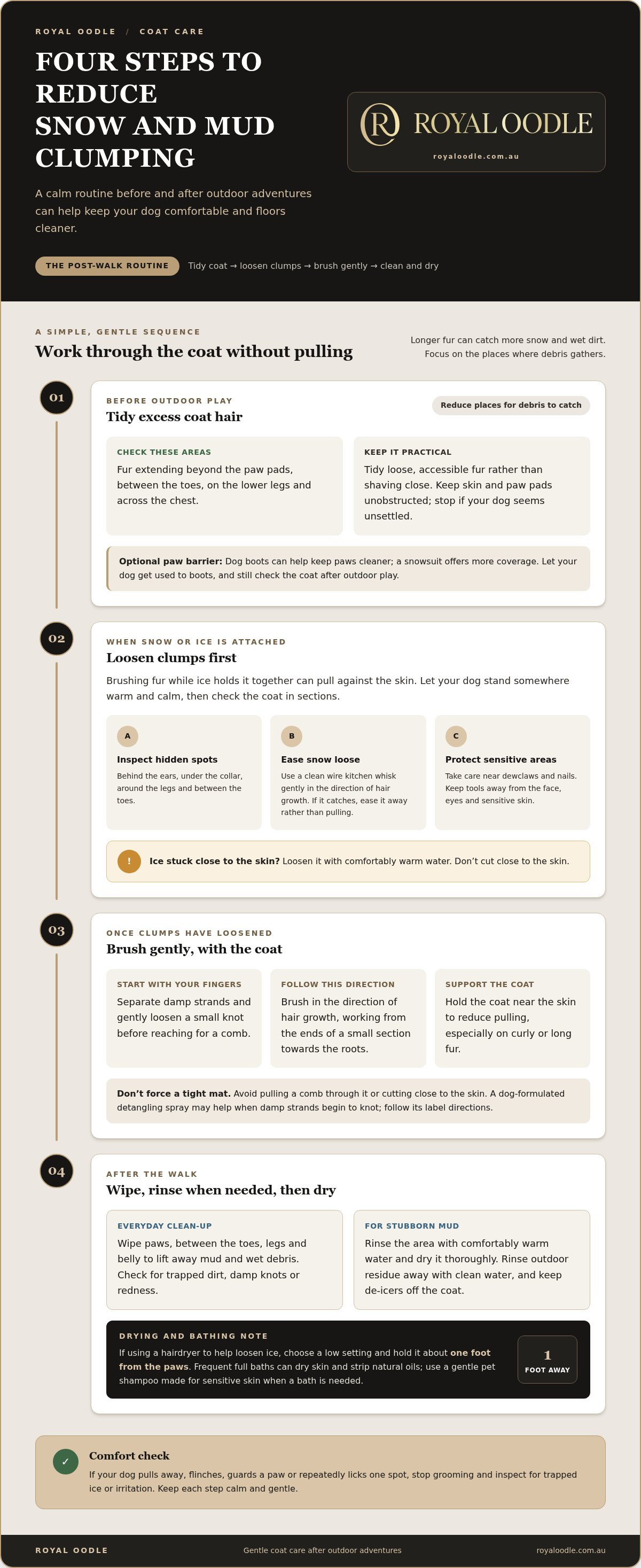
Start with the coat that reaches the ground. Long fur around paw pads, lower legs and chest can collect wet dirt during an Australian winter walk. Mud then dries within the coat, forming gritty clumps that are harder to remove. Keeping excess length tidy can reduce places for debris to catch and help limit dirt tracked indoors. According to the RSPCA, trimming fur on a dog’s paws and nose can help prevent ice balls building up.
Focus on the hair extending beyond the paw pads and between the toes. Check each foot while your dog is standing comfortably, then look at the lower legs and chest, where longer strands may brush against wet grass or muddy paths. Aim for a practical tidy-up, not a close shave. Keep the paw pads and skin unobstructed, and stop if your dog pulls away or seems unsettled.
Take a calm, step-by-step approach. Let your dog sniff the grooming tool, then handle one paw at a time. Work in good light so you can see where the coat ends and the skin begins. If a knot is tight against the skin, don’t tug it or cut into it blindly. Trimming loose, accessible fur is safer than trying to remove every clump at once.
Do dog boots help prevent snow, mud and ice from clumping in fur? Yes. Boots create a barrier around the paws and can help keep them cleaner, while a snowsuit offers more coverage. Give your dog time to get used to wearing boots, and still check the coat after outdoor play.
Cutting ice clumps close to the skin can catch the skin beneath the coat. Instead, loosen them with comfortably warm water. A hairdryer on a low setting, held at a distance, can also help. Keep it about one foot from the paws to reduce burn risk. Keep de-icers off your dog’s coat and rinse outdoor residue away with clean water.
To help prevent matting and skin irritation after repeated snow and mud exposure, keep excess fur tidy, gently brush out loose debris, and wipe or rinse muddy areas after walks. Frequent full baths can dry skin and strip natural oils, so use a gentle pet shampoo made for sensitive skin when a bath is needed. Check between the toes for trapped dirt, damp knots or redness, then dry the area thoroughly.
2. Brushing out remaining snow and ice
Brush only after loosening any snowballs. Ice-stuck hair can pull against the skin, making brushing uncomfortable. First, let your dog stand somewhere warm and calm, then inspect the coat in sections. Check behind the ears, under the collar, around the legs and between the toes, where small clumps can hide.
A clean wire kitchen whisk can help tease loose snowballs from the coat. Move it gently over the hair in the direction of growth, and stop if it catches. Take particular care around dewclaws and nails, where hair or a claw can snag. Keep the tool away from the face, eyes and sensitive skin.
Once the visible snow is loosened, use your fingers to separate any damp strands. If the coat is still wet, brush lightly in the direction of hair growth. Work from the ends of a small section towards the roots, supporting the coat near the skin. This reduces pulling, especially on curly or long fur that tangles easily.
In Australia, dog-care options include pet-safe detangling sprays, paw balms, boots and coats. Prices vary by product type and pack size, so choose based on the area you want to protect. Paw balms and protective sprays made for dogs can help protect paws or ease coat friction. Follow the label directions and keep products away from your dog’s eyes and mouth.
For a small knot left after brushing, gently separate the hair with your fingers before using a comb. Don’t pull a comb through a tight mat or cut close to the skin. If your dog flinches, guards a paw or repeatedly licks one spot, stop grooming and inspect the area for trapped ice or irritation.
A dog-formulated detangling spray can help make post-walk coat care easier when damp strands begin to knot. Apply it as directed, then gently work through the coat with your fingers or a suitable brush. Explore dog detangling sprays as part of a considered routine, after removing loose snow and debris.
Before reaching for a brush, check whether snow or ice is still holding the fur together. Brushing it immediately may hurt, so start by gently working with a clean wire kitchen whisk. Move it lightly over the coat to loosen snowballs rather than dragging it through the hair. The goal is to dislodge what is attached, not force a tool through resistant fur. Keep your movements calm and controlled, and give your dog time to stay comfortable. Use the whisk first, then brush once the clumps have loosened.
Pay close attention as the whisk passes near the dewclaws, and keep it from catching on the nails. Use a light touch throughout; if the whisk catches, ease it away rather than pulling. A gentle approach matters because the coat may still be uncomfortable to handle while snow or ice remains stuck in it. Once the snowballs have been knocked loose, you can move on to brushing the coat. Taking these steps in order helps avoid brushing directly against fur that is still held by snow or ice.
3. How snowballs form in dogs’ fur
Snowballs start as flakes caught in a dog’s coat. Longer fur gives snow more strands to cling to, so long-coated dogs are more prone to clumps and ice balls. During a walk, loose snow can gather around the legs, chest, belly or paws. Where it collects depends on which parts of the coat brush against the snow and how much fur is exposed.
A dog’s body heat can warm snow caught against the coat. As it melts, nearby strands become damp, and trapped snow can form an ice ball. The clump may feel denser than the loose flakes that first landed on the fur. Soft snow may sit on the outer coat, while firmer clumps form closer to the body.
Coat texture affects how easily clumps are spotted. Snow may be visible between strands on a long, loose coat, such as along the lower legs. On a curly coat, it can sit within the curls and blend into the hair. Check your dog from several angles, including underneath, rather than relying on a quick look at the back.
Snow and mud gather in different ways. Snow can melt in the warmth of the coat and form ice balls, while mud catches on hair that brushes wet ground. A dog walking through fresh snow and muddy tracks may collect snow around the paws and dirt along the chest. Understanding the difference helps prevent snow and mud clumping in dog fur.
Notice how the coat looks and feels. Loose flakes may brush away easily, while a formed ice ball can pull several hairs into a tight clump. Inspect each leg, then check the belly and chest. Comparing both sides can show where snow gathered during play or a walk, even if a clump is hidden under the outer coat.
Your dog’s usual pattern can guide your checks. If snow often catches behind the front legs, pay particular attention there after an outing. If it gathers on the paws, inspect around the pads and between the toes. Coat length, exposure to snow and warmth near the body all influence where clumps form, so focus on areas that come into contact with the ground.
Knowing how snow changes from loose flakes to a compact clump helps you respond gently. Check exposed areas where snow tends to catch during and after outdoor play. See whether a damp patch is simply wet fur or contains a formed ice ball. That distinction helps prevent snow and mud clumping in dog fur by guiding your choice of clean-up method and avoiding pulling at the coat.
4. Wiping paws, legs and belly fur after walks
Make a quick wipe-down part of the routine after muddy or wet walks. Cleaning your dog’s paw pads, between the toes, legs and belly removes mud, wet grass and road residue before they dry into the coat. A post-walk wipe-down can take less than one minute. Keep a towel by the door so your dog can pause comfortably before coming inside.
Use pet-safe wipes rather than human wipes, which may contain ingredients that irritate a dog’s skin. Gently wipe each paw, including between the toes, then move up the legs and across the belly. Use a clean section of the wipe as it becomes muddy. For a dusty coat or damp belly, a clean, damp cloth can also help with spot cleaning between grooming sessions.
For heavier mud, rinse the paws and lower legs with comfortably warm water. A quick rinse may be enough for a dog that often gets muddy, without a full bath. If you soak the paws, dry them afterwards so your dog doesn’t get chilled. Check beneath the chest and around the legs, where wet ground can leave dirt hidden in longer fur.
Set up a simple clean-up station near the entryway with a towel or washable mat, pet-safe wipes, a brush or comb, a paw-cleaner cup and treats. The mat can catch dirt as you clean each foot. Practise asking your dog to pause at the door, rewarding calm behaviour with a treat. This short routine can help prevent muddy pawprints through the house.
Take a moment to inspect the paw pads, the webbing between the toes and the nails. Look for cracks, splits, redness or swelling after a muddy outing. If ice is packed into a paw and won’t loosen with gentle cleaning, or you notice these signs, seek veterinary advice. Don’t pull at firmly stuck ice or rub irritated skin.
Keep clean-up gentle and focused. Use warm water to loosen clumps rather than scrubbing the skin, then pat the coat dry with a towel. A full bath isn’t needed after every muddy walk; repeated bathing can dry a dog’s skin and strip its natural oils. Bathe when the coat needs a more complete wash, using a gentle pet shampoo made for sensitive skin.
For small and medium-sized dogs, place their legs in a sink of warm water to melt snow clumps. You can also apply lukewarm water with a washcloth. Dry the paws after soaking so your dog doesn’t get chilled.
5. How can you prevent snowballs forming between a dog's paw pads?
Before a snowy walk, check the fur around each paw pad. Long hairs can catch snow between the toes, where movement and body warmth help it melt and form clumps. The RSPCA says trimming fur on a dog’s paws and nose can help prevent ice balls from building up. Keep the trim conservative, and don’t cut close to the skin or paw pads.
Booties create a physical barrier between your dog’s paws and the snow. They can also help keep paws clean and reduce mud buildup in wet conditions. Introduce them gradually at home, letting your dog sniff and wear them briefly before going outdoors. Some dogs need time to get comfortable walking in boots, so practise on a dry surface first.
For more coverage, a snowsuit can help shield the coat from snow. Choose one that lets your dog walk naturally and toilet comfortably. Check the paws after the outing, even if your dog wore boots, as snow or dampness may still collect around exposed areas.
If your dog dislikes booties, paw wax or balm can create a protective layer over the pads. Paw wax may help protect against harsh conditions and reduce dryness or cracking; balm can help reduce dryness and irritation. Use only a product intended for dogs, follow its label directions, and keep it away from your dog’s eyes and mouth.
After a walk, inspect each paw in good light. Gently separate the toes and look between the pads for packed snow, mud or debris. Check the pads and nails for cracks, splits, redness or swelling. If you find a loose snow clump, ease it away carefully. Don’t pull at firmly caught ice or tug hair close to the skin.
For stubborn snow, soften the clump with comfortably warm water, then dry the paw thoroughly. A washcloth can help you reach between the toes without rubbing forcefully. If you use a hairdryer on its low setting, hold it about one foot from the paws and keep it moving to avoid overheating one spot.
Make paw checks part of your return-home routine, especially after walking through fresh snow or wet, muddy ground. Clean and dry between the toes, then check for lingering dampness. This simple habit helps you spot clumps early and notice skin changes before they become harder to manage.
For a considered coat-care routine alongside paw protection, explore gentle dog grooming care.
Royal Oodle: Detangling Sprays
Royal Oodle’s Detangling Sprays are a natural next step if post-walk cleaning leaves your dog’s coat prone to knots. They complement gentle brushing by helping ease tangles, particularly in curly coats where damp strands can catch together. Clean away mud and snow first. A detangling spray supports coat care but doesn’t replace cleaning or paw protection.
Royal Oodle designs Australian-made, plant-based grooming products for Oodles and other curly-coated dogs, including products with gentle ingredients for sensitive skin. The range includes Detangling Sprays, Shampoo & Conditioners, and Bundles & Kits to support a broader coat-care routine.
Explore Royal Oodle’s coat-care options at royaloodle.com.au.
Make coat care part of the routine
Your dog’s coat may respond differently to changing weather, walks and outdoor play. Notice where dampness or tangles tend to linger, then shape your routine around those areas. A small adjustment, such as setting aside time for a calm coat check before settling in, can make grooming feel less like a last-minute chore and more like a familiar part of coming home.
Preventing snow and mud clumping in dog fur is less about a perfect coat and more about consistency. Keep each step comfortable for your dog and pay attention to their response. If grooming becomes difficult, pause and resume when your dog is settled. Gentle handling helps make coat care a more pleasant shared routine.
For guidance on choosing coat-care products that suit your dog’s routine, contact Royal Oodle. A little attention after outdoor adventures can help you and your dog enjoy the next one with greater ease.
Frequently Asked Questions
Why do snow and mud clump in dog fur, and which coat types are most affected?
Snow catches on longer hair, then can melt against a dog’s body and form ice balls. Long-coated dogs are more prone to snow clumps because their fur gives flakes more places to lodge. Mud also catches on hair that brushes wet ground, such as the longer fur on the lower legs or chest. After a walk, check first where the coat brushed through snow, grass or muddy paths.
Should you trim fur between a dog's paw pads to reduce snow and mud clumping?
Yes, tidying excess fur around the paw pads can reduce the hair where snow and dirt collect. The RSPCA says trimming fur on a dog’s paws can help prevent ice balls from building up. Keep the trim conservative, especially between the toes, where skin can be difficult to see. If your dog moves or resists, pause rather than trying to finish in one go.
How should you remove snow, ice, and mud from a dog's coat after a walk?
Treat snow and mud differently instead of brushing everything at once. Gently loosen snowballs before brushing, and use comfortably warm water for any clumps that remain. Wipe muddy areas with a pet-safe wipe or damp cloth, switching to a clean section as dirt lifts. Dry the paws if they get soaked. For example, clean muddy paws first, then use a fresh cloth on the belly.
