

A deshedding tool isn’t automatically right for an Oodle puppy that sheds. For a curly coat, a slicker brush and metal comb are usually a better starting point. The best brush for an Oodle puppy coat depends on its texture and density.
It’s easy to assume loose hair calls for a deshedding tool, but curly coats can trap shed hair and develop tangles or mats. Choosing a brush that suits the coat and using a gentle technique can make grooming more comfortable for your puppy.
Learn which brush types suit curly, wavy, silky or thicker coats, and how to approach tangles, mats, shedding and dry skin. You’ll also find out when a deshedding tool may be unsuitable, how a comb can reveal hidden knots, and when to stop rather than pull at a stubborn mat. A calm, considered routine can make coat care a gentle part of your time together.
Key Takeaways
- Match the brush to your puppy’s coat texture and density; curly, silky and thicker coats need different approaches.
- Work through tangles gently in small sections, and don’t pull at a tight mat close to the skin.
- Loose hair alone doesn’t make a deshedding tool the right choice for an Oodle coat.
- A slicker brush can suit curly coats when used with a light touch, while a comb helps reveal knots closer to the skin.
1. Choosing a brush based on coat texture and density
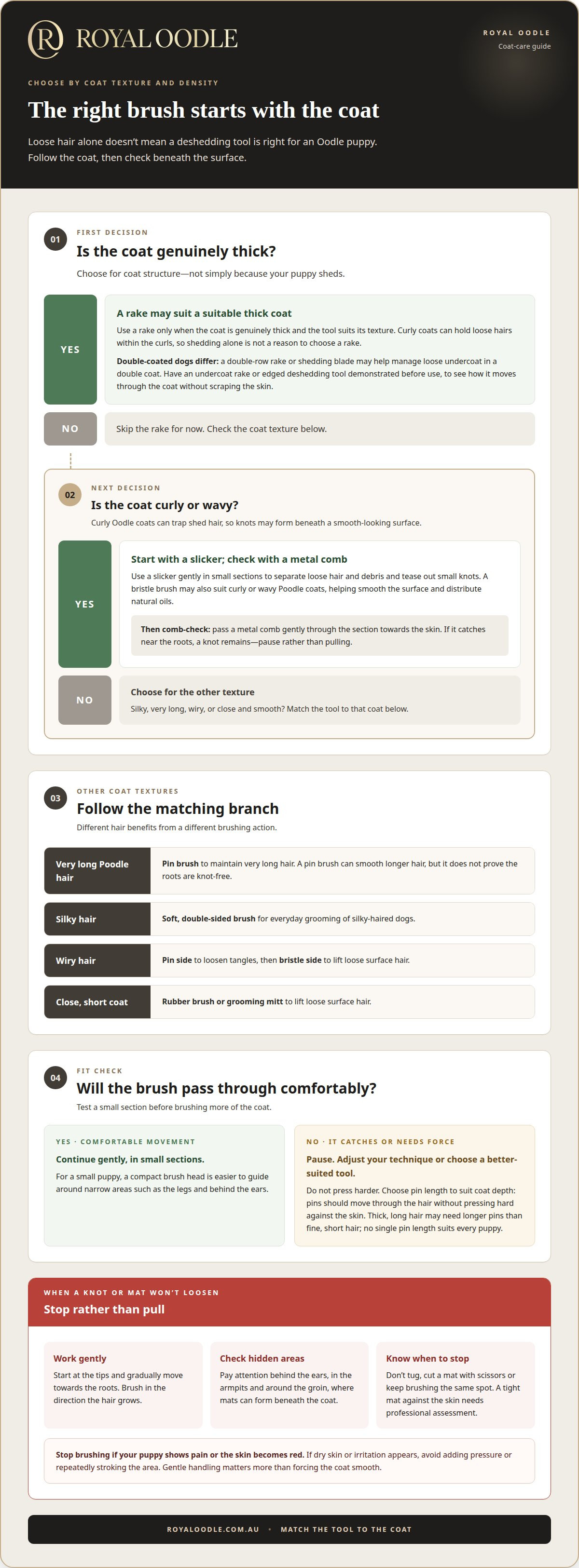
An Oodle puppy’s coat may be curly, wavy, silky or short and smooth. Consider its hair length, thickness and tendency to knot before choosing a tool. For a small puppy with curls, the best brush for an Oodle puppy coat is usually a slicker brush, paired with a metal comb to check through the coat. Poodle hair has a single-layered structure, often called wool, so curly coats need tools suited to that texture.
For a small Oodle puppy, a compact brush head is easier to guide around narrow areas such as the legs and behind the ears. Choose pin length to suit the coat’s depth: pins should move through the hair without pressing hard against the skin. A thick, long coat may need longer pins than a fine, short coat. No single pin length suits every puppy.
Match the brush to the coat, not just the breed name. A pin brush can maintain very long Poodle hair, while a soft, double-sided brush suits everyday grooming for silky-haired dogs. For wiry hair, use the pin side to loosen tangles, then the bristle side to lift loose surface hair. Each texture benefits from a different brushing action.
For a close coat, a rubber brush or grooming mitt can lift loose surface hair. For curls, use a slicker gently, then pass a metal comb through the hair to check for tangles. A bristle brush may also suit curly or wavy Poodle coats and help distribute natural oils.
Consider how much control and reach you need. A smaller head is easier to guide through narrow areas, while coat density helps determine pin length. The best brush for an Oodle puppy coat should pass comfortably through a small test section. If it catches, adjust your technique or choose a better-suited tool instead of pressing harder.
2. Matting, tangling, shedding and dry skin
Curly Oodle coats can trap shed hair instead of letting it fall away, creating knots that tighten into mats. Common mistakes include brushing only the surface, pulling hard at knots and using too much pressure. These habits can leave tangles near the skin or make brushing uncomfortable.
Work through the coat in small sections, starting at the tips and gradually moving towards the roots. This helps loosen knots without dragging them against the skin. Pay close attention behind the ears, in the armpits and around the groin, where mats can form beneath the coat. Brush gently in the direction the hair grows.
After brushing each section, gently pass a metal comb through the longer hair to check for hidden tangles. The comb should reach towards the skin without catching. If it snags, stop rather than pulling it through. A pin brush may smooth longer hair, but that doesn’t prove the roots are knot-free.
Loose Oodle hair can get caught in curls, so brushing helps manage debris and reduce tangling. Long hair can also collect dirt and knot easily. Brush regularly and gently to keep the coat manageable, adjusting your approach if your puppy seems uncomfortable. Grooming also gives you a chance to notice changes such as redness, bumps or irritation.
If a knot won’t loosen easily, don’t tug, cut it with scissors or keep brushing the same spot. A tight mat against the skin needs professional assessment. Stop brushing if your puppy shows pain or the skin becomes red. If dry skin or irritation appears, avoid adding pressure or repeatedly stroking the area. Gentle handling matters more than forcing the coat smooth.
3. Rake brushes for thick coats and deshedding
A rake can help remove loose undercoat from a thick coat, but don’t choose one for an Oodle just because it sheds. Curly coats can hold loose hairs within the curls, so coat type and structure matter more than shedding alone. For an Oodle puppy, use a rake only if the coat is genuinely thick and the tool suits its texture.
For curly or wavy Oodle coats, a slicker brush is usually the more useful choice. Its fine pins separate loose hair and debris in small sections, helping tease out knots with light pressure. A bristle brush may also suit curly or wavy Poodle coats, especially for smoothing the surface and distributing natural oils. Neither brush should be pressed firmly against a puppy’s skin.
Long-haired coats need more than a quick brush over the top. Work through manageable sections, then use a metal comb to check whether tangles remain closer to the roots. A pin brush can maintain and arrange longer hair, but it doesn’t prove the coat is knot-free. If the comb catches, stop and gently ease the tangle rather than pulling.
Double-coated dogs differ from many Oodles. A double-row rake or shedding blade may help manage loose undercoat in a double coat, while a rake may suit a thicker Poodle coat. Don’t assume these tools suit every Oodle. Have an undercoat rake or edged deshedding tool demonstrated before use, so you can see how it moves through the coat without scraping the skin.
Brush prices in Australia depend on the tool type, size and construction. Compare those features with your puppy’s coat needs. Rather than choosing by rating alone, prioritise a slicker for curls, a bristle brush for surface grooming or a rake for a suitable thick undercoat. A rating can’t establish that a tool suits every Oodle puppy.
4. Slicker brushes for curly-haired dogs
For a curly Oodle puppy, a slicker brush is a useful starting point. Its fine, angled pins separate loose hair and debris, helping tease small knots from curls. A detangling brush isn’t automatically a better match for this distinct coat texture.
Use light pressure. Work over a small section at a time, keeping the pins from scraping the skin. The brush should move through the coat without force. If it catches, pause and gently ease the tangle rather than dragging the pins through it. Take particular care around delicate areas such as the ears and legs.
A slicker can help with loose hair and tangles, but it isn’t a substitute for checking the coat’s depth. After brushing, gently pass a metal comb through the section. If the comb catches near the roots, there’s still a knot to address. A smooth surface alone doesn’t show whether the hair underneath is clear.
For an Oodle with a wavy coat, a bristle brush may help smooth the surface and distribute natural oils. A slicker is better suited to separating curls and teasing out knots. Choose according to the coat in front of you, rather than assuming every puppy of the same cross has identical hair.
Keep the tool in good condition. Before brushing, look for bent, rough or broken pins that could catch hair or irritate skin. Remove trapped hair and debris after grooming, then clean and dry the brush according to its instructions. Replace it when the pins are worn or bent, or when the brush no longer glides smoothly.
For curly coats, the clear takeaway is to start with a slicker, use a light touch, and confirm your work with a comb. Explore gentle coat-care products to complement a considered grooming routine.
Royal Oodle
Royal Oodle offers coat-care products to complement the brush that suits your Oodle puppy’s coat. If curls catch easily between grooming sessions, a detangling spray can be part of your routine; shampoo and conditioner support coat care on wash day. Bundles and kits bring together coat-care essentials, while breeder packs are another option for breeders preparing puppies for their new homes.
Choose products with your puppy’s coat and skin sensitivity in mind, and keep brushing technique gentle. Royal Oodle’s grooming range is designed for Oodles and other curly-coated dogs, with gentle, premium ingredients. The products are developed and manufactured in Australia.
If you’d like help choosing coat-care products to complement your puppy’s brushing routine, contact Royal Oodle.
Make coat care a routine that grows with your puppy
Your grooming routine can evolve alongside your Oodle. As the coat grows or its texture becomes clearer, reassess whether your current brush still moves comfortably through it. Your puppy’s response matters too. A relaxed grooming session can help make coat care a familiar part of your time together.
Think of the best brush for an Oodle puppy coat as the one that suits the coat in front of you, not a choice you need to make once and keep forever. If brushing becomes uncomfortable or the coat’s needs seem to change, pause and consider how to make the routine gentler. The right approach should support coat care and your puppy’s comfort.
For guidance on choosing coat-care products to complement your routine, contact Royal Oodle about puppy coat care. Take the next step at your puppy’s pace, and let grooming become a calm, caring ritual.
Frequently Asked Questions
Can a brush remove a tight mat?
No. A brush can help with loose tangles, but forcing it through a tight mat can hurt your puppy or damage the coat. Don’t pull harder or try to cut the mat out with scissors, as skin can be caught beneath it. A mat close to the skin needs professional assessment, especially if brushing causes pain.
Does every dog need a slicker brush?
No. The right brush depends on coat texture and length. A slicker suits curly coats, while a rubber brush or grooming mitt can lift loose hair from a close coat. For a silky coat, a soft double-sided brush may suit everyday grooming. Choosing by coat type helps avoid a tool that doesn’t match the hair’s needs.
Are slicker brushes safe for Oodle puppies, and which bristle type should I choose?
A slicker brush can be used on a puppy’s curls with a light touch. Choose a brush with fine, angled pins suited to separating curly hair, rather than pressing firmly against the skin. Use short, gentle strokes over a small area. Stop if your puppy shows pain or the skin becomes red, and check the pins for roughness or damage before brushing.
Is a metal comb needed alongside a brush for Oodle coat care?
A metal comb is useful for checking whether brushing has reached through a curly or longer coat. After brushing a section, gently pass the comb through it. If it catches, don’t force it; work gently on that tangle before continuing. The comb helps find knots a brush may leave hidden beneath the surface, particularly in dense curls.
How often should you brush an Oodle puppy to prevent mats?
Brush regularly, guided by coat length and how readily it tangles. Long-haired dogs should ideally be brushed daily, while a puppy with a shorter, less knot-prone coat may need a different routine. Check areas where knots commonly hide, such as behind the ears and beneath the legs, and give the coat more attention when it starts catching.
How do you brush an Oodle puppy without irritating or scratching the skin?
Use gentle strokes in the direction the coat grows, and avoid pressing the pins against the skin. Brush a small area at a time, supporting longer hair as you work through it. Before each session, check the brush for bent or broken pins. Stop if your puppy reacts with pain or you notice redness, rather than brushing over the area.
