

A greasy coat after a bath doesn’t always mean your dog needs another wash. If your dog's coat feels greasy after bath, leftover product, bathing technique or natural skin oils may be behind the slick finish. Washing again straight away can add friction and discomfort without addressing the cause.
It’s frustrating when bath time doesn’t leave your dog’s coat feeling clean. Product residue is one possibility, but moisture held in a dense coat or a change in skin health can also affect its texture. You don’t need to scrub harder or reach for a stronger product.
This guide covers common reasons a coat feels greasy after bathing, what to do next and when to seek veterinary advice. You’ll learn how to rinse thoroughly, choose a routine suited to your dog’s coat and avoid over-washing. For curly and Oodle coats, a considered shampoo-and-conditioner routine can make bath time easier to manage, but grooming products aren’t a solution to a skin condition.
Key Takeaways
- A greasy feel doesn’t automatically mean you’ve done anything wrong. Notice where it appears and whether it changes as the coat dries.
- If your dog's coat feels greasy after bath, check whether it’s fully dry before deciding what to do next.
- If leftover product seems likely, try a careful lukewarm-water rinse rather than shampooing again straight away.
- Persistent or recurring greasiness may need more than a change in bathing technique. Note any other changes to your dog’s skin or coat.
- For the next wash, use dog-specific products as directed and take extra care rinsing dense or curly coat areas.
Why does a dog’s coat feel greasy after a bath? Start with what you can feel
A greasy-feeling coat can have several explanations, and it doesn’t mean you’ve cared for your dog poorly. Treat the texture as something to observe, not a diagnosis. Hair may feel oily, tacky or coated after washing even when it looks clean. Leftover product, moisture close to the skin or naturally produced oils can all affect how it feels.
In brief: Surface residue is product left on the hair after bathing. Natural greasiness comes from sebum, an oil produced by the skin’s sebaceous glands that helps lubricate skin and hair. The two can feel similar, so touch alone won’t tell you which is responsible.
Notice where and when the texture appears. A lingering fragrance doesn’t prove that shampoo or conditioner remains, and visible dirt isn’t the same as an oily coating. If your dog's coat feels greasy after bath time, check whether the sensation covers the whole body or is concentrated in places such as behind the ears, under the collar or in dense curls. That detail can help you describe the change later.
Consider whether the coat has had time to dry fully. Damp hair can feel heavy or gathered together, particularly where it’s thick. That sensation may ease as it dries, while greasiness that remains or returns is worth paying attention to. Neither feel, on its own, confirms a skin condition.
What does a greasy coat feel or look like?
Look for strands that stick together in oily clumps, a slick or tacky surface, or a film that seems to transfer to your hands when you gently run them over the coat. Hair may also look flat rather than light and separated. These clues can occur in one area or across the body. Note where you find them instead of assuming the whole coat is affected in the same way.
A coat that is simply damp usually feels wet or cool, rather than persistently coated. If the texture changes as the hair dries, moisture may have contributed. Check again once the coat is dry and note whether the oily feel remains.
Is the coat greasy, or is it still wet?
Curly and dense coats can hold moisture beneath a surface that feels nearly dry. Gently part the hair with your fingers and feel close to the skin in a few places, without tugging or rubbing. If those layers feel damp, give the coat more time to dry before judging its texture. If it feels oily once fully dry, note whether the sensation is localised, widespread or recurring. Coat feel alone can’t identify the cause.
What can make a dog’s coat feel greasy straight after washing?
Several things can leave a coat feeling slick or heavy after a bath, and similar textures can have different explanations. Residue, moisture trapped in a dense coat and naturally produced skin oil are possibilities to consider, not a diagnosis. Think about what you used, where the sensation appears and whether it remains once the coat is dry.
A greasy feel after bathing may come from leftover shampoo or conditioner, a still-damp coat, naturally produced skin oils or a change in skin health. One bath can’t confirm which is responsible, but a few careful observations can help you choose a sensible next step.
Could shampoo or conditioner residue be the reason?
Yes. Shampoo or conditioner that hasn’t been rinsed away can leave hair slippery, tacky or coated. Residue may be easy to miss beneath the belly, between the legs or in a thick, curly coat, where water can be harder to work through. Conditioner is intended to affect coat texture, but too much left behind may make the hair feel heavy instead of soft.
Product amount and application matter, too. Using more than the label directs, applying it unevenly or spreading conditioner through areas that don’t need it may contribute to a coated feel. Follow the product directions rather than guessing at a stronger amount or dilution. Rinse patiently, gently parting dense hair so water reaches the layers underneath.
Can natural oils or a skin change affect coat texture?
Sebum is the skin’s natural oil. It helps lubricate the skin and hair, and its production is part of normal skin function. The Merck Veterinary Manual’s guide to dog skin anatomy and sebaceous glands explains how these structures relate to the coat. Dogs’ coats naturally differ in texture, and what feels normal may change over time.
If a greasy feel persists between baths or keeps returning despite careful washing, pay attention to other changes. A strong or unusual odour, redness, irritation, discomfort or frequent scratching makes veterinary advice a sensible next step. Texture alone can’t tell you whether a skin condition is present, and simply washing more often may not address the cause.
Could the way the product is applied affect the finish?
It can. A product that isn’t spread through the coat as directed may gather in some areas and be difficult to rinse evenly. Curly and Oodle coats need particular care because their texture can make it easy to miss product close to the skin. Use dog-specific shampoo and conditioner suited to your dog’s coat, and follow the label for application and rinsing.
A considered routine is more helpful than adding extra product. If you’re refining bath time for a curly coat, explore shampoo and conditioner for curly-coated dogs as part of gentle, attentive coat care.
How can you tell residue, dampness and a possible skin issue apart?
Use texture as one clue, then consider when it appears, where it shows up and whether it changes as your dog dries. A patch that feels slippery straight after washing may have a different explanation from greasiness that persists between baths. The comparison below can help you organise what you notice, but it can’t identify a condition or replace veterinary assessment.
| Clue | What it may suggest | A sensible next step |
|---|---|---|
| A localised slippery or coated patch after washing, especially in a dense area | Leftover shampoo or conditioner, or incomplete rinsing | Check whether the area changes after a careful rinse and thorough drying. Avoid another shampoo wash as a test. |
| The coat feels heavy or clumped while damp, then feels different as it dries | Moisture held in the coat, particularly close to the skin | Allow the coat to dry fully, then gently check the same area again. |
| Greasy texture persists when dry, repeatedly returns, or occurs with odour, redness, sores, itching or discomfort | A change in skin or coat health may need assessment | Arrange veterinary advice, especially if your dog seems uncomfortable or the signs continue. |
What clues point towards leftover product or incomplete rinsing?
A slippery or tacky feel limited to a few areas after a bath makes residue worth considering. Check spots that are easy to overlook, such as the belly, legs and dense curls. Notice whether the texture changes after carefully rinsing the affected area with lukewarm water and letting it dry. Repeated shampooing can add more product and friction, so it isn’t a useful test.
Keep your observations simple: note where the coat feels coated, whether it was still damp and what happens once it’s dry. One bath won’t prove the cause, but a clear pattern can help you decide on a sensible next step.
When should an owner consider veterinary advice?
Seek veterinary advice if greasiness persists when the coat is dry, keeps returning after baths or comes with signs of skin discomfort. A strong or unusual odour, redness, sores, ongoing scratching or sensitivity are reasons to pay closer attention. These signs don’t prove a particular condition, but they’re useful details to share with your vet.
Don’t try to identify seborrhoea, infection or an allergy from coat texture alone. If your dog seems distressed, has sore or broken skin, or the changes are worsening, contact your vet promptly. Notes on timing, location and other signs can help them assess the concern.
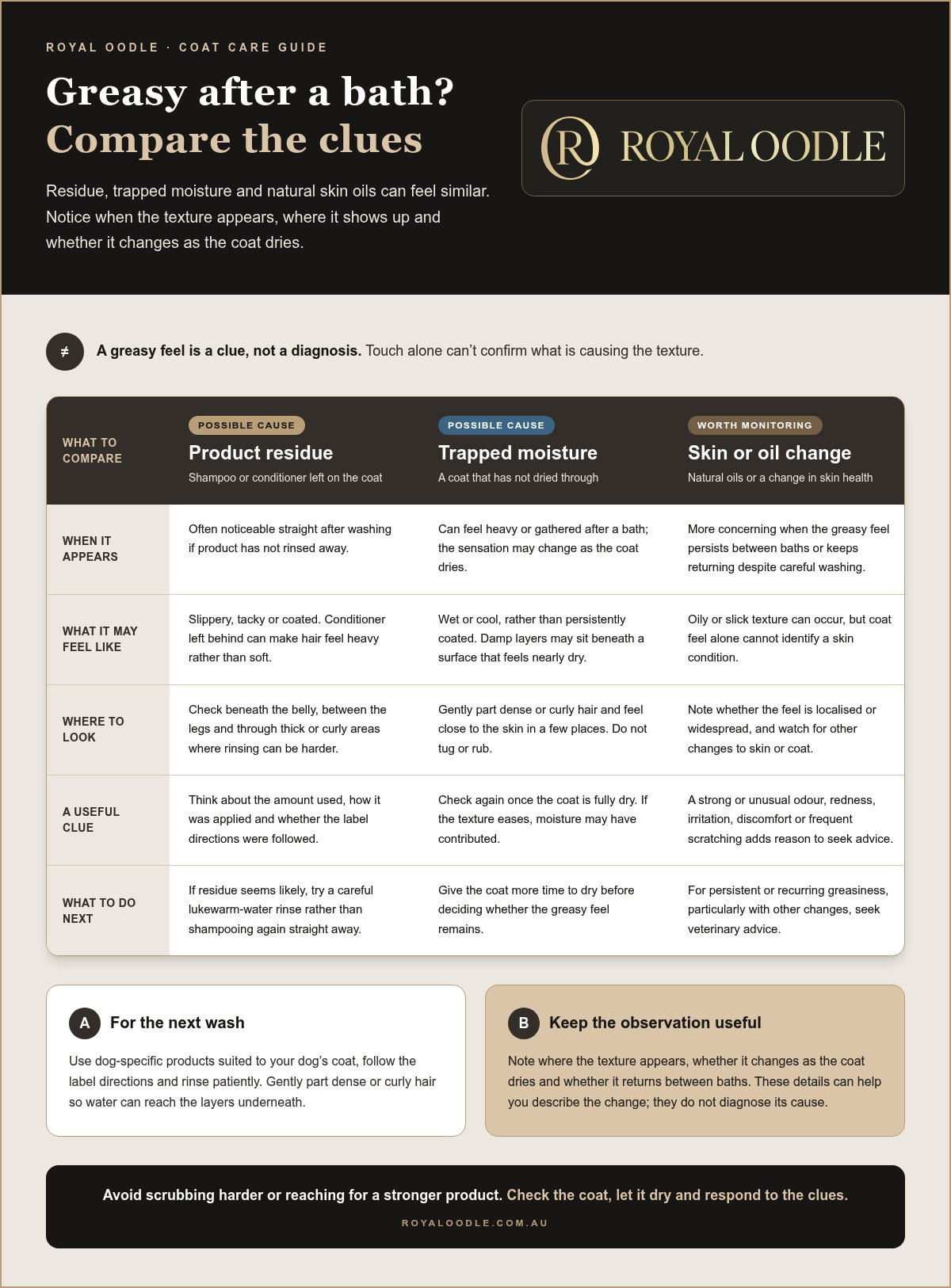
What should you do when your dog’s coat feels greasy after a bath?
If your dog's coat feels greasy after bath time, pause before reaching for more shampoo. First work out whether the coat is still damp, whether a particular area feels coated or whether your dog’s skin seems uncomfortable. A calm check helps you respond gently without adding unnecessary washing or rubbing.
- Check whether the coat is fully dry. Part the hair gently in a few places, especially through dense or curly areas, and feel close to the skin. If those layers are damp, give them more time to dry before judging the texture.
- Look for a localised patch. Notice whether the slippery feel is limited to places such as the belly, legs or under the collar. Check the skin for redness, sores or signs your dog is uncomfortable.
- Rinse suspected residue carefully. If the coat is dry and a product-coated feel seems plausible, use lukewarm water to rinse that area gently. Keep water away from the eyes and inside the ears, and stop if your dog becomes unsettled.
- Dry with a light touch. Press a clean towel against the coat to absorb water rather than rubbing vigorously. Let the coat continue drying in a comfortable setting, then check the texture again when it’s fully dry.
- Note what you observe. Record when the greasiness began, where it appears and whether you’ve noticed odour, itching, redness or other changes. These details can help if you seek veterinary advice.
What can you safely try before giving another bath?
Start with a gentle check, not a full repeat wash. If the coat is damp, allow it to dry; if one area seems to have residue, rinse that spot with lukewarm water and pat it dry. Don’t scrub or keep rinsing if your dog shows discomfort or the skin looks irritated. In those cases, stop and seek veterinary guidance.
Why might washing again straight away be unhelpful?
Another shampoo wash may leave more product behind or add friction without clarifying why the coat feels greasy. Avoid harsh scrubbing, household cleaners and unverified home remedies, which can add irritation or make the situation harder to assess. If the problem returns, keep notes and discuss the pattern with your vet rather than increasing bath frequency.
Persistent greasiness with skin symptoms calls for veterinary advice. Contact your vet if the coat remains greasy when dry, the issue repeatedly returns, or you notice a strong odour, redness, sores, ongoing scratching or discomfort. Coat texture alone can’t tell you what’s causing the change.
For future washes, choose dog-specific shampoo and conditioner suited to your dog’s coat, and follow the label directions for use and rinsing. Explore shampoo and conditioner for curly-coated dogs as you plan a considered routine.
How can you help prevent a greasy feel at your dog’s next bath?
A clean-feeling coat starts with a calm, consistent routine, not more frequent baths or stronger cleansing. Use products intended for dogs, follow their label directions and take time to rinse through the whole coat. This matters especially for curly and Oodle coats, where product can be harder to reach close to the skin.
How can better rinsing and drying support a clean-feeling coat?
Work methodically rather than rinsing only the surface. Move through the coat in sections, gently parting dense curls so water reaches the layers underneath. Pay attention to the belly, legs and other areas that are easy to miss. Rinse until the coat no longer feels slippery with product, while keeping water clear of your dog’s eyes and ears.
After bathing, press a towel against the coat to absorb water instead of rubbing vigorously. Let the coat dry thoroughly, checking close to the skin as well as the outer layer. A damp undercoat can feel heavy or clumped, so wait until the coat is dry before deciding the wash has left a greasy finish.
How should coat-care products fit into a gentler routine?
Shampoo is used to cleanse; conditioner is used for coat care. Neither needs to be applied more generously than its label directs. Choose dog-specific products that suit your dog’s coat, and use conditioner in a way that works for its texture and needs. A thoughtful shampoo-and-conditioner routine can support curly coats without harsh scrubbing or repeated washes.
For more detail on choosing a wash for curls, see this Oodle dog shampoo guide. If you’re considering the wider routine, the curly dog grooming products guide covers coat-care options in broader context.
Keep a note of what you used and how the coat felt once dry. If greasiness keeps returning or comes with signs of skin irritation, ask your vet for advice rather than changing to a stronger wash. For a considered routine, explore Royal Oodle’s Australian-made coat-care range, developed for Oodles and other curly-coated dogs.
Make the next bath a gentler reset
If your dog's coat feels greasy after bath, treat the next wash as a chance to refine the routine, not simply add another bath. Note the products used and how the coat feels once it’s dry. If the greasiness persists or comes with skin irritation, share those observations with your vet before changing your dog’s care routine.
For curly and Oodle coats, choose care designed with their texture in mind. Royal Oodle’s Australian-made range is developed and manufactured in Australia for Oodles and other curly-coated dogs, with shampoos, conditioners and detangling sprays for a considered routine.
Explore Royal Oodle’s Australian-made coat-care range for a thoughtful starting point for your dog’s next wash. Small, gentle adjustments can make bath time easier to manage for both of you.
Frequently Asked Questions
Should I bathe my dog again if their coat still feels greasy?
Usually, don’t give your dog another full bath straight away. First check that the coat has dried completely, since damp hair can feel heavier than it is. If one area still feels slippery and you suspect product remains, a gentle water rinse may be enough. If the greasy feel persists after drying or keeps happening after baths, note the pattern and speak with your vet before changing the bathing schedule.
Can dog conditioner make a coat feel oily after a bath?
Yes, conditioner can leave a heavy or slick feel if too much remains on the hair, or if it doesn’t suit your dog’s coat. A curly coat may hold product in its inner layers even when the surface feels rinsed. Use conditioner as its label directs, and pay attention to how your dog’s coat responds. If the finish consistently feels weighed down, review how and where you apply it.
Is a greasy coat after a bath a sign of a skin problem?
Not necessarily. A greasy coat can follow a bathing issue, but ongoing or recurring greasiness may also be associated with a skin or health concern. Look for accompanying changes such as persistent scratching, redness, sores, sensitivity or an unusual odour. These signs don’t identify a specific cause, so avoid diagnosing from appearance alone. Arrange veterinary advice if the texture continues or your dog seems uncomfortable.
Can I use human shampoo to remove grease from my dog’s coat?
No, use a shampoo made for dogs instead. Human shampoo is formulated for human skin, and its acidity may irritate a dog’s skin. Trying to strip away grease with a stronger wash can also leave the skin uncomfortable without addressing why the coat feels oily. Choose a dog-specific product and follow its directions. If the greasy feel persists, speak with your vet rather than experimenting with household products.
Why does my dog’s coat feel greasy again soon after bathing?
If your dog's coat feels greasy after bath time again and again, the cause may not be a single missed rinse. Consider whether the same areas are affected, whether the coat is fully dry and whether the texture changes between washes. Note any new skin changes or discomfort. Repeated greasiness deserves veterinary advice, since a vet can assess possible underlying causes instead of treating the coat feel alone.
Can a curly-coated dog feel greasy even when the outer coat seems clean?
Yes. Curly or dense hair can make it harder to judge the layers closest to the skin by looking at the surface. The outer curls may appear clean while inner sections still feel damp or coated. Gently part the hair in a few places to check, without pulling or scraping at the skin. If the coat is dry but greasiness persists, especially with irritation or odour, seek veterinary advice.
