

Another bath may make a greasy coat harder to understand, not easier to fix. If you’re wondering what causes greasy fur in dogs, the cause may be product build-up, but persistent or unusual oiliness can also accompany a skin or health problem. Washing more often may irritate the skin and make it harder to work out what’s changed.
It’s understandable to want to freshen your dog’s coat straight away. A little natural oil helps protect the skin and keep the coat supple, but ongoing greasiness, especially with flakes, redness, itching or a musty smell, deserves closer attention. The pattern matters more than shine alone.
This guide explains how normal skin oils differ from persistent greasiness and covers possible causes, from grooming habits to allergies, parasites, infections or hormonal conditions. You’ll learn what to note, when to seek veterinary advice and how to keep coat care gentle while you investigate. For curly and Oodle coats, thoughtful washing and thorough rinsing can support a comfortable grooming routine, but they can’t diagnose or treat an underlying medical cause.
Key Takeaways
- A greasy patch on its own can’t identify the cause. Note whether it settles after a recent exposure or keeps returning.
- Understanding what causes greasy fur in dogs starts with recognising that some natural skin oil is normal, while persistent greasiness may accompany an underlying issue.
- Primary seborrhoea is uncommon. Secondary greasiness may accompany another skin or health concern, so note signs such as odour, itching, flakes or redness.
- Record when the greasiness began, where it appears and how it changes. These details can help your vet assess the pattern.
- Choose a gentle coat-care routine suited to your dog’s skin and coat, and follow veterinary guidance if a skin condition is suspected.
What causes greasy fur in dogs, and how does skin oil work?
A greasy-feeling patch alone can’t identify the cause, so there’s no need to assume the worst. A small area may feel different from the rest of your dog’s coat for several reasons. To understand what causes greasy fur in dogs, notice whether the change is temporary, keeps returning or appears with other skin changes.
Sebum is the natural oil produced by sebaceous glands around hair follicles. In balanced amounts, it helps keep the skin flexible and supports the coat’s protective surface. Oil isn’t something you need to remove every time you notice it. For a broader overview of how these glands produce sebum, see Sebaceous Gland Function and Sebum Production.
Natural skin oil supports the coat. Persistent or excessive greasiness is a change to track, not a diagnosis in itself. Keeping that distinction in mind can help you observe your dog calmly instead of reaching straight for another bath.
What does sebum do in a healthy dog’s coat?
Sebum helps maintain the skin’s natural suppleness and coats the hair. Its presence is normal, and routine care doesn’t aim to strip away every trace of oil. A healthy coat may feel soft or slightly conditioned rather than dry and rough.
Coats don’t all feel the same. Hair length, texture, density and the way the coat sits against the skin can affect how oil is distributed and how the fur feels. A curly coat, for instance, may feel different from a short, smooth coat without that difference indicating a health concern. Treat greasiness as an observation to track, not a diagnosis you can make by touch.
What does “greasy fur” usually look and feel like?
Greasy fur may feel slick, waxy or heavier than usual. Individual hairs can stick together in small clumps, look less airy or seem coated at the roots. The change may be limited to one area or affect a larger part of the coat.
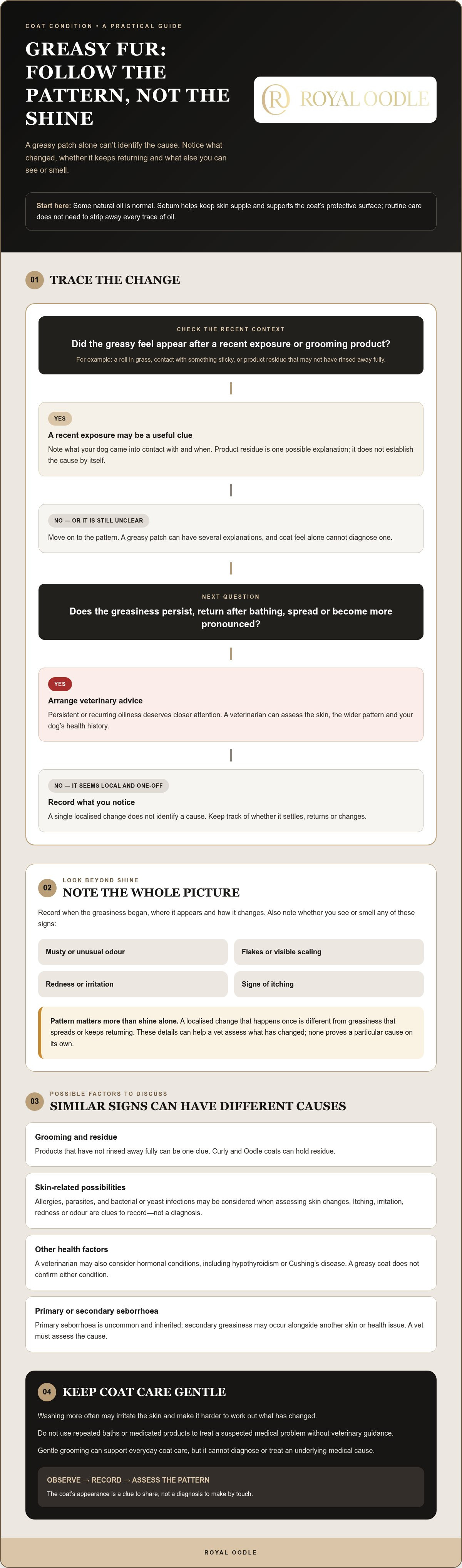
Pay attention to the pattern. A localised change that happens once is different from greasiness that spreads, returns after bathing or gradually becomes more pronounced. Curly and Oodle coats can also hold residue if products aren’t rinsed out thoroughly. Consider recent coat care as one possible clue, not a complete explanation.
As you check the coat, note what else you see or smell:
- A musty or unusual odour
- Flakes or visible scaling
- Redness, irritation or signs of itching
- Whether the change is localised, widespread or recurring
One detail may not tell you much on its own. Together, the texture, location and accompanying signs give a clearer picture of what has changed and whether it’s time to seek veterinary advice.
Which skin and health factors can make a dog’s coat greasy?
If the oiliness persists or keeps returning, it’s natural to wonder what causes greasy fur in dogs. Changes in sebum can be associated with skin conditions or wider health issues, but the coat’s appearance alone can’t identify the explanation. Similar-looking signs may have different causes, so don’t diagnose from a checklist or treat the coat as though the cause is already known.
Persistent greasy fur can have several causes, and the same coat change doesn’t point to one diagnosis every time. A veterinarian can assess the full pattern, including your dog’s skin, other signs and health history.
Primary and secondary seborrhoea: what is the difference?
Primary seborrhoea is an uncommon inherited pattern involving the way skin cells develop and renew. Veterinary sources describe it in certain dogs, and it may begin at a young age. Secondary greasiness is different: it can occur alongside another underlying skin or health issue.
The visible coat change doesn’t reveal which type, if either, is present. A vet must assess your dog to explore the cause. The American Kennel Club’s overview of Understanding Seborrhea in Dogs also describes primary and secondary forms, but it can’t replace an individual veterinary assessment.
Can allergies, parasites or infection affect coat condition?
These can be possibilities, particularly if oiliness appears with other changes. Allergies may be associated with itchy, irritated skin; parasites can also cause irritation; and bacterial or yeast infections may occur with skin problems. These are possibilities to discuss with a vet, not conclusions to draw from one symptom.
Look at the combination and pattern. Is your dog scratching more than usual? Do you see redness, flakes or an unusual odour? Are the changes spreading or recurring? These details can help a veterinarian understand what’s happening, but none proves a particular cause on its own.
Some health conditions, including hormonal disorders such as hypothyroidism or Cushing’s disease, may also be considered during an assessment. A greasy coat doesn’t confirm either condition. Your vet can decide whether further examination or tests are appropriate rather than relying on coat feel alone.
While you’re observing the changes, keep routine grooming gentle. Don’t try medicated products or repeated baths to solve a suspected medical problem without veterinary guidance. For curly and Oodle coats, gentle coat-care products can be part of everyday grooming, but they don’t diagnose or treat the underlying causes of greasy fur.
Is greasy fur just dirt, or a sign that something needs attention?
A coat can feel oily after a roll in the grass, contact with a sticky substance or use of a grooming product that hasn’t rinsed away fully. But greasy fur that returns, spreads or comes with skin changes is different from a one-off mess. The appearance alone can’t confirm a health problem, so consider what happened beforehand and how the coat changes over time.
Bathing may lift surface dirt or residue, but it can’t identify or treat an underlying skin or health issue. More frequent washing isn’t automatically the answer. Repeated baths may irritate skin or strip its natural oils, so don’t increase the bathing routine to chase persistent greasiness. The Merck Veterinary Manual’s guide to seborrhoea explains why ongoing coat changes may need veterinary attention.
| Temporary residue or recent exposure | Recurring coat changes |
|---|---|
| Appears after a clear event, such as getting dirty or using a grooming product. | Returns, persists or gradually affects more of the coat. |
| May be limited to the area that came into contact with something. | May occur with odour, flakes, redness, discomfort or itching. |
| May settle after the residue is gently removed and the coat is observed. | Needs closer attention; repeated bathing may not address the reason for the change. |
Which accompanying signs deserve closer attention?
Look beyond shine. Redness, scaling, flakes or hair clumping can add context, as can a musty or unusual smell. Your dog’s behaviour matters too: persistent scratching, pulling away when touched or sensitivity during handling may signal discomfort. One isolated sign doesn’t establish a cause. A combination that persists or keeps returning is more useful to share with your vet.
Note when the changes began and whether they’re worsening. If your dog seems uncomfortable, has irritated skin or the coat change is recurring, seek veterinary advice rather than relying on another bath. Greasy fur can have different explanations, and a vet can assess the full picture.
When is a greasy coat more likely to be a temporary change?
Think about recent contact with dirt, grass, sticky substances or grooming products. If the oiliness appeared straight after a clear event, is confined to that area and settles once surface residue is removed, a temporary change may be more likely. This is a clue, not a way to rule out a skin concern.
Observe whether the coat returns to its usual feel or becomes greasy again. Don’t delay seeking advice if there’s discomfort, redness, persistent odour or other changes, even if a recent exposure seems like an explanation. If you’re still asking what causes greasy fur in dogs, tracking the pattern is more useful than simply washing more often.
What should you record before asking a vet about greasy fur?
A few clear observations can make a veterinary appointment more useful. You don’t need to work out the cause yourself. Note what changed, when you first noticed it and whether anything else has changed in your dog’s skin or behaviour.
A symptom timeline helps a vet assess changes in context. It can show whether the greasiness appeared suddenly, keeps returning or is gradually spreading, details that may be hard to recall during an appointment.
How can you describe the coat change clearly?
Start with what you can see and feel, without repeatedly rubbing or irritating the area. Record whether the change affects one patch, a particular body area or most of the coat, and whether it has improved, worsened or returned since you first noticed it.
- Onset: When did you first notice the greasiness?
- Location: Is it in one area or across the coat?
- Pattern: Is it constant, recurring or spreading?
- Other changes: Note any odour, itching, flakes, redness, hair clumping or discomfort when touched.
- Recent care: Record baths, grooming products and any noticeable change after use.
Dated photos can help if there’s a visible change, such as redness, flakes or a patch that looks different from the surrounding coat. Take them in similar lighting where possible, and include a wider view as well as a closer one. Photos can show how the area changes between appointments, but they don’t replace an examination.
What might a veterinary assessment involve?
Your vet will consider your dog’s history alongside the appearance and feel of the skin and coat. They may ask when the greasiness began, whether it returns and what other signs you’ve observed. Share your notes, photos and recent grooming changes; you don’t need to arrive with a theory about what causes greasy fur in dogs.
Further checks depend on what the vet finds. Skin sampling may be considered to investigate changes on the skin, while blood tests may be appropriate if the history or examination suggests a wider health concern. These are examples, not a standard set of tests for every dog. Your vet can explain which steps, if any, make sense for your pet.
If your dog seems uncomfortable or the changes are worsening, contact your vet rather than waiting to see whether another bath helps. For everyday coat maintenance alongside veterinary advice, explore gentle grooming products for curly coats. Coat-care products support a considered grooming routine; they aren’t a substitute for assessment of persistent skin changes.
How can gentle coat care support a dog with greasy fur?
Coat care can keep your dog comfortable and help manage everyday dirt, but it can’t explain why greasiness is happening. If a skin condition is suspected, follow your vet’s advice before changing the bathing routine or using a medicated product. Grooming and veterinary care have different roles: one supports the coat, while the other investigates and manages a possible health issue.
How should owners approach bathing while investigating the cause?
Resist the urge to bathe repeatedly just to mask a persistent oily feel or smell. Frequent washing may irritate skin or disrupt its natural oils, and it won’t establish what’s behind recurring changes. Use products intended for dogs and follow their label directions, including instructions for use and rinsing.
If the skin looks red, flaky or sore, check with your vet before adjusting the routine. The right bathing frequency depends on your dog’s individual coat and skin needs, so there isn’t one schedule that suits every dog. If your vet recommends a particular bathing plan or product for a suspected condition, follow that guidance rather than substituting routine grooming products.
Curly coats can need considered cleansing and conditioning as part of everyday grooming. For practical washing considerations, see this Oodle dog shampoo guide. Rinse thoroughly, since leftover shampoo or conditioner can contribute to residue that makes fur feel coated. If the greasy feel returns or comes with discomfort, seek veterinary advice rather than simply washing more often.
Where do curly-coat products fit into a gentle routine?
Shampoos, conditioners and detangling sprays are grooming products, not medical treatments. Royal Oodle designs and manufactures coat-care products in Australia for Oodles and other curly-coated dogs. The range includes gentle formulations for sensitive skin, and these products can be part of a considered routine. They don’t diagnose, prevent or treat seborrhoea or another medical cause of greasy fur.
Choose grooming products for coat maintenance, and keep your vet involved if the skin is irritated or the oiliness persists. That distinction helps you care for a curly coat without relying on bathing to solve a problem that may need assessment. The curly dog grooming products guide offers broader coat-care considerations. To browse options for a considered routine, explore Royal Oodle coat-care products.
Let your dog’s coat guide the next step
Instead of chasing a sleek feel with repeated baths, make a simple plan: notice what changes, track the pattern and seek veterinary advice if the greasiness persists or your dog seems uncomfortable. A measured approach helps you care for your dog without overlooking a change that deserves attention.
Understanding what causes greasy fur in dogs isn’t always possible from appearance alone. You don’t need to solve the mystery before asking for help. Your observations can give your vet a useful starting point, while gentle, appropriate grooming can remain part of your dog’s routine.
For a considered coat-care routine, explore Royal Oodle coat-care products. Keep grooming in its proper role: supporting coat care, not replacing veterinary assessment when skin changes persist. With patient observation and the right guidance, you can take the next step with confidence and make your dog’s comfort the priority.
Frequently Asked Questions
Can a dog’s diet cause greasy fur?
A diet change can coincide with greasy fur, but appearance alone can’t show that food is responsible. If you’ve changed your dog’s food, note when and whether other changes followed, such as altered appetite, energy or bowel habits. Share this context with your vet, along with any skin signs. Avoid major diet changes or adding supplements to address the coat without professional advice, especially if your dog seems unwell.
Is greasy fur in dogs contagious?
Greasy fur itself isn’t a diagnosis, so whether a dog’s skin problem can spread depends on its cause. Some underlying issues may affect other pets, while others aren’t contagious. If another animal in your household develops skin changes, mention this to your vet and describe when each pet’s signs appeared. Don’t assume the animals have the same problem based on appearance alone, particularly if either seems itchy or uncomfortable.
Can bathing a dog too often make its coat greasy?
Frequent bathing can affect how a dog’s skin and coat feel, but it doesn’t explain every case of persistent greasiness. If the coat seems oilier after you’ve increased bath frequency, note when the routine changed and what products you used. Use dog-specific products and follow their directions. If the coat change continues, don’t keep increasing baths to manage it; ask your vet what routine suits your dog.
Does a greasy coat always mean my dog has seborrhoea?
No. A greasy coat can have several explanations, and what causes greasy fur in dogs doesn’t have one answer that applies to every pet. Your vet may consider your dog’s age, health history and other signs before deciding whether an examination or tests are appropriate. If the coat stays oily or changes alongside irritation, make an appointment rather than treating seborrhoea as a confirmed diagnosis.
Can a dog have greasy fur without an unpleasant smell?
Yes. A coat can feel greasy without smelling unusual, so odour isn’t a reliable way to decide whether the change matters. Note whether the oily feel is limited to one area, appears after grooming or continues between washes. Also watch for changes in your dog’s comfort, such as flinching during brushing. If the coat change persists or new signs appear, share those observations with your vet.
Are some dog breeds more prone to greasy skin?
Some veterinary sources associate primary seborrhoea with particular breeds, including Cocker Spaniels, West Highland White Terriers and Basset Hounds. Breed alone doesn’t explain an individual dog’s greasy coat or confirm a condition. If you have a dog from a breed mentioned in veterinary information, include their breed and any family or skin history you know when discussing persistent coat changes with your vet.
