

What if the answer to how to stop cavoodle hair matting isn’t a longer brushing session, but a gentler routine done more often? It’s frustrating when tangles return soon after grooming, especially when curls conceal knots close to the skin. If your Cavoodle flinches, it’s natural to worry that detangling may hurt.
Comfort matters as much as appearance. Cavoodle coats vary from straight to wavy and curly, and curlier coats are more prone to matting. Knots often start in high-friction spots, such as behind the ears, beneath a collar or harness, and around the armpits. Brushing only the surface can miss them.
This guide explains how to build a calm, realistic between-grooms routine: where to check, how to part and brush the coat in small sections, and how to adapt care to your dog. You’ll also learn when to stop rather than pull at a stubborn mat, and when to contact a professional groomer or veterinarian. The goal isn’t a perfect coat every day. It’s a more comfortable Cavoodle and fewer last-minute tangles.
Key Takeaways
- Curly and wavy Cavoodle coats can hold shed hair, but coat types vary, so tailor care to your dog.
- Learn how to stop cavoodle hair matting with regular, gentle checks rather than occasional forceful brushing.
- Use a calm, section-by-section routine, and treat prevention differently from removing a tight, established mat.
- Notice when a knot needs a professional groomer’s attention. If mats keep returning, discuss coat length or routine changes.
- Detangling sprays and other suitable coat-care products can support brushing, but they don’t replace it or professional advice.
Why Cavoodle hair mats and where tangles start
If tangles keep returning, you haven’t failed your Cavoodle’s coat. Recurring knots are a common coat-care challenge, particularly where curls, movement and everyday friction meet. Cavoodles don’t all have the same coat. Some are straighter, while others are wavy or curlier, and texture and density affect how easily loose hair gets caught.
Matting is hair that tightens and clumps together, sometimes close to the skin. Spotting small snags early makes them easier to address gently. Shed hairs may stay caught within a wavy or curly coat instead of falling away, then twist around other hairs as your dog moves. Missed brushing, dampness and a longer coat may also contribute, though the mix differs from dog to dog. Matted fur can affect comfort and skin health, as outlined in Dog grooming.
Why a Cavoodle’s coat can tangle between grooms
Curl pattern and coat density both matter. A tighter curl may hold loose hairs more readily, while a longer coat gives knots more hair to catch onto. Walking, rolling, resting and wearing a collar or harness create repeated movement and friction. These factors can combine, so a coat that looks smooth on top may still hide a small snag underneath.
There isn’t one ideal coat length or grooming schedule for every Cavoodle. Ask your dog’s groomer what length suits your dog’s coat, lifestyle and tolerance for home brushing. If you’re wondering how to stop cavoodle hair matting, start by identifying where loose hair and friction meet.
Where to check for early tangles
Gently feel through the coat with your fingertips rather than relying on a quick look at the surface. Check behind the ears, under the collar and wherever a harness touches. Then feel around the armpits, chest, legs and tail, as well as other places where the coat rubs as your dog moves. Keep the collar or harness comfortably loose and check contact areas regularly.
A small snag may feel like a rough patch or tiny knot that catches your fingers. Part the hair gently to see whether it’s loose or pulling close to the skin. Don’t tug to test it. If a knot feels dense, your dog reacts, or the skin looks irritated, stop and ask a professional groomer or veterinarian for advice. Regular, calm checks help you spot changes before they become harder to manage.
What helps prevent Cavoodle hair matting: brushing, moisture, and coat care
Prevention and detangling aren’t the same job. Routine brushing can catch loose hairs and small snags before they tighten. A dense mat close to the skin is different: pulling at it can cause discomfort or irritate the skin, so don’t use force as a shortcut. The ASPCA describes how severe matting can lead to severe medical problems. If a knot feels tight or your dog is uncomfortable, pause and ask a professional groomer for help.
Consistent, gentle brushing helps keep small tangles manageable before they gather into mats. A few calm minutes, repeated as suits your dog, is usually kinder than leaving tangles until one long, forceful session. That’s a practical starting point for how to stop cavoodle hair matting, but the right routine depends on your dog’s coat.
Choose a brushing approach that suits the individual coat
Ask your groomer which brush and brushing frequency suit your Cavoodle’s coat texture, density and length. A slicker brush followed by a steel comb is commonly recommended for curly coats. Your groomer can show you how to use the tools safely on your dog. Work in small sections with light strokes, supporting the hair near the skin. If a brush catches, don’t yank it through. Pause, check the knot and ease off if your dog shows discomfort.
There isn’t one schedule that fits every Cavoodle, puppy or coat type. Coat condition, length and your dog’s tolerance for brushing all matter. If knots keep returning, talk with your groomer about whether a different routine or coat length may be easier to maintain at home.
Use coat-care products thoughtfully
A dog-safe detangling spray or conditioner may help reduce friction and make brushing more comfortable, but it won’t replace regular checks and brushing. Choose products intended for dogs, follow the label directions, and don’t assume a product will loosen a tight mat safely. Avoid human hair products or homemade mixtures unless your veterinarian or groomer has advised you to use them.
Royal Oodle’s Australian-developed and manufactured range includes detangling sprays, shampoos and conditioners described as gentle and designed for sensitive skin. These products are optional support for a considered coat-care routine, not a substitute for brushing, professional grooming or veterinary advice. If you’re exploring dog detangling and coat-care products, check the current label for directions suited to your dog’s coat.
Moisture deserves attention, too. A damp coat left to air-dry can tangle more readily, so dry your Cavoodle thoroughly after a bath or getting wet. Follow your groomer’s advice on brushing as the coat dries. Comfortable coat care depends on consistency, not force.
Cavoodle matting myths: more brushing is not always better
A stubborn mat can make it tempting to brush harder or keep going until it gives way. But more pressure doesn’t mean safer detangling. Pulling at a knot can hurt, especially where the coat is fine or close to the skin. Frequent, gentle checks help with prevention; forcefully working on an established mat is different.
Bathing isn’t a detangling shortcut, either. Water can tighten existing knots and make them harder to manage. Check the coat before a bath and ask your groomer how to handle tangles or drying for your dog’s coat. If brushing brings distress, resistance or visible discomfort, stop. That’s good care, not giving up.
Does brushing more often always prevent mats?
No single brushing schedule suits every Cavoodle. Coat type and length, daily activities and your dog’s tolerance all affect what’s realistic. A brief, calm session checking small sections may be easier on your dog than a rushed, lengthy attempt after tangles have built up. If knots keep returning despite regular care, ask your groomer to recommend a routine tailored to your Cavoodle.
Think of brushing as a chance to notice changes, not a test of endurance. If your dog turns away, fidgets or resists, take a break. Try again later only if they’re comfortable. For owners learning how to stop cavoodle hair matting, a sustainable routine should support both coat condition and trust.
When should you stop trying to remove a mat?
Stop if a knot feels tight, sits close to the skin or won’t loosen with gentle handling. Don’t cut it out with household scissors. A dog’s skin can be difficult to see beneath the coat, and it may be pulled up into the mat. A professional groomer can assess the safest way to deal with it.
Distress is a clear signal to pause. Watch for flinching, repeated attempts to move away, growling or sudden sensitivity in one spot. Don’t restrain your dog to force the brushing session. Seek help from a groomer instead. If the skin looks sore, damaged or persistently irritated, contact your veterinarian for advice. Coat-care products can support routine brushing, but they aren’t a substitute for professional help with a tight mat or skin concern.
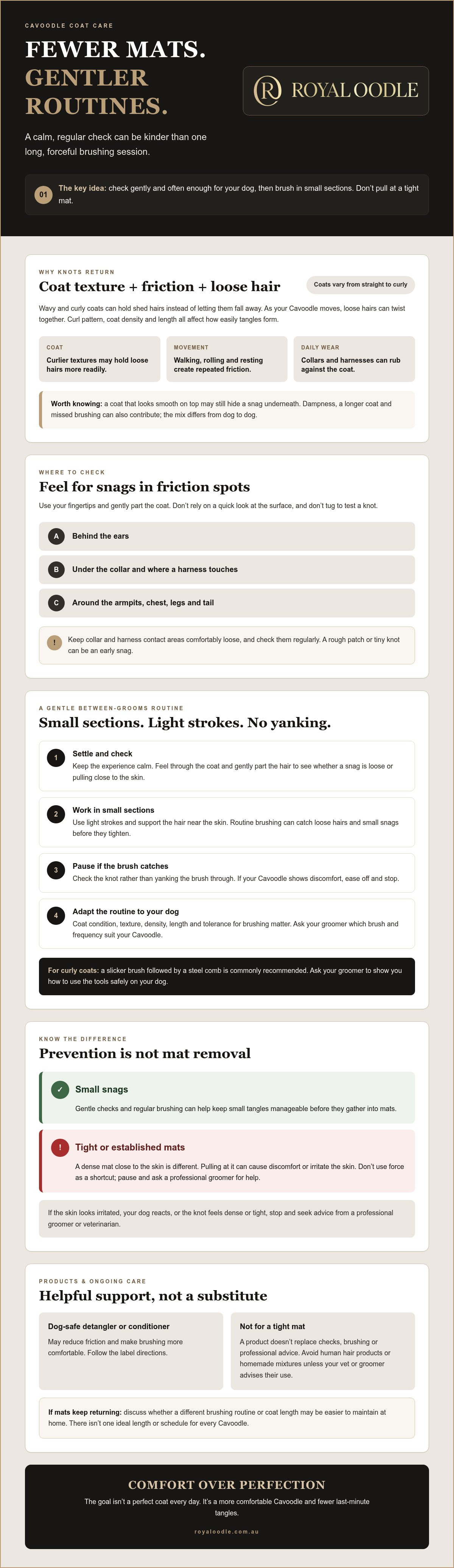
A gentle between-grooms routine to reduce Cavoodle hair matting
A repeatable coat check helps you catch small snags before they become a bigger job. Keep the session calm and adapt the steps to your dog’s coat, comfort and groomer’s advice. You don’t need to finish the whole coat at once. A short, settled session is more useful than pushing through resistance.
A short coat check and brushing sequence
- Settle your Cavoodle. Choose a comfortable spot and let them relax before you begin. Use your eyes and fingertips to check behind the ears, beneath the collar, around harness contact points, and through the armpits, chest, legs and tail.
- Pause at snags. Feel for small knots without pulling. If you find a tight tangle, or your dog flinches, moves away or seems uncomfortable, stop working on that spot. Don’t force the session.
- Work in small sections. Part the coat and brush a manageable section at a time with light strokes. Support the hair near the skin and avoid dragging the brush through resistance. If it catches, ease off and reassess rather than tugging.
- Check only if your dog is comfortable. Gently pass a comb through the brushed section to see whether it moves freely. If it catches, don’t pull it through. Return to gentle handling only if the tangle is loose and your dog remains relaxed. Leave tight or skin-close mats to a professional groomer.
- Finish on a calm note. Offer reassurance and stop before your Cavoodle becomes unsettled. It’s fine to cover another area in a later session.
Keep the routine comfortable and consistent
There’s no need to make every check a full-body brushing session. Keep it brief, use a soothing voice and give your dog time to adjust. If you use a dog-safe coat-care product, follow its label directions. The aim is a familiar, gentle ritual, not a race to remove every knot in one sitting.
Make a note of spots that repeatedly snag, such as beneath a harness or behind one ear. Share that pattern with your groomer and ask whether the coat length, brushing approach or schedule could be adjusted. Revisit your routine after a change in coat length, activity or weather, or when your groomer gives new advice. A tailored sequence is a practical way to learn how to stop cavoodle hair matting without turning brushing into a struggle.
Royal Oodle offers detangling sprays, shampoos and conditioners as optional additions to a coat-care routine. Products can support regular brushing, but they don’t replace gentle checks or help from a groomer when a mat is tight. See Royal Oodle’s coat-care products.
When Cavoodle hair matting needs a groomer: how coat-care products can help
Home brushing is for routine coat care, not every knot. If a mat feels tight, covers a wide area or sits close to the skin, stop trying to work it out and contact a professional groomer. Do the same if you can’t see the skin clearly beneath the tangle or your Cavoodle becomes distressed. Continuing to pull may cause pain or irritate delicate skin.
Signs a groomer should assess the coat
Pause and arrange professional help if mats are dense, widespread or difficult to reach without tugging. Don’t cut them out at home, as skin can be caught up inside the coat. If you notice sores, redness, pain or other concerning skin changes, seek veterinary advice. A groomer can assess the coat, while a veterinarian can advise on skin or health concerns.
Stopping early is a caring choice. You don’t need to solve every knot yourself, and detangling products aren’t a safe substitute for professional assessment when a mat is tight or close to the skin.
Make prevention easier between professional grooms
If matting keeps returning, ask your groomer to review the coat length, maintenance frequency and areas that regularly snag. A shorter style may be easier to manage, but the right option depends on your dog’s coat and your preferences. Share what you notice at home, such as tangles beneath a harness or around the legs, so the routine can be adjusted to your Cavoodle.
Once you’ve agreed on a plan, gentle, dog-specific coat-care products may help support brushing. Royal Oodle is an Australian-owned brand that develops and manufactures grooming products in Australia. Its range includes detangling sprays, shampoos and conditioners, as well as bundles and kits. These are optional aids for a consistent routine, not replacements for brushing, professional grooming or veterinary advice. Follow the directions on the product label.
To decide how to stop cavoodle hair matting, start with your groomer’s guidance and a manageable home routine. Then choose coat-care products that suit your dog and use them as directed. Explore Royal Oodle coat-care products.
Make coat care a gentler daily ritual
Learning how to stop cavoodle hair matting starts with small, consistent checks, not a marathon brushing session. Work gently through manageable sections and pay attention to spots that snag repeatedly. If a mat is tight, close to the skin or distressing your dog, stop and ask a professional groomer for help. For sore or irritated skin, contact your veterinarian.
Choose a routine that suits your Cavoodle’s coat and comfort, and revisit it with your groomer if tangles keep returning. Dog-specific detangling sprays, shampoos and conditioners can be optional supports, but they don’t replace brushing or professional care. Royal Oodle focuses on Oodles and other curly-coated dogs, with products developed and manufactured in Australia, including grooming kits.
For coat-care options to complement your routine, explore Royal Oodle coat-care products. Keep brushing gentle and comfortable, and celebrate the small wins.
Frequently Asked Questions
How often should I brush my Cavoodle to help prevent matting?
Brush often enough to catch small tangles before they tighten, then adjust the routine to your Cavoodle’s coat and comfort. Daily or every-other-day brushing is commonly recommended for curly coats, while brushing at least two or three times a week is a useful baseline. Ask your groomer to tailor the frequency and technique, especially if your dog has a longer coat or finds brushing uncomfortable.
Why does my Cavoodle’s hair keep matting after grooming?
Matting can return because grooming doesn’t stop loose hair, movement or friction from creating new tangles. Longer coats may need more upkeep, and knots can hide under a collar or harness, behind the ears or in other rub-prone areas. Moisture and missed tangles can also contribute. If you’re wondering how to stop cavoodle hair matting, ask your groomer to review your dog’s coat length and between-grooms routine.
Can I brush out a mat in my Cavoodle’s coat at home?
You may be able to ease a small, loose tangle with gentle brushing in short sessions, provided your Cavoodle stays comfortable. Don’t pull or keep brushing through resistance. If a mat feels dense, sits close to the skin, or causes your dog to flinch or move away, stop and contact a professional groomer. Avoid cutting mats out with household scissors, as skin can be hidden within the coat.
Should I use detangling spray on my Cavoodle?
A dog-specific detangling spray may help reduce friction during brushing, but it’s an optional aid, not a substitute for checking and brushing the coat. Follow the product label, and avoid using products not intended for dogs. Royal Oodle offers detangling sprays, shampoos and conditioners developed for Oodles and other curly-coated dogs. If your dog has sensitive or irritated skin, ask your veterinarian before introducing a new product.
Does bathing a Cavoodle help prevent hair matting?
Bathing alone won’t prevent mats, and water can tighten existing tangles. Brush the coat before bathing, and dry it thoroughly afterwards rather than leaving it damp to air-dry. Ask your groomer how often to bathe your Cavoodle and what drying approach suits their coat. If you find a tight mat before bath time, don’t try to wash it out. Get advice from a professional groomer first.
What should I do if my Cavoodle has a tight mat near the skin?
Stop brushing and arrange for a professional groomer to assess the mat. Don’t tug at it or try to cut it out, as the skin may be caught beneath the hair. If your Cavoodle seems in pain, or the skin looks red, sore or damaged, contact your veterinarian for advice. Coat-care products aren’t a substitute for professional help with a tight mat or a skin concern.
Can a shorter Cavoodle haircut help reduce matting?
A shorter coat may be easier to maintain, but it won’t prevent every tangle and may not suit every dog’s coat or lifestyle. Discuss coat length and upkeep with your groomer, including the length in millimetres or blade number you prefer, so you can be clear about the result. If mats keep returning, share the problem areas and ask whether a different length or home-care routine may help.
