

Preventing burrs and seeds in your dog’s coat starts with avoiding long, seed-heavy grass where possible, then checking and gently brushing your dog after outdoor time. Burrs are seeds that cling to fur, while sharp grass seeds can work their way into the skin or lodge in the ears, eyes, nose or paws. A simple routine helps you spot them early and recognise when a seed needs veterinary attention.
It’s frustrating to finish a lovely walk with a tangled coat and prickly surprises between the toes. This guide explains how grass seeds can harm dogs, how to loosen and remove surface burrs without pulling at the skin, and which signs call for prompt veterinary care. You’ll also learn how regular brushing, clearer walking routes and protective coverings can reduce the chance of seeds hitching a ride home.
Key Takeaways
- Learn which warning signs can point to a seed causing irritation beneath the coat, and when it’s time to seek veterinary care.
- Use a gentle, section-by-section approach to loosen stubborn tangles, reducing tugging on your dog’s skin.
- Make coat care easier with a regular brushing rhythm, paying special attention to the areas where debris tends to hide.
- Plan ahead for seed-prone walks with sensible route choices and protective layers suited to your dog’s comfort.
Why are grass seeds dangerous for dogs?
Dogs with long, dense or curly coats are more likely to collect burrs and grass seeds than short-haired dogs. These coat types can hide seeds close to the skin, so your dog’s coat length and texture are useful clues when deciding how carefully to check after a walk.
- Keep grass and weeds short in your yard. Mow regularly and remove seed-shedding plants before their heads dry and scatter. Rake or clear loose plant debris, especially in areas where your dog rests or plays. Shorter growth reduces opportunities for burrs and seeds to catch in fur.
- Choose paths over long grass. Grass seeds can cling to a dog’s coat as they brush past, particularly around the legs and belly. Walk on mown lawns, paths or pavements instead of pushing through tall grass. In Australia, fox tail grass is a particular source of trouble for dogs.
- Know how seeds cause injury. Barbed seeds can snag in fur, then work towards the skin, ears, eyes, nose or paws. A seed lodged in the skin may cause redness, swelling and discomfort. A deeply embedded seed can form a lump that becomes infected, so don’t dig into the skin to retrieve it.
- Watch for signs of a serious problem. Check for a tender lump, redness, swelling or discharge around a suspected seed entry point. Head shaking, a tilted head or pawing at the head can signal ear irritation. Limping or refusing to put weight on a paw may indicate a seed between the toes or in a paw pad.
- Act quickly if a seed may have travelled deeper. Grass seeds can lodge in the ears, nose, throat and internal organs. If inhaled, they can migrate into the lungs and cause respiratory distress; seeds entering the digestive tract may cause vomiting, diarrhoea or blockage. Contact a vet promptly if breathing changes or these symptoms appear.
Removing burrs with combs, oil and other tools
Work slowly, separating trapped fur before easing a burr free. Stop if it is embedded in the skin, painful or difficult to remove.
-
Remove loose burrs with fingers and a comb
Hold the fur at its base to limit pulling on your dog’s skin. Tease apart the outer strands with your fingers, then work a wide-toothed metal dog comb or hair pick through the tangle. A little coconut or vegetable oil may help loosen snarls. Don’t cut burrs out with scissors, as you could injure the skin beneath the coat.
-
Remove loose seeds from fur
Brush gently to lift loose seeds and plant debris from the coat. Check the chest, belly and behind the legs, where seeds can go unnoticed. For a small tangle, separate the fur with your fingers before combing from the ends towards the skin. Support the section at its base, and stop if your dog shows discomfort or the seed appears embedded.
-
Remove burrs during hikes
Remove burrs as soon as you notice them, rather than letting them tighten into the coat during a walk. Loosen the surrounding fur with your fingers, then gently comb out the burr. Check the paws and legs before continuing. If a burr is firmly tangled or your dog reacts with pain, don’t force it. Arrange professional grooming for safe removal.
- For stubborn tangles, a groomer can help remove burrs without tugging or cutting close to the skin. Regular trimming around the paws, belly and ears can reduce places where seeds lodge, and a well-groomed coat makes debris easier to spot. See a vet if a seed is embedded in the skin, or if the area is red, swollen, painful or oozing. Treatment costs in Australia depend on whether care involves an examination and removal or more involved treatment, such as anaesthesia, minor surgery or infection care.
Brushing and checking a dog after walks
Make a quick coat check part of your routine when you get home. Consistent checks help you spot burrs and loose seeds before they become tangled, supporting preventing burrs and seeds in your dog’s coat.
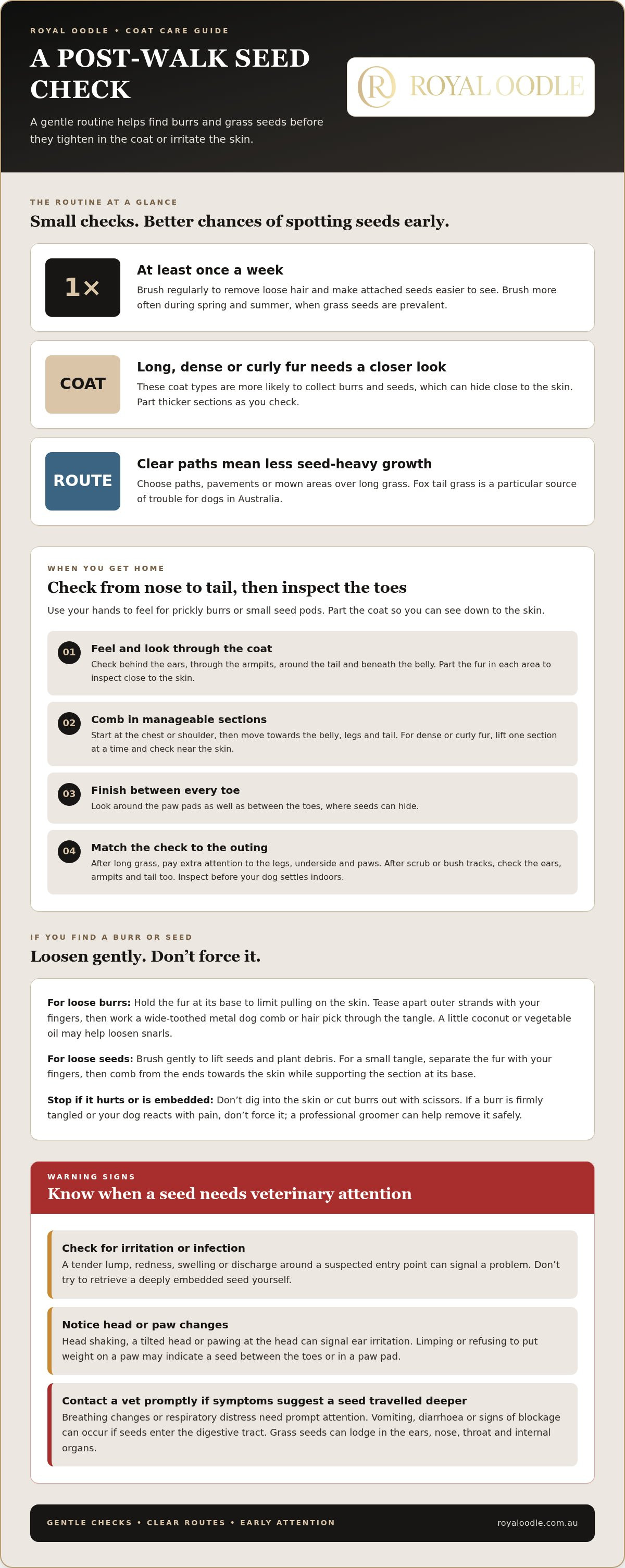
- Check from nose to tail, then inspect the toes. Gently run your hands over your dog’s coat, feeling for prickly burrs or small seed pods. Look behind the ears, through the armpits, around the tail and beneath the belly. Part the fur in each area to see down to the skin. Finish by checking between every toe and around the paw pads, where seeds can hide.
- Brush at least once a week. Brush more often during spring and summer, when grass seeds are prevalent. Long, dense or curly coats can trap debris between strands, so separate thicker sections with your fingers as you work. Regular brushing removes loose hair and gives you a clearer view of the coat, making attached seeds easier to spot.
- Comb through the coat in manageable sections. Start at the chest or shoulder, then move towards the belly, legs and tail. Use a suitable dog comb to check through the hair, rather than brushing only the visible surface. If the coat is dense or curly, lift one section at a time and check near the skin. Removing loose debris as you go helps with preventing burrs and seeds in your dog’s coat.
- Match the check to your dog’s outing. After a walk near long grass, pay extra attention to the legs, underside and paws. After exploring scrub or bush tracks, check the ears, armpits and tail too. Inspect your dog before they settle indoors, since loose seeds can fall from the coat onto bedding or floors. For longer coats, keep the routine gentle and steady.
Avoiding burr-producing plants or using a protective coat
Reduce exposure by choosing clear paths, avoiding seed-heavy growth and covering vulnerable areas. Cockleburs, burdock and foxtail grass can cause trouble, especially when grass seeds are abundant in spring and summer.
-
Avoid burr-producing plants
Choose paths, pavements and cultivated areas instead of walking through dense wild growth. Cockleburs and burdock produce burrs that catch in fur, while grass seeds can grow in fields, hedgerows and beside suburban roads. Before letting your dog explore a yard, look for tall, seed-bearing plants and remove or cut them back. Keep grass mown, then rake or clear loose plant debris from play areas.
-
Use a protective coat
Dress your dog in a jacket or vest before walks through seed-prone areas. A covering reduces the amount of fur exposed to burrs, particularly across the back and body. Booties can protect paw pads on rough or woodsy terrain if your dog tolerates wearing them. For trips where burrs are likely, consider trimming belly and leg hair and using a leave-in conditioner or silicone spray. Explore gentle coat-care essentials to support an easier grooming routine.
-
Identify risky grasses and weeds
Scan the route for dry grass heads and plants with clingy seed pods before your dog enters. Foxtail grass is a particular source of trouble; cockleburs and burdock also produce burrs that attach to coats. Grass seeds are commonly found in fields, hedgerows and along suburban roads. They are most abundant in spring and summer, so favour mown routes during these seasons and avoid patches of long, seeding grass.
Royal Oodle: Detangling Sprays
Royal Oodle offers Detangling Sprays for curly-coated dogs, which can be a useful addition to your coat-care routine if fur tangles easily after outdoor adventures. Apply the product as directed, then gently work through the coat with your fingers or a comb. Detangling spray can make routine grooming more manageable, while regular checks help you spot plant debris before it mats into the fur.
Royal Oodle’s grooming range is designed for Oodles and other curly-coated dogs, with gentle, premium ingredients for sensitive skin. Choose a Detangling Spray to support coat maintenance, or include Shampoo & Conditioners and Bundles & Kits in your grooming routine. The products are developed and manufactured in Australia.
For a more comfortable coat-care routine between walks, visit royaloodle.com.au to explore Royal Oodle’s grooming products.
Make coat care part of your time together
Let grooming become a calm moment of connection, not a chore reserved for troublesome tangles. A familiar brush, a gentle touch and a little patience can help your dog feel comfortable with routine coat care. Adapt your approach to your dog’s coat and sensitivity, and build the habit around the walks and outdoor adventures you already enjoy.
A thoughtful routine for preventing burrs and seeds in your dog’s coat is easier to maintain when your grooming products suit your dog’s needs. Royal Oodle offers coat-care options for curly-coated dogs, including Detangling Sprays, Shampoo & Conditioners, and Bundles & Kits. Choose products that suit your dog, then keep each grooming session gentle and unhurried.
Ready to find a considered addition to your dog’s coat-care routine? Contact Royal Oodle for help, and take the next step towards calmer, more comfortable grooming.
Frequently Asked Questions
What Are Burrs?
Burrs are seed heads with hooks, barbs or rough surfaces that catch on fur, feathers or clothing. This helps the plant’s seeds travel away from where they grew. Unlike a smooth seed that may brush off, a burr can wind into longer coat strands and tighten as your dog moves. Look for hooked or prickly plant material rather than assuming every coat tangle is ordinary matting.
What are the sticky green balls in my dog’s fur?
They may be clingy seed pods, such as goosegrass, which can stick to fur, irritate skin or contribute to matting. Check whether each pod is loose in the coat or attached close to the skin. Gently part the surrounding hair and remove surface pods without pulling. If you find a tender, swollen or weeping spot beneath one, seek veterinary advice rather than probing the skin.
What other seeds can cause problems for dogs?
Foxtail grass seeds are a particular concern because their barbed structure can lodge in vulnerable areas. Goosegrass pods may tangle fur, while cockleburs and burdock produce burrs that readily attach to coats. The key difference is that a burr often clings externally, while a sharp grass seed can penetrate the skin. Treat prickling, redness or a persistent sore as more than a grooming issue.
Do dog coats, snoods, boots, or body suits help keep burrs and seeds off?
A jacket or vest can cover some fur, while booties can shield paw pads on rough walks if your dog tolerates them. A body suit may also reduce exposed coat, but uncovered areas still need checking. Snoods cover the ears, not the whole head or body. Choose comfortable coverings that allow free movement, and remove them after the walk to inspect the fur beneath.
What are the best ways to remove burrs from a dog's coat without hurting them?
For a surface burr, steady the fur near the skin and gently separate strands with your fingers before using a wide-toothed comb. A small amount of coconut or vegetable oil may help ease a stubborn tangle. Avoid scissors near the skin, and don’t dig out a seed lodged in tissue. Stop if your dog shows pain or the burr won’t release easily.
How should I check my dog for grass seeds after walks, especially around ears, paws, and armpits?
Settle your dog somewhere well lit, then part the coat with your fingers so you can see the skin. Look around the ear openings without inserting anything, and gently examine between the toes and around each paw pad. Lift each front leg to inspect the armpit, then check behind the ears and under the collar. If your dog shakes its head or limps, contact a vet.
