

What if the secret to a fluffy Oodle coat isn’t more brushing, but gentler preparation and careful drying? If you’re wondering how to make oodle coat fluffy after a wash, start with a clean, fully dried coat, then gently lift and separate the hair. That soft, airy finish is possible at home without turning grooming into a frustrating battle.
A coat that looks flat, limp or separated after washing can be disappointing, especially when drying and styling already take time. Brushing too soon or with too much friction can make tangles harder to manage and leave your dog uncomfortable. A calm, step-by-step routine makes it easier to work with your Oodle’s curls and waves.
This guide covers how to prepare the coat before washing, dry it thoroughly and gently lift the hair for a soft finish. You’ll also learn when knots need attention before bath time, and when persistent matting calls for a different approach. With patience and the right technique, coat care can feel more comfortable for both of you.
Key Takeaways
- A fluffy finish means soft, gently lifted and separated hair, not a frizzy or overworked coat.
- Coat type, length, cleanliness and drying technique all influence the finished look.
- A calm post-wash sequence helps the coat dry evenly and regain its natural lift.
- Gentle brushing and a simple routine can help you learn how to make oodle coat fluffy.
- Notice and address tangles before washing, rather than trying to brush volume into mats.
What makes an Oodle coat look fluffy, soft and full?
A fluffy finish isn’t simply a coat that’s been brushed until it looks bigger. It’s soft, separated hair with a gentle lift, while the curls or waves remain defined and comfortable to touch. Frizz, flyaways and puffiness can make the coat appear bigger, but they aren’t the same as healthy-looking volume.
The result depends on your dog’s natural texture, coat length, cleanliness and drying technique. A clean, fully dried coat is generally easier to separate and lift gently. There’s no single styling method that creates the same look for every Oodle.
A soft, fluffy finish starts with a clean, tangle-free coat and gentle drying that suits your dog’s natural texture.
Fluffy, frizzy or tangled: how to tell the difference
Look closely and feel gently. With an airy, separated coat, you can see individual curls or soft waves, and the hair moves easily beneath your fingers. Frizz tends to look rougher, with flyaway strands and less definition. Compact knots or mats feel dense and clumped together. They aren’t extra volume, and pulling them apart can be uncomfortable, so don’t force a brush through them.
Watch your dog as you groom. If they flinch, move away, tense up or seem unsettled, pause rather than pushing on. A comfortable finish should never come at the expense of your dog’s comfort.
Why Oodle coat texture changes the result
“Oodle” covers crosses such as Cavoodles, Groodles and Labradoodles, not one uniform coat type. Some coats form loose waves; others have tighter curls or a dense, fleece-like feel. The Poodle breed is known for its distinctive curly coat, but an Oodle’s coat can also reflect traits from its other parent. Texture can vary between individual dogs, too.
That variation matters at home. A technique that gently lifts a wavy coat may leave tighter curls looking expanded or frizzy, while a dense coat may need more careful, section-by-section attention. Treat the coat in front of you as your guide, rather than aiming for a particular breed’s look. Learning how to make oodle coat fluffy begins with recognising what your dog’s own texture can comfortably do.
How washing and drying help an Oodle coat regain its lift
Fluff begins before the final brush. A careful wash removes dirt and residue that can weigh the coat down, while conditioner used as directed helps keep it manageable during drying. Follow the product instructions: cleanse, rinse thoroughly, condition, rinse again if directed, then gently remove excess water. For general Poodle coat-care principles, see the AKC grooming guide.
Prepare the coat before drying
Follow the directions on your shampoo and conditioner, and take your time rinsing. Product left behind can make the coat feel coated or heavy, while thorough rinsing prepares it for a lighter finish. Keep the water and your touch gentle around the face, ears and other delicate areas, and avoid getting water or product into your dog’s eyes and ears.
Before reaching for a dryer, press a towel gently against the coat to absorb water. Work in sections, using fresh areas of the towel as they become damp. Don’t scrub or rub back and forth: friction can encourage tangling and leave curls rough-looking. Removing excess water first also means there’s less moisture to manage during drying.
Dry gently while encouraging natural volume
If you use a dryer, choose a low or cool airflow setting and keep it moving rather than directing it at one spot. Let your dog adjust to the sound and sensation, and pause if they seem distressed or uncomfortable. A calm, steady process is more useful than rushing to create a particular shape.
Check beneath the top layer, especially in dense areas, to make sure the coat is dry throughout before judging its volume. Leftover moisture can weigh hair down and keep strands clumped together, so a coat may look flat or separated until it’s fully dry. Once dry, assess the natural texture and decide whether it needs a light finishing brush.
That’s the foundation of how to make oodle coat fluffy without vigorous brushing: cleanse and rinse well, condition as directed, press out excess water, then dry gently and completely. Royal Oodle’s Australian-made shampoos and conditioners for Oodle coats are designed for gentle coat care and easier manageability, making them a useful part of a considered wash routine.
Brushing, detangling and fluffing: what helps without creating frizz?
Brushing can help reveal a soft, lifted finish, but speed and pressure work against it. Hurried strokes may tug at curls, create friction and leave the coat rough or flyaway-looking. Aim for gentle separation instead: work in small sections, choose a coat-appropriate brush or comb, and keep your touch light. The goal is to let the coat’s natural texture show, not brush it into a shape it won’t comfortably hold.
When brushing supports a soft, airy finish
Once the coat is dry, lift a small section and gently separate the hair with your fingers or a suitable grooming tool. Continue only while the coat moves freely and your dog remains relaxed. A long-pin slicker brush may help with a dense coat, while a metal comb can help check for remaining snags. Use tools gently and follow your dog’s response. You don’t need to brush every curl into a cloud; often, a light finishing pass is enough to give the coat a softer, more open appearance.
If a section catches, ease off rather than brushing harder. A dog detangling spray can help reduce friction during coat care, but it doesn’t replace patient handling or make tight mats safe to pull apart. For help understanding what to look for, read this guide to choosing a dog detangling spray.
When not to chase extra volume
A knot is a grooming concern, not an opportunity to create lift. Tight mats sit compactly in the coat and can pull against the skin, so don’t rake through them, tug, or keep brushing in the hope they’ll loosen. Pause if your dog flinches, turns away or becomes tense. Comfort matters more than completing the styling in one sitting.
Too much brushing can also disturb curl definition. Repeated strokes and firm pressure increase friction, making the hair look expanded but less smooth, with curls that appear rough or scattered. If the coat resists gentle separation, stop and reassess instead of adding force or trying to disguise the tangle with volume.
For anyone learning how to make oodle coat fluffy, the best finishing touch is restraint: separate only what moves easily, then leave the coat soft and natural. A comfortable, well-cared-for finish will always look better than extra puffiness achieved by overworking your dog’s coat.
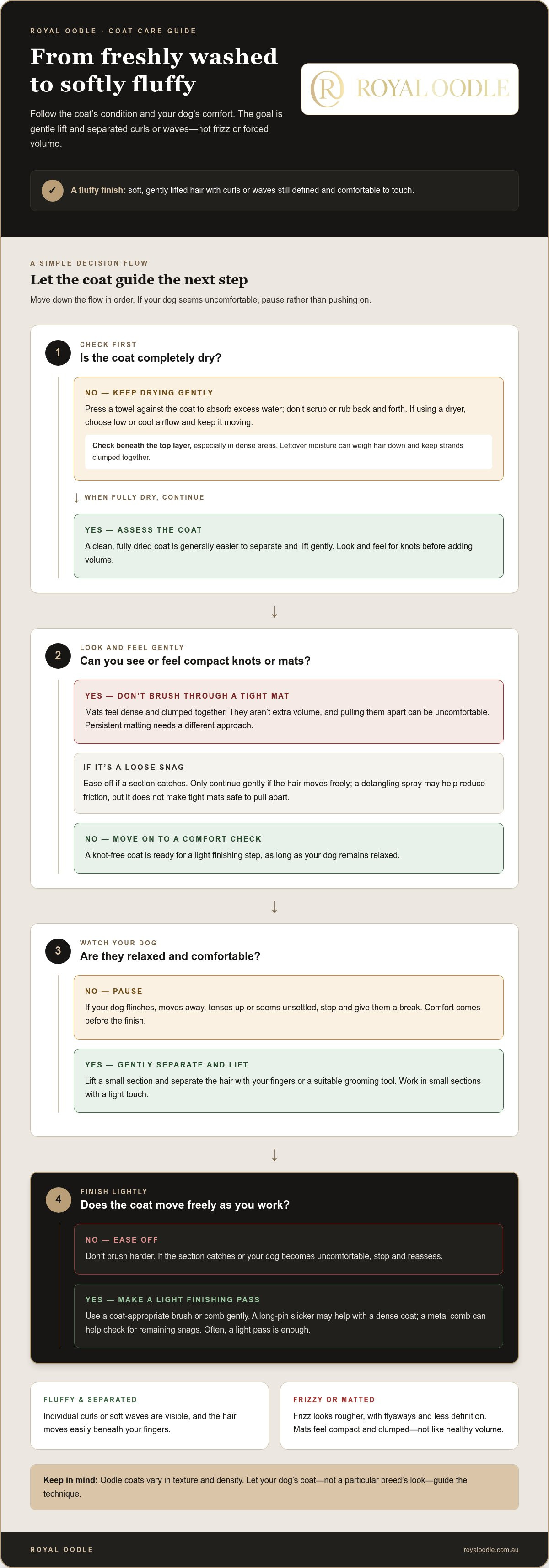
How to make an Oodle coat fluffy: a simple step-by-step routine
The easiest way to create a soft, lifted finish is to follow the same calm sequence each time. Keep the aim modest: bring out your dog’s natural texture rather than forcing extra volume. This routine for how to make oodle coat fluffy takes you from coat preparation to a gentle final check, with comfort guiding every step.
The post-wash sequence for a fluffy finish
- 1. Check the coat. Before washing, gently feel for knots or mats. Don’t pull at tight tangles or bathe a heavily matted coat, as water and handling may make them harder to manage.
- 2. Cleanse and condition. Wash with suitable dog shampoo and rinse thoroughly, then apply conditioner as directed. Rinse according to the product instructions.
- 3. Press out excess water. Use a towel to gently squeeze and absorb moisture in sections. Avoid rubbing, which can rough up curls and encourage tangles.
- 4. Dry methodically. If using a dryer, choose low or cool airflow and keep it moving. Work through the coat in sections, checking beneath the surface so damp patches aren’t missed.
- 5. Finish lightly. Once the coat is fully dry, use your fingers or a suitable brush to separate areas that move freely. Step back and assess the natural shape before doing more.
Pause at any point if your dog seems uncomfortable or if a knot resists gentle handling. A fluffy finish can wait. Your dog’s comfort comes first.
Adjust the routine to your dog’s coat
Dense or tightly curled coats can hold moisture beneath the surface, so take extra care checking that they’re dry throughout. Fine or wavy coats may need only a light finishing touch; repeated brushing can leave them looking flyaway. Coat length and natural texture also affect how much lift you’ll see, so a soft, tidy finish may look different from one Oodle to another.
Keep this quick checklist in mind: prepared, clean, rinsed, gently towel-dried, fully dry, lightly lifted. Repeat the sequence at a pace your dog can manage, rather than rushing to achieve a particular shape. For gentle coat-care essentials made for Oodles and other curly-coated dogs, explore Royal Oodle grooming products.
Keep your Oodle’s fluffy finish soft with thoughtful coat care
A soft, lifted finish is easier to maintain with gentle, consistent care rather than one big grooming session. A quick check between washes can help you notice small tangles before they become harder to manage. Pay particular attention to areas where the coat rubs or folds, such as behind the ears, beneath the collar and around the legs.
Small habits that help the coat stay soft
Run your fingers lightly over the coat and look for clumps or snags. If you find a minor tangle, take your time and ease it apart only if it moves comfortably. Don’t yank, rake or brush harder when hair resists. If your dog shows discomfort or the knot feels tight, stop rather than turning a quick check into an unpleasant grooming session.
Keep routine care simple and follow the directions for each grooming product. Use shampoo and conditioner as directed, and apply detangling spray according to its instructions. These habits support a manageable coat between washes without repeatedly brushing curls in pursuit of extra volume. For more detail on gentle detangling, see our guide to choosing a dog detangling spray.
Choose coat care that supports comfort
The best goal isn’t maximum puffiness. It’s a clean, comfortable coat that feels soft and suits your dog’s natural texture. A manageable coat is easier to care for, and a light lift is a lovely finishing touch when the coat allows it. If it looks less voluminous one day than another, that doesn’t mean you need to brush more; texture, length and condition all affect its appearance.
Thoughtful product choices can make the routine more manageable. Royal Oodle’s Australian-made shampoos, conditioners and detangling sprays are designed for Oodles and other curly-coated dogs, with a focus on gentle coat care and easier detangling. They fit naturally into a routine built around patient handling and regular coat checks.
If you’re exploring how to make oodle coat fluffy, remember that comfort comes before styling. A soft finish should feel as good as it looks. For a closer look at coat-care options, explore Royal Oodle coat care.
Make your next coat-care session gentler
A soft, lifted finish comes from working with your Oodle’s natural coat, not brushing until it looks bigger. Cleanse and rinse thoroughly, remove excess water gently, then dry the coat fully before adding a light finishing touch. If knots resist or your dog seems uncomfortable, pause. Comfort comes before styling.
That’s the heart of how to make oodle coat fluffy at home: prepare the coat carefully, dry it with control, and let its natural texture guide the final lift. Regular, gentle coat checks can also help you spot minor tangles early, before they become harder to manage.
Royal Oodle’s Australian-developed and manufactured grooming products are designed for Oodles and other curly-coated dogs. The range includes shampoos, conditioners and detangling sprays to support a considered coat-care routine. Explore gentle coat care for Oodles and make your next grooming session one calm step at a time. With patience and a gentle touch, a soft, comfortable finish is within reach.
Frequently Asked Questions
How do you make an Oodle’s coat fluffy after a bath?
For a soft, lifted finish, rinse the coat thoroughly, use conditioner as directed, then gently press out excess water with a towel. Dry the coat completely before lightly separating the hair with your fingers or a suitable brush. Work patiently and avoid vigorous rubbing or brushing, which can create friction and frizz. The best method for how to make oodle coat fluffy is the one that suits your dog’s texture and keeps them comfortable.
Can I use a hair dryer to make my dog’s coat fluffy?
Yes, if your dog is comfortable with the sound and sensation. Use low or cool airflow, keep the dryer moving and work methodically so moisture doesn’t remain beneath the top layer. Don’t direct airflow at one spot or continue if your dog seems distressed. Let them take a break if needed. Wait until the coat is dry throughout before judging its volume or adding a gentle finishing brush.
Why is my Oodle’s coat flat after washing?
A coat may look flat or separated if it’s still damp, weighed down by residue or not fully clean. Oodle coat textures also vary, so curls and waves won’t all lift in the same way after washing. Rinse shampoo and conditioner thoroughly, press out excess water rather than rubbing, and dry carefully through the coat. If you feel tight knots, don’t brush harder to create volume; address the tangles gently first.
Does conditioner make an Oodle’s coat fluffy or weigh it down?
Conditioner can help keep the coat manageable, but the result depends on using it as directed and rinsing as instructed. Too much product or residue left in the coat may make it feel heavy rather than soft and airy. Choose a conditioner intended for dogs, follow its label, and rinse thoroughly where directed. A comfortable, manageable finish is a better goal than adding product or trying to force extra volume.
Should I brush my Oodle before or after drying?
Check and gently detangle the coat before bathing, since washing can make existing knots harder to manage. After the bath, avoid hurried brushing on a wet coat. Press out excess water, dry carefully, then use a suitable brush or your fingers to lightly separate the fully dry hair. If a knot catches or your dog shows discomfort, pause. Don’t pull at tight tangles in pursuit of a fluffier look.
How often should I wash my Oodle to keep its coat fluffy?
There isn’t one washing schedule that suits every Oodle. Coat texture, length, lifestyle and how dirty the coat gets all influence when a bath is needed. Follow the directions for your dog’s grooming products, and avoid washing simply to chase extra volume. Between baths, gentle coat checks can help you spot small tangles early. A clean, comfortable coat and thorough drying matter more to the finish than frequent washing.
Can a detangling spray help make an Oodle coat fluffy?
A dog detangling spray may help reduce friction as you gently work through minor snags, making the coat easier to manage before finishing. Use it according to its directions, and don’t treat it as a way to force apart tight knots or mats. Once the coat is clean and completely dry, light separation can reveal its natural texture. Detangling supports coat preparation; it doesn’t create volume on its own.
