

What if the best dog conditioner for curly hair isn’t the richest formula on the shelf, but the one that suits your dog’s coat and skin? After a bath, curls can still snag and resist the brush. It can be hard to know whether to change products, adjust your routine or simply take more time.
That frustration makes sense. Conditioner can support curly-coat care, but different formulas and product claims can make choosing feel complicated. Start with your dog’s coat and skin needs, then check the directions on the label.
This guide explains what to look for, how rinse-off and leave-in products differ, and how to apply conditioner gently as part of a manageable wash-day routine. You’ll also find practical tips for post-bath brushing and guidance on when persistent irritation calls for veterinary advice. The goal is a calmer grooming routine, with your dog’s comfort at the centre of every step.
Key Takeaways
- Choose a dog conditioner for curly hair based on your dog’s coat texture, length, skin sensitivities and bathing routine.
- Compare rinse-out conditioners, leave-in products and detangling sprays by their purpose, then follow the product label.
- A gentle, step-by-step wash-day routine can make post-bath brushing more manageable.
- Monitor how your dog’s coat and skin respond, and seek veterinary advice about persistent skin concerns.
- Royal Oodle’s Australian-developed and manufactured grooming range includes products for curly-coat care.
Dog conditioner for curly hair: what it can, and cannot, do
Curly and wavy coats need thoughtful washing and brushing, especially when curls catch against each other or knots begin to form. If brushing after bath time feels like a struggle, it doesn’t mean you’ve done anything wrong. Coat texture, length and condition all affect how manageable a dog’s coat feels.
Dog conditioner is used after or alongside cleansing, according to its label. Depending on its formulation and directions, it may leave the coat feeling softer and easier to work through. A dog conditioner for curly hair can support a considered routine, but it won’t remove the need for regular brushing or suit every dog in the same way.
Why curly and wavy coats can need a considered routine
There’s no single curly-coat pattern. Oodle crosses can vary in curl, density and length, and those differences affect how readily the coat tangles and how much care it needs. For an overview of coat variations, see Dog coat types. Knots can tighten with movement and make brushing uncomfortable, so regular, gentle grooming matters. Conditioner may improve manageability, but it can’t promise to prevent matting. Bathing habits, coat condition and brushing technique matter too.
Think of conditioner as support, not a shortcut. Choose and use it with your dog’s coat and skin in mind, and follow the product’s instructions rather than assuming every formula works the same way.
What conditioner cannot fix on its own
Conditioner isn’t a substitute for brushing, clipping or professional grooming. If you find a tight mat, don’t pull at it or force a brush through. Tugging can hurt your dog and irritate the skin beneath the knot. A qualified groomer can assess difficult matting and decide how to handle it safely.
Conditioner supports coat care; it doesn’t treat skin disease or resolve severe matting. If you notice persistent irritation, redness, sores or unusual changes to your dog’s skin, seek veterinary advice rather than relying on a grooming product. A gentle routine should make coat care more manageable, not leave your dog sore or distressed.
How to choose a dog conditioner for your curly-coated dog
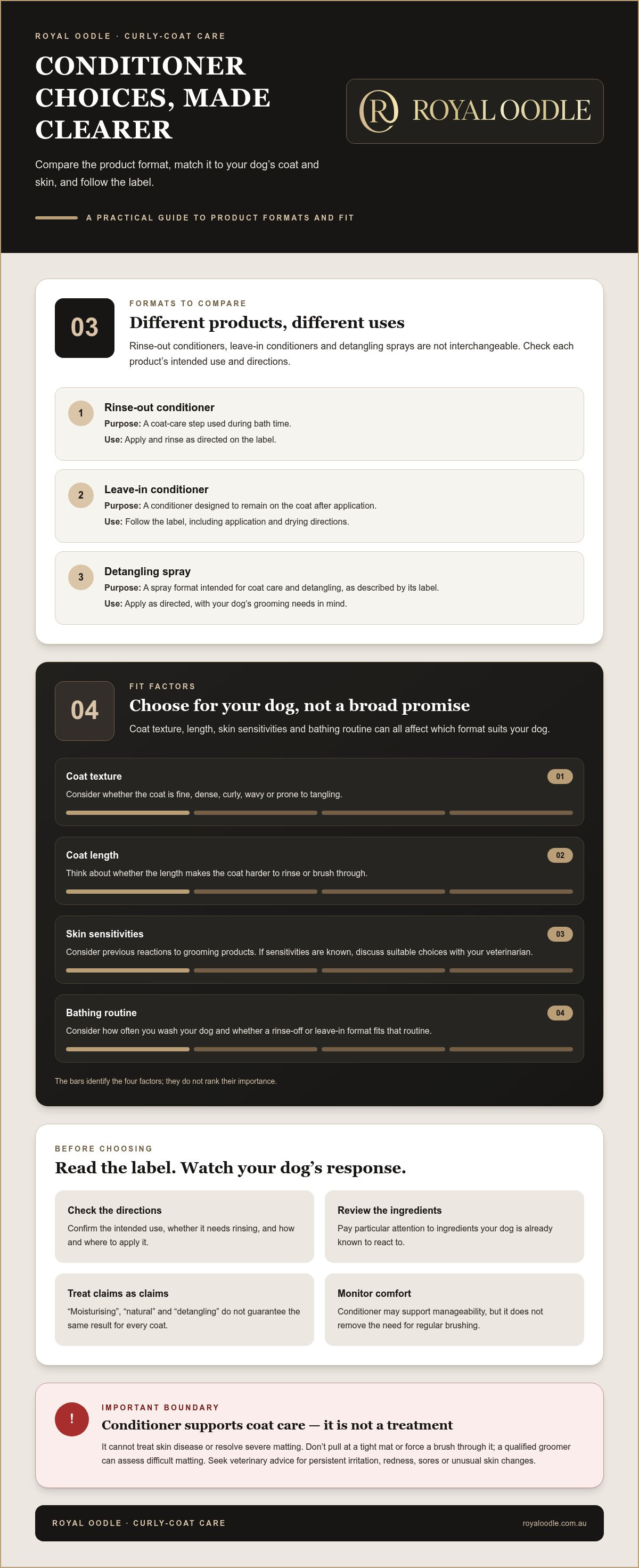
Choose for your individual dog, not for a broad promise on the bottle. A fine, loose wave may need different care from a dense curl that tangles easily. Skin sensitivities and bathing frequency also matter. Use this checklist to compare options:
- Coat texture: Is it fine, dense, curly, wavy or prone to tangling?
- Coat length: Does the length make it harder to rinse or brush through?
- Skin sensitivities: Has your dog reacted to grooming products before?
- Bathing routine: How often do you wash your dog, and would a rinse-off or leave-in format fit that routine?
Match the conditioner to your dog, follow its label and monitor the response.
Match the conditioner to coat and skin needs
Consider how the coat behaves between baths. A longer, dense coat that tangles readily may call for a different format or routine from a shorter, fine coat. These are starting points, not guarantees. Coat condition and grooming habits also affect what works for your dog.
If your dog has known skin sensitivities or a history of reacting to products, discuss suitable choices with your veterinarian. Don’t assume a conditioner is appropriate for puppies or sensitive skin unless its label says so.
Read the label before comparing product claims
Check the intended use, application directions and whether the conditioner needs rinsing. Follow the label for how and where to apply it. Review the ingredients, particularly if you already know what your dog reacts to. If an ingredient raises a concern, ask your veterinarian for advice rather than assuming it is universally safe or unsuitable.
Words such as “moisturising”, “natural” and “detangling” describe product claims, not guaranteed results for every coat. Look for clear directions and consider whether the stated purpose fits your dog’s needs. Rinse-out conditioners, leave-in products and detangling sprays are different formats, so don’t assume they can be used interchangeably. For more on that distinction, read this guide to choosing a dog detangling spray.
Once you’ve narrowed down the format and label directions, compare products with your dog’s routine in mind. Royal Oodle develops and manufactures its curly-coat grooming range in Australia, including conditioners and detangling sprays. Explore Royal Oodle’s coat-care range.
Rinse-out conditioner, leave-in products and detangling sprays compared
These products can all feature in curly-coat care, but they aren’t interchangeable. Consider how each format fits your dog’s coat and your wash-day routine. A dog conditioner for curly hair may be rinse-off or leave-in, while a detangling spray is a separate product with its own intended use.
| Format | Purpose | How it’s used |
|---|---|---|
| Rinse-out conditioner | A coat-care step used during bath time. | Apply and rinse as directed on the label. |
| Leave-in conditioner | A conditioner designed to remain on the coat after application. | Use according to its label, including any application and drying directions. |
| Detangling spray | A spray format intended for coat care and detangling, as described by its label. | Apply as directed, taking your dog’s grooming needs into account. |
When a rinse-out conditioner may fit wash day
If bathing is already part of your routine, a rinse-out conditioner may be a practical step when its label directs you to use it that way. Apply it as instructed, then rinse thoroughly if the product is labelled rinse-off. Leaving residue behind may not follow the product’s directions, so take time to rinse as instructed. The result depends on the formula and your dog’s coat. Don’t assume every conditioner creates the same feel or level of manageability.
When a leave-in product or detangling spray may be more practical
A leave-in conditioner is designed to stay on the coat, while a detangling spray is a different format. Formulas and directions vary, so check the label rather than treating the names as interchangeable. Consider how often you brush your dog, where tangles tend to form and whether another step fits your routine. If the coat is clean and you want a product for brushing care, a spray may suit that task. Let the label guide its use.
There’s no universally best format. Compare the product’s stated purpose with your dog’s coat and routine, follow its directions and observe how your dog responds. For more detail on spray-specific considerations, read the guide to choosing a dog detangling spray.
Royal Oodle’s Australian-developed and manufactured grooming range includes conditioners and detangling sprays for curly-coated dogs. Explore curly-coat grooming products.
How to use dog conditioner on curly hair without rough brushing
A calm, unhurried wash can make coat care more comfortable for both of you. Start by reading the product label, as application and rinsing directions vary. Then follow this gentle sequence, adjusting to your dog’s comfort.
- Prepare the space. Set out the products and towel you need before bath time. Keep the environment calm, and pause if your dog seems unsettled.
- Wet the coat as directed. Follow the conditioner’s instructions about when and how to apply it. Make sure your dog is comfortable before moving on.
- Apply conditioner according to the label. Work it through the coat as instructed. Don’t guess at the amount or leave-on time, as these depend on the product.
- Rinse if directed. For a rinse-off conditioner, rinse thoroughly and follow the label. If it’s a leave-in product, don’t rinse unless its instructions say to.
- Brush patiently after the bath. Let your dog settle, then check the coat in manageable sections. Use gentle strokes and take breaks as needed.
Keep brushing comfortable
Work through small sections rather than brushing the whole coat at once. Watch your dog’s body language and notice if brushing pulls at the skin. Stop if it causes pain or distress. Never tug through a tight mat or keep brushing when your dog is uncomfortable.
Conditioner can support the routine, but it doesn’t make forceful brushing appropriate. Difficult knots that won’t ease comfortably at home need attention from a professional groomer. If you notice a skin problem or your dog seems distressed during grooming, seek advice from a veterinarian or qualified groomer as appropriate.
A dog conditioner for curly hair should fit into a broader routine, not turn wash day into a struggle. Choose a formula with directions that suit your routine, follow them closely and let your dog’s comfort guide each step.
For curly-coat care that brings washing and brushing into one considered routine, explore Royal Oodle’s grooming products.
Choose a curly-coat conditioner that suits your dog and routine
The right choice matches your dog’s needs and fits comfortably into your grooming routine. Before buying, identify what you’re trying to make easier. Is the coat difficult to brush after a bath, or are you looking for a product to use between washes? Your answer can help you decide whether a rinse-out conditioner, leave-in product or another grooming step makes sense.
A simple decision checklist before you buy
- Identify the need. Consider your dog’s coat texture, length and usual tangles, and where conditioner might fit into wash day.
- Compare formats. Decide whether a rinse-out conditioner, leave-in product or detangling spray suits the task and your routine. These formats aren’t automatically interchangeable.
- Read the label. Check the intended coat use, application and rinsing directions. If your dog has known sensitivities, factor those in and seek veterinary advice about product choices where appropriate.
- Set a realistic goal. Aim for manageable routine care and a more comfortable brushing experience, not a promise that a product will prevent every knot or mat.
- Assess your dog’s response. Notice how their coat and skin respond when you use the product according to its directions.
When a specialist curly-coat range may make sense
If you want grooming products developed with curly-coated dogs in mind, a focused range can help you consider conditioner as part of a broader routine. Royal Oodle is an Australian brand that develops and manufactures grooming products for Oodles and other curly-coated dogs. Its range includes dog conditioners, shampoos, detangling sprays and grooming kits.
Start with the individual product label. Check that its intended use and directions suit your dog rather than assuming every formula or format is right for every coat. Keep expectations practical: conditioner can support coat care, but your dog’s routine and response matter too. If you have a known skin concern, a persistent reaction or uncertainty about suitability, your veterinarian can help guide the next step.
Choosing a dog conditioner for curly hair doesn’t mean chasing the biggest claim. Identify the need, compare formats, follow the directions and let your dog’s comfort guide your routine. For a considered starting point, explore Royal Oodle’s coat-care range.
Make your dog’s next wash day more comfortable
Choosing a dog conditioner for curly hair starts with your dog, not the boldest promise on a bottle. Consider coat texture and routine, compare rinse-out and leave-in formats, and follow the product label for application and rinsing. Then notice how your dog’s coat and skin respond.
Conditioner can support coat care, but it can’t replace regular grooming or resolve tight mats. Gentle, patient brushing and realistic expectations keep the routine focused on comfort. If you notice persistent skin changes or your dog seems distressed, seek appropriate professional advice.
Royal Oodle’s grooming products are developed and manufactured in Australia. The range includes conditioners, shampoos, detangling sprays and grooming kits. Explore Royal Oodle’s coat-care range.
Small, thoughtful steps can make grooming feel less like a struggle and more like a caring ritual. Let your dog’s comfort guide the way.
Frequently Asked Questions
Is conditioner good for dogs with curly hair?
Yes, a dog-specific conditioner may help make a curly coat feel more manageable if it suits your dog and is used as directed. Curly and wavy coats vary, so consider coat texture, length and skin sensitivities when choosing. Conditioner is one part of grooming, not a replacement for brushing. If your dog has persistent irritation or a known skin condition, speak with your veterinarian before trying a new product.
Can I use human conditioner on my dog?
It’s generally better to choose a conditioner made for dogs rather than use a human product. Dogs’ skin and coats have different care needs, and a human formula may not be suitable. Select a dog conditioner and follow its label, including application and rinsing directions. If your dog has a history of skin reactions or develops irritation after a product is used, stop using it and seek veterinary advice.
How do I use conditioner on a curly-coated dog?
Use the conditioner according to its label, as directions differ between products. For a rinse-out formula, apply it as directed during bath time and rinse thoroughly as instructed. For a leave-in product, follow its application directions. After bathing, let your dog settle, then brush patiently in small sections. Stop if your dog seems uncomfortable, and don’t force a brush through a tight knot.
Does dog conditioner prevent curly hair from matting?
No conditioner can guarantee that a curly coat won’t mat. A dog conditioner for curly hair may support coat manageability, but tangles are also affected by coat length and condition, brushing technique and grooming frequency. Keep up a gentle brushing routine and check areas where knots tend to form. If a mat becomes tight or painful to work through, don’t pull at it; seek help from a qualified groomer.
Should dog conditioner be rinsed out?
It depends on the product. Rinse-out conditioners should be rinsed thoroughly according to their label, while leave-in products are intended to remain on the coat when used as directed. Don’t assume the format from the word “conditioner” alone. Check the packaging for rinsing and application instructions. If directions are unclear or your dog shows irritation, stop using the product and ask your veterinarian for guidance.
Can I use dog conditioner on a puppy with curly hair?
Only use a conditioner on a puppy if its label specifically says it’s suitable for puppies, and follow the directions carefully. Don’t assume that a product suitable for adult dogs is appropriate for a young dog. If your puppy has sensitive skin, a history of reactions or an existing skin concern, ask your veterinarian before trying a grooming product. Keep bath time calm and stop if your puppy becomes distressed.
What should I do if my dog’s coat is already badly matted?
Don’t pull at tight mats or try to brush through them by force. This can cause discomfort and tug on the skin beneath the coat. A qualified groomer can assess difficult matting and determine how to handle it safely. If the skin underneath looks red, sore or irritated, or your dog seems painful, seek veterinary advice too. Conditioner is for coat care, not a way to resolve severe mats.
