

What if the best between-groom routine is less about doing more and more about making each brush gentle and brief? Tangles can appear well before your dog’s next appointment, and it’s understandable to wonder how often to brush without causing discomfort. Thoughtful dog coat care between grooming appointments can help keep curls manageable while making home care calmer.
You don’t need to recreate a professional groom at home. Small, regular moments of coat care can help you notice knots or skin changes early. Your dog’s comfort matters more than pushing through a session.
This guide explains how to brush gently, ease through small tangles and use detangling spray, shampoo and conditioner as part of a consistent routine. You’ll also learn when to pause and seek professional advice, so between-appointment care stays gentle maintenance, not a substitute for a groom.
Key Takeaways
- Keep dog coat care between grooming appointments gentle and brief; home maintenance supports, but doesn’t replace, professional grooming.
- Adapt brushing to your dog’s coat texture and comfort instead of relying on one routine for every dog.
- Pause if your dog flinches, pulls away, repeatedly licks an area or shows skin irritation.
- Build a calm, adaptable routine around settling your dog, checking their coat and rewarding cooperation.
- Use a detangling spray to support brushing, and choose shampoo and conditioner suited to your dog’s coat and skin needs.
Dog coat care between grooming appointments: why small habits matter
Home maintenance supports a professional groom; it doesn’t replace one. A few calm minutes spent checking and gently brushing your dog’s coat can help you spot developing tangles before they tighten, keep the coat more comfortable and give your groomer a clearer starting point at the next appointment. The goal isn’t to recreate a salon routine at home. It’s to tend to small changes as they appear.
That’s the heart of dog coat care between grooming appointments: brief coat checks, gentle brushing where needed and timely attention to anything that looks or feels different. Between appointments, focus on simple maintenance rather than a full groom. A guide to dog grooming practices offers broader background on common care methods and tools.
There’s no single schedule that suits every dog. Coat type and length affect how readily tangles form, and lifestyle matters too: a dog who enjoys grassy walks may pick up more debris than one who spends most of the day indoors. Your dog’s tolerance counts just as much. If brushing makes them tense or uncomfortable, shorten the session and adjust your approach instead of trying to finish the whole coat at once.
What does between-appointment coat care include?
Start with a visual and hands-on check, then brush gently where the coat needs attention. Work in small sections with a light touch, keeping your dog settled and comfortable. Pause if they become uneasy. Short, positive sessions can make coat care feel familiar rather than like a lengthy task to endure.
This is maintenance, not clipping or a full grooming session. Don’t try to pull apart a tight mat or brush through one that tugs at the skin. Leave difficult mats for a professional groomer to assess, and seek veterinary advice if you notice concerning skin changes.
Why curly and fleece coats need attentive maintenance
Curly and fleece coats can hide tangles beneath the surface, close to the skin, where they’re easy to miss during a quick glance. Gently check friction-prone spots, especially behind the ears, under the legs and around the collar. A soft knot may be manageable; a tight mat can pull uncomfortably, so don’t force your way through it.
Between-appointment maintenance is comfort-focused care that helps keep a dog’s coat manageable until their next professional groom. Notice how your dog responds as you check. Ease, not perfection, is the measure of a session worth repeating.
How coat texture shapes a gentle between-grooming routine
A brush that suits one dog may feel ineffective or uncomfortable on another. With curly and fleece coats, tangles can sit beneath the visible curls. Long, silky hair may catch where it rubs against itself or a collar. Short coats usually need less detangling, but still benefit from a quick check for debris or skin changes. Let the coat in front of you, and your dog’s response, guide the session.
A slicker brush and a metal comb have different roles. A slicker can help work gently through the coat in small sections, while a comb is useful for checking whether you’ve missed a snag or the coat feels clear. Keep your movements light. If a tool catches, don’t pull it through resistance. Ease off, reassess and pause if needed.
Curly or fleece coat
Focus: Check beneath the visible curls, especially in friction-prone spots.
Approach: Separate the coat into small sections and brush gently; use a comb as a light check, not a lever.
Watch for: Hidden knots, catching or signs of discomfort.
Long or silky coat
Focus: Look for tangles where hair rubs, such as behind the ears or around a collar.
Approach: Work carefully through manageable sections and avoid tugging at knots.
Watch for: Snags at friction points and resistance from your dog.
Short coat
Focus: Check the skin and coat for debris, irritation or changes.
Approach: Keep brushing light and targeted; extensive detangling may not be needed.
Watch for: Flinching, redness or areas your dog avoids having touched.
Curly and fleece coats: check through to the skin
With a curly or fleece coat, visible fluff doesn’t always reveal what’s happening underneath. Gently part a small area and work through it section by section, paying attention to the coat close to the skin. A metal comb can help you check for snags: move it lightly and stop if it catches. If a knot won’t loosen easily or your dog shows discomfort, leave it rather than pulling.
Adjusting care for other coat textures
Long, silky hair can tangle at points of friction, so check those areas without assuming the whole coat needs the same attention. Short coats may need less detangling, but a gentle look and touch can still help you notice changes. Brushing frequency should reflect your dog’s coat, tendency to tangle and individual tolerance, not a one-size-fits-all timetable.
For curly-coated dogs, a detangling spray can support gentler brushing by helping reduce friction, though it won’t make every knot suitable to brush out. Choose products that suit your dog’s coat and skin needs. Royal Oodle’s coat-care products for curly-coated dogs include detangling sprays, shampoos and conditioners developed and manufactured in Australia.
Tangles, discomfort and skin changes: know when to pause
A small, loose tangle may shift with gentle handling. A tight mat is different: it feels dense or close to the skin, resists a light touch, or pulls the skin as the coat moves. Don’t test it by tugging harder. If your dog reacts, stop and give them space. Keeping dog coat care between grooming appointments gentle means knowing when not to continue.
Your dog’s body language is useful feedback. Pause brushing if you notice any of these signs:
- Flinching, turning towards your hand or suddenly tensing when you touch an area.
- Pulling away, trying to leave or becoming increasingly unsettled.
- Repeatedly licking or chewing one particular spot.
- Visible redness, irritation, sores or discomfort when the coat is moved.
Stop the session rather than asking your dog to tolerate more. A break can protect trust as well as comfort. If your dog settles, leave the troublesome area alone and continue another time elsewhere, provided there are no signs of pain or skin irritation. Never cut into a mat or use scissors close to the skin. A dog’s skin can be difficult to see beneath the coat, and a sudden movement could cause an injury.
When a knot is not a do-it-yourself job
Leave tight, widespread or skin-adjacent mats for a professional groomer to assess. Pulling at a mat may increase discomfort, and repeated attempts can make brushing stressful. Don’t force a comb through a painful knot, even if you’ve applied a detangling product. These products can support gentle brushing, but they’re not a reason to persist when a knot won’t ease.
Professional grooming is the right next step for coat problems beyond light maintenance, such as matting that covers a large area or sits firmly against the skin. If your dog appears to be in pain, or you’re unsure whether the reaction is coming from a mat or the skin beneath it, contact your veterinarian for advice before continuing to groom that area.
Recognising skin concerns during coat checks
As you part the coat, look for redness, sores, unusual odour or areas your dog persistently scratches or licks. These signs don’t tell you the cause, but they warrant attention, especially if irritation continues or your dog seems sore. Avoid trying to treat a suspected skin problem with cosmetic grooming products; a veterinarian can advise on the concern.
Routine coat care helps you notice changes; it isn’t a substitute for veterinary assessment of a skin problem. Note where you saw the change and when it appeared, and share those observations with your vet. If the coat is tangled without skin symptoms, a professional groomer can help with matting that isn’t safe or comfortable to address at home.
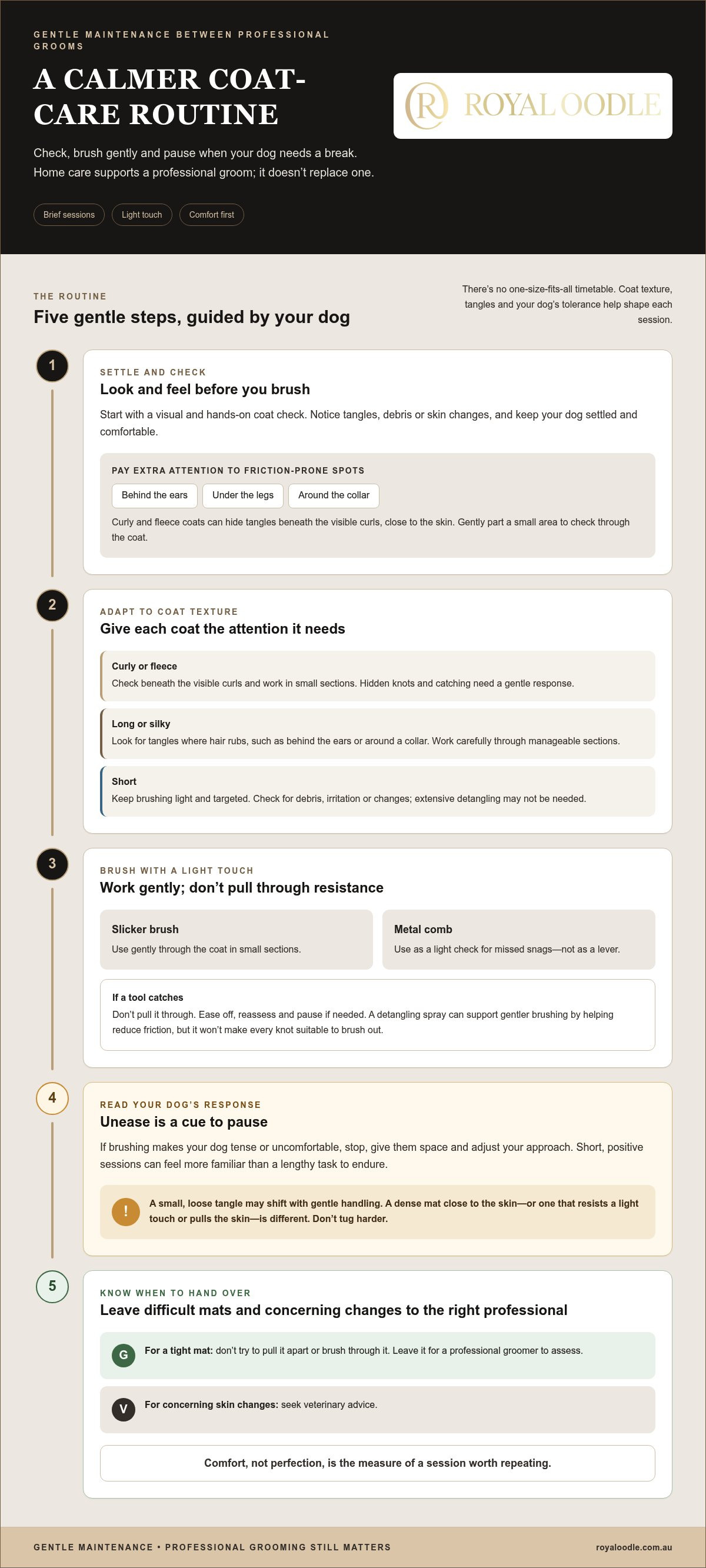
A practical between-appointment routine you can adapt
A reliable routine doesn’t need to be long or identical every time. Let your dog’s coat condition and body language guide how much you do. For curly coats, a brief check of a friction-prone area may be more useful than brushing the whole coat when it’s already clear. Keep each step calm and stop if your dog seems uncomfortable.
A calm check-and-brush sequence
Choose a quiet moment when your dog is relaxed. Keep your tools within reach so you can focus on their comfort rather than searching mid-session. Then move through this sequence at an easy pace:
- Settle: Let your dog get comfortable in a familiar spot. Offer gentle reassurance before picking up a brush.
- Inspect: Look over the coat and feel gently for snags or debris. Check areas that tend to rub, such as behind the ears, under the legs and around the collar.
- Brush: Choose a manageable section and use light strokes. Work with the coat rather than brushing quickly over the surface, and don’t force a tool through resistance.
- Check: Gently use a comb to see whether the section feels clear. If it catches, stop to reassess instead of tugging.
- Reward: End on a positive moment, with praise or a reward your dog enjoys. A short session that finishes calmly is more useful than pushing on when they need a break.
- Record: Note any recurring tangles, sensitive spots or areas that need a professional groomer’s attention.
A simple log can include the date, area checked, what you noticed and how your dog responded. If a knot keeps appearing behind one ear, for instance, a note can remind you to check there gently next time and mention the pattern at the next appointment. If you notice skin irritation or signs of pain, seek veterinary advice rather than treating it as a coat-care issue.
Make the routine suit your dog
There’s no universal brushing frequency that suits every dog. Adjust how often you check, and how long each session lasts, according to the coat’s condition, how readily it tangles and your dog’s tolerance. If knots repeatedly develop in one area, check that spot more often, but keep each check brief and comfortable. If your dog becomes unsettled, pause and try again later.
For wash-day steps that complement your between-grooming routine, this Cavoodle grooming routine sets out coat care as a gentle sequence, rather than a single brushing task.
Royal Oodle’s coat-care products include detangling sprays, shampoos and conditioners developed and manufactured in Australia for curly-coated dogs.
Choosing gentle coat-care support between professional grooms
Products can support a comfortable home routine, but they work best alongside gentle handling, not as a shortcut through a difficult knot. For curly-coated dogs, choose coat-care products designed for dogs and suited to their coat and skin needs. If your dog has sensitive skin, pay attention to how their skin responds and seek veterinary advice about ongoing irritation.
What to look for in between-grooming products
A detangling spray is intended to support brushing. Used as directed, it may help reduce friction as you work through the coat, making each stroke gentler. It can be a useful part of brushing support, but it can’t guarantee that tangles or mats won’t form. If a knot remains tight or uncomfortable, stop rather than relying on more product or force.
Keep wash-day products in their own role. Shampoo and conditioner are for washing, while a spray supports brushing between washes. Choose options made for dogs and appropriate to your dog’s coat. Follow the product directions and pay attention to whether your dog’s skin seems comfortable after use. If you notice a reaction or persistent skin concern, pause use and speak with your veterinarian.
For more on selection considerations, this curly dog grooming products guide explores coat-care choices for curly coats. If your main question is how a spray fits into brushing, the dog detangling spray guide offers more focused detail.
A considered Australian-made coat-care option
Royal Oodle develops and manufactures grooming products in Australia, with a range designed for Oodles and other curly-coated dogs, including dogs with sensitive skin. The range includes detangling sprays, shampoos, conditioners and grooming kits. These products support different parts of a considered routine: spray for brushing support, and shampoo and conditioner for wash day.
Keep your expectations measured. No product replaces regular coat checks, a suitable brushing approach or professional grooming, and no spray should be treated as a promise that every tangle can be removed. The right support is what fits your dog’s coat and sits comfortably within a calm routine.
Royal Oodle’s Australian-developed coat-care options are designed to support the routine you’ve shaped around your dog.
Make your next gentle step count
Choose one small coat-care moment to carry into the week: a calm check after a walk, a brief brush when your dog is settled, or a note about a spot for your groomer to assess. Let your dog’s comfort set the pace. Consistency can grow from a routine that feels kind and achievable, not from trying to do everything at once.
Royal Oodle’s grooming products are developed and manufactured in Australia for Oodles and other curly-coated dogs, including those with sensitive skin. The range includes detangling sprays, shampoos, conditioners and grooming kits to support different parts of your home routine.
Explore Royal Oodle’s gentle coat-care range to find products that suit your dog’s coat and make dog coat care between grooming appointments a calmer part of your time together.
Frequently Asked Questions
How often should I brush my dog between grooming appointments?
There’s no single brushing schedule that suits every dog. For dog coat care between grooming appointments, let coat texture and length guide your checks: curly or fleece coats may need closer attention than short coats. Notice whether knots return quickly, especially after walks or play, and adjust from there. Keep sessions gentle and stop before your dog becomes uncomfortable; consistency should never come at the expense of comfort.
Can I remove a mat from my dog’s coat at home?
You may be able to ease a loose tangle if it releases with gentle handling, but don’t try to work out a tight mat close to the skin. Pulling can hurt, and cutting near the skin risks injury, particularly when fur obscures where the skin sits. Leave tight or extensive mats to a professional groomer. If the skin looks sore or affected, seek veterinary advice instead of continuing.
Is it better to brush a dog’s coat when it is wet or dry?
It depends on your dog’s coat, the tool you’re using and the directions for any grooming product. Don’t brush forcefully in either condition: if the tool drags, catches or seems to irritate your dog, pause rather than pushing through. Follow product instructions and keep your touch gentle. If your dog’s coat mats easily, a professional groomer can provide guidance suited to the coat.
What should I do if my dog dislikes being brushed?
Make the brush feel familiar in calm, brief steps. Let your dog investigate it, then reward relaxed behaviour before gently touching one small area. End the session while they’re still comfortable, rather than restraining them or trying to complete a full brush. If their dislike is new, persists despite gentle introductions, or centres on one body area, seek professional guidance; discomfort may have a cause beyond the brush itself.
Should I bathe my dog between grooming appointments?
Bathing needs vary with your dog’s coat, lifestyle, skin and the timing of their next professional groom, so there’s no universal schedule. A muddy outing may prompt a different decision from an ordinary day indoors. Use products made for dogs and follow their directions, including rinsing thoroughly. If your dog has persistent skin irritation, speak with a veterinarian before changing their bathing routine or products.
When should I contact a vet about my dog’s coat or skin?
Contact your veterinarian about sores, persistent redness, unusual odour, ongoing scratching, pain or a sudden change in your dog’s coat. These signs may need assessment, rather than a change of grooming product alone. Note when you first noticed the change and where it appears. For tight mats without signs of skin trouble, a professional groomer can assess coat management; don’t attempt removal if it causes pain.
